

- India,
- 18-Oct-2025 02:06 PM IST


Recent Pakistani attacks on Afghanistan's Paktika province in October 2025 have sparked intense debate about a possible 'hidden role' of the USA, particularly former President Donald Trump, and a strategic move by Pakistani Army Chief General Asim Munir. The attacks, which killed dozens of Afghans, were termed 'attacks on civilians' by the Taliban, leading to retaliatory actions, while this complex geopolitical play is seen by some as an attempt by the US to re-establish its presence in Afghanistan, potentially challenging India's growing diplomatic ties with the Taliban.
The Afghanistan-Pakistan Conflict
The Durand Line has been a source of decades-long tension between Afghanistan and Pakistan. Following the Taliban's takeover in 2021, Pakistan accused them of sheltering Tehrik-i-Taliban Pakistan (TTP), a group responsible for terror attacks in Pakistan, while this led to multiple Pakistani military operations in Afghan territory. While tensions eased briefly in March 2024, they escalated again from December 2024, culminating in the October 2025 airstrikes. Pakistan claimed to target 'terrorist hideouts,' while the Taliban stated 'unarmed civilians' were hit. A 48-hour ceasefire was observed, but border trade and underlying tensions persist.
USA's 'Hidden Role' in Pakistan's Attacks
After the US withdrawal from Afghanistan in 2021, Donald Trump has reportedly expressed a desire to reclaim Bagram Airbase, while in September 2025, Trump allegedly warned the Taliban of 'severe consequences' for non-cooperation on Bagram. Immediately after this, Pakistan intensified its attacks on Afghanistan. Media reports and online discussions suggest the US might be using Pakistan to pressure the Taliban, while pakistan's Defence Minister Khawaja Asif reportedly praised Trump's mediation and accused India of fostering closer ties with the Taliban. Another perspective suggests Trump's alignment with Pakistan is a concerning strategy for India and Afghanistan, potentially aimed at weakening the Taliban.
India-Taliban Rapprochement Worries Pakistan and USA
Amidst these developments, India's efforts to improve relations with the Taliban have reportedly discomfited both Pakistan and the US, while in a significant diplomatic shift in 2025, the Taliban's Foreign Minister, Amir Khan Muttaqi, visited India from October 9-16. This was followed by India's announcement to reopen its embassy in Kabul, which had been closed since 2021. According to The New York Times, this growing diplomatic proximity between India and the Taliban is partly driven by their shared opposition to Pakistan, while india has provided humanitarian aid, trade, and infrastructure support to Afghanistan, though it has not formally recognized the Taliban government. Chatham House also indicated that this rapprochement is influenced by growing Pakistan-US ties and emerging tensions between New Delhi and Washington.
The Trump-Munir 'Ploy'
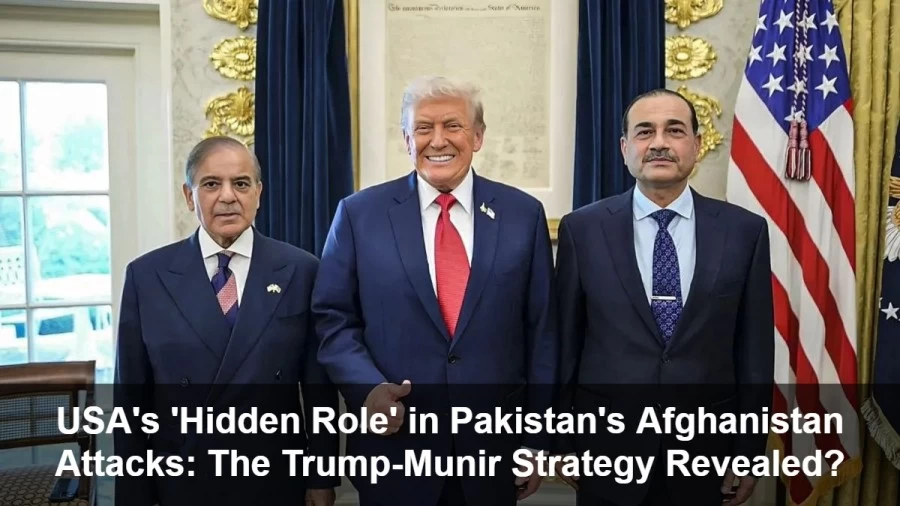
A meeting between Trump, Munir, and Pakistani PM Shehbaz Sharif reportedly took place at the White House in September 2025, where Trump referred to Munir as his 'favorite field marshal, while ' Multiple reports suggest Munir is playing a 'strategic gambit' with Trump, aiming for the US to regain control of Bagram Airbase. The improving India-Taliban relationship is believed to have prompted Trump and Munir to execute this strategy: using Pakistan as a proxy to weaken the Taliban. After the Taliban rejected demands regarding Bagram, Trump issued threats, and Pakistan launched attacks, while some analyses on 'X' (formerly Twitter) claim this is a conspiracy to curb India's influence. Al Jazeera characterized Trump's Pakistan policy as a 'strategic alliance' that could target not only the Taliban but also China.
