

- India,
- 11-Feb-2026 06:00 AM IST


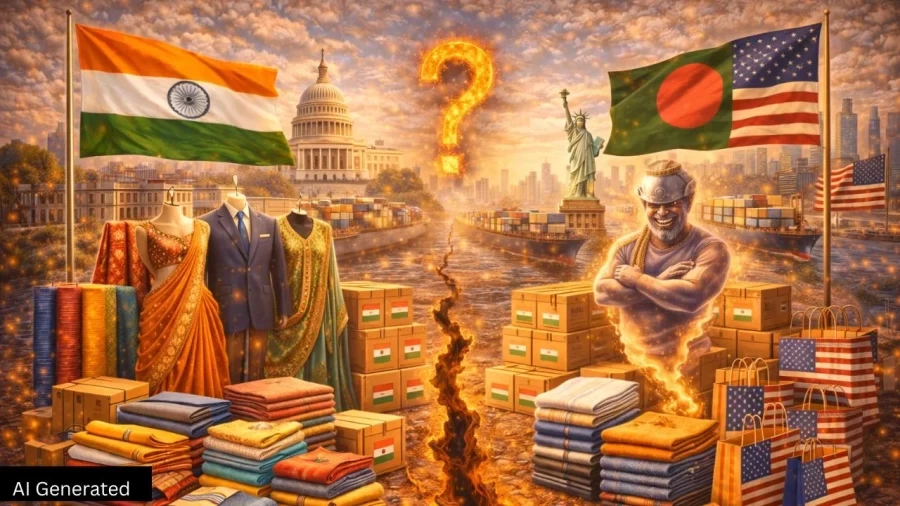
The recent signing of a bilateral trade agreement between the United States and Bangladesh has introduced new dynamics into the global textile and apparel trade. Under this agreement, certain Bangladeshi apparel products are expected to receive zero-tariff access to the US market. Following this announcement on February 10, major Indian textile stocks witnessed significant downward pressure. 25%. Market analysts attribute this volatility to concerns regarding the potential erosion of India's price competitiveness in the American market.
India currently operates under a trade framework with the US that involves an 18% reciprocal tariff on textile products. In contrast, the new US-Bangladesh deal reduces general tariffs to 19% but introduces a specific quota system for zero-tariff entry. This provision is reportedly linked to the use of US-sourced raw materials, such as cotton and man-made fibers. 5 billion textile export base to the US, which remains India's largest destination for apparel and finished goods.
Key Provisions of the US-Bangladesh Zero-Tariff Agreement
The agreement, reached after nine months of negotiations, aligns with Executive Order 14257. It sets a baseline tariff of 19% for Bangladeshi goods, which is slightly higher than the 18% agreed upon for Indian products under the India-US framework. However, the most critical element for the textile sector is the commitment to establish a system for zero-tariff access for a specified volume of apparel exports. This quota will be determined based on Bangladesh's imports of textile inputs from the US, creating a reciprocal supply chain mechanism.
According to trade analysts, this 'input-linked' quota could allow Bangladesh to gain a price advantage despite the baseline tariffs. By utilizing US cotton, Bangladeshi manufacturers may offset production costs through tariff exemptions. For Indian exporters, the concern lies in the possibility of Bangladesh capturing a larger share of the $118 billion US global import market. However, the technical details regarding the specific apparel categories eligible for these exemptions and the exact implementation timeline remain under discussion, leaving some room for strategic adjustments by other global players.
Market Reaction and Sentiment in Indian Textile Hubs
Prior to the US-Bangladesh announcement, the Indian textile industry was optimistic about expanding its footprint in the US. Government data indicates that nearly 70% of India's textile exports to the US consist of apparel, with made-ups contributing another 15%. The Ministry of Textiles had previously noted that an 18% tariff would place India in a favorable position compared to competitors like China (30%), Vietnam (20%), and Pakistan (19%). In hubs like Tiruppur, exporters had projected that apparel exports to the US could double to ₹30,000 crore over the next three years.
M. Subramanian, President of the Tiruppur Exporters Association, had earlier estimated the creation of approximately five lakh additional jobs driven by increased US orders. The recent stock market reaction reflects a cautious shift in sentiment as the industry evaluates the potential for order diversion to Bangladesh. Nevertheless, some experts suggest that the requirement for US-sourced inputs might limit the scale of the zero-tariff benefit for Bangladesh, as it could increase their logistics and raw material procurement costs, thereby balancing the competitive field.
Strategic Advantage for India in the European Union Market
While the US market presents new challenges, India has secured a significant breakthrough in the European Union (EU). The EU-India trade agreement, announced on January 27, provides Indian textile products with immediate zero-tariff entry into the $263 billion EU market. CareEdge Ratings suggests that this move could increase India's market share in the EU apparel segment from the current 5% to 9%. 5 billion in annual export revenue for the Indian textile sector.
The EU-India deal effectively levels the playing field with Bangladesh, which has long enjoyed preferential access to the European market as a Least Developed Country (LDC). With India now gaining similar zero-tariff benefits, the tariff advantage previously held by Bangladesh has been neutralized. Analysts point out that Bangladesh will now have to compete directly with India's more integrated and diversified textile industry, while Plus, the Indian government's policy support, including incentives announced in the recent Union Budget, is expected to bolster domestic manufacturing capabilities.
Analysis of Global Trade Dynamics and Conclusion
The evolving trade landscape indicates a shift toward bilateral agreements that prioritize supply chain integration. Analysts observe that while the US-Bangladesh deal creates a specific niche for products using US inputs, India's broader manufacturing base and recent success in the EU provide a strong counterweight. The Indian textile industry benefits from a strong domestic supply of raw materials and a large, skilled workforce, which are critical factors in long-term global competitiveness.
Ultimately, the US-Bangladesh trade agreement introduces a new layer of competition in the American market, but its overall impact on India will depend on the final implementation details. India's strategic gains in the European Union and its ongoing trade negotiations with the US suggest a resilient outlook for the sector. As global buyers diversify their sourcing strategies, India's ability to maintain high-quality standards and benefit from policy incentives will be key to sustaining its growth trajectory in the international textile arena.
