

- India,
- 04-Feb-2026 09:50 AM IST


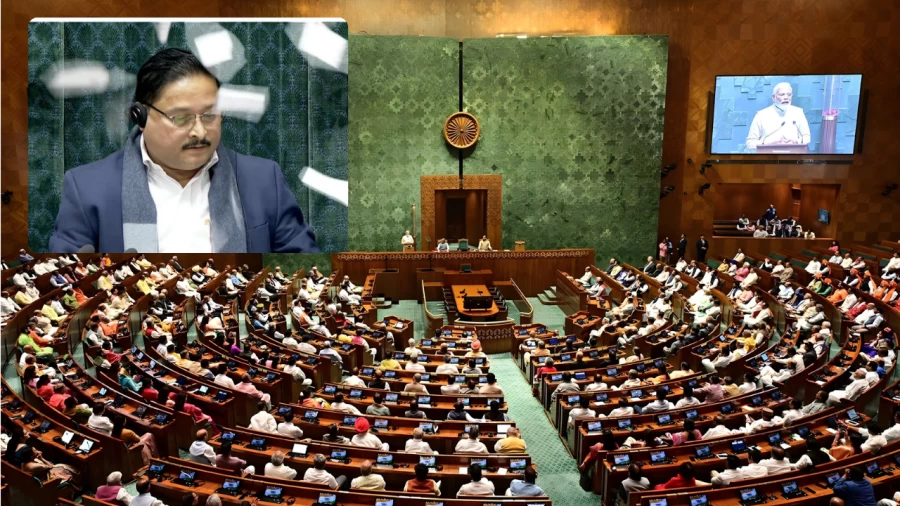
In a significant disciplinary move, eight Members of Parliament (MPs) were suspended from the Lok Sabha on Tuesday for the remainder of the Budget Session. The action was taken following instances of gross misconduct and disorderly behavior, which included throwing papers toward the Speaker's chair. The suspended members include seven representatives from the Indian National Congress and one from the Communist Party of India (Marxist). This development has triggered intense protests from opposition leaders, including Rahul Gandhi and Priyanka Gandhi, outside the Parliament premises.
The list of suspended Congress MPs includes Manickam Tagore, Gurjeet Singh Aujla, Amarinder Raja Warring, Hibi Eden, Kiran Reddy, Prashant Padole, and Dean Kuriakose. S. Venkatesan of the CPM was also among those faced with the suspension order. The motion for suspension was moved by the Minister of Parliamentary Affairs and subsequently adopted by the House through a voice vote, leading to the immediate removal of these members from the session's proceedings.
The Procedural Framework of MP Suspension
The suspension of a Member of Parliament is governed by specific rules designed to maintain the decorum of the House. According to Rule 373 of the Rules of Procedure and Conduct of Business in Lok Sabha, the Speaker can direct any member whose conduct is grossly disorderly to withdraw immediately from the House. For more serious or persistent obstructions, Rule 374 is invoked. Under this rule, the Speaker names the member who disregards the authority of the Chair or abuses the rules of the House. A motion is then formally put to the House to suspend the member for a period not exceeding the remainder of the session. Similar provisions exist in the Rajya Sabha under Rules 255 and 256.
Loss of Legislative Rights and Privileges
A suspension entails the immediate cessation of several fundamental rights that an MP typically enjoys. During the suspension period, the member is strictly prohibited from entering the Chamber of the House. They can't participate in any legislative debates, discussions, or voting processes, while On top of that, suspended MPs lose their right to attend meetings of Parliamentary Committees of which they may be members. Crucially, their right to ask questions during Question Hour is suspended, and any notices they've submitted for discussions aren't entertained for the duration of the suspension.
Reinstatement and Duration of Suspension
The duration of a suspension is usually specified in the motion passed by the House, which in this case extends to the end of the current Budget Session. While the suspension automatically expires at the end of the session, the House retains the power to revoke it earlier, while to reinstate a member before the session concludes, a fresh motion must be moved and passed by the House. Such revocations often occur following an apology from the concerned member or a consensus reached between the government and the opposition to ensure the smooth functioning of Parliament.
Analytical Perspective on Parliamentary Decorum
According to parliamentary analysts, while suspension is a necessary tool to uphold the sanctity of the legislature, it also impacts the strength of the opposition's voice in the House. Experts suggest that the mass suspension of members can lead to a lack of diverse perspectives during crucial legislative debates. However, the presiding officers maintain that deliberate obstruction and disrespect toward the Chair undermine the foundations of parliamentary democracy. The primary objective of such disciplinary action is to serve as a deterrent and to ensure that the legislative business of the nation proceeds without unconstitutional interruptions.
Ultimately, the suspension of the 8 MPs marks a period of heightened friction between the treasury and opposition benches. As the Budget Session continues, the focus remains on whether the House can return to productive deliberations or if the current impasse will persist, affecting the passage of key legislative agendas.
