

- India,
- 20-Jul-2025 11:40 AM IST


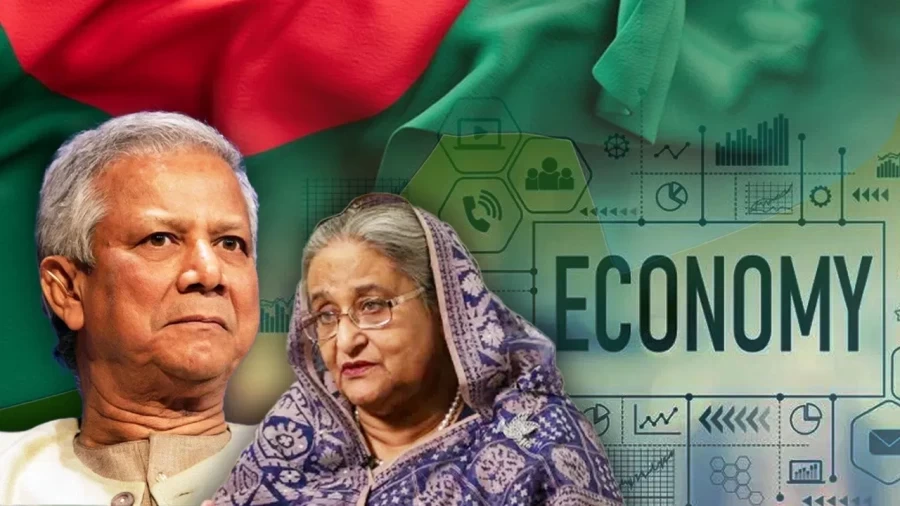
Bangladesh Economy: Sheikh Hasina's 15-year tenure (2009-2024) is considered the golden period for Bangladesh's economy. During this period, Bangladesh made its mark as a shining example of economic progress in South Asia. Notable achievements were made in the fields of readymade garment (RMG) sector, remittances, poverty alleviation, human resource development, and infrastructure.
- Readymade garment sector: Bangladesh became the second largest country in global RMG exports, providing employment to millions of people.
- Remittances: Remittances received from expatriate Bangladeshis strengthened the economy, which remained a significant part of GDP.
- Poverty alleviation: There was a significant reduction in the poverty rate, raising millions of people above the poverty line.
- Infrastructure: Roads, bridges, and energy projects accelerated the country's development.
- These achievements established Bangladesh as an emerging economy on the global stage.
Changing Situation: Signs of Economic Crisis
However, some serious challenges have emerged in Bangladesh's economy in recent years. Recent reports by the World Bank's 'Global Findex 2025' and the National Board of Revenue (NBR) have pointed to a deep crisis in the economy. The decline in financial inclusion and revenue collection has posed threats to the country's economic stability and sustainable development.
Decline in Financial Inclusion
- According to the World Bank's 'Global Findex 2025' report, Bangladesh has seen a sharp decline in financial inclusion rate:
- 53% of the population aged 15 years and above had a bank or mobile money account in 2021, which is expected to decline to 43% in 2024.
- This 10% decline reflects Bangladesh's weak position in South Asia, where neighbouring countries such as India (89%) and Sri Lanka (over 80%) have fared better.
- Globally, the financial inclusion rate rose from 74% to 79%, but Bangladesh is only ahead of Pakistan in this list.
Lack of mobile financial services
- Bangladesh's performance in mobile financial services (MFS) has also been disappointing:
- The rate of mobile money account holders fell from 29% in 2021 to 20% in 2024.
- The rate of account holders in banks and financial institutions also fell from 24% to 23%.
- This lack is holding back Bangladesh's progress in the digital economy, which was previously a leader in this field.
One year of Yunus government: A period of challenges
The government led by Muhammad Yunus has not even completed a year in power, but the situation is worrying on both the economy and law and order fronts. Yunus tried to strengthen foreign policy by establishing new relations with China and Pakistan, but these efforts have not been successful yet.
- Law and order: The state of instability and insecurity in the country has affected investment and economic activities.
- Revenue collection: According to NBR data, revenue collection has declined, posing a challenge for government expenditure and development projects.
Future challenges and prospects
- Bangladesh's economy faces many challenges, but they are solvable with the right policies and reforms:
- Promoting financial inclusion: There is a need to increase access to banking and mobile money services to rural and low-income groups.
- Strengthening the digital economy: Investment in technological infrastructure is necessary to promote mobile financial services.
- Improving revenue collection: The tax system needs to be made more transparent and effective.
- Investment and stability: Policy stability is necessary to improve law and order and attract foreign investment.
