

- Russia,
- 30-Jul-2020 08:32 AM IST


Moscow: As many as 1,000 babies born to surrogate mothers in Russia for foreign families have been left stranded in the country by the coronavirus pandemic and closure of international borders, the Guardian has been told.
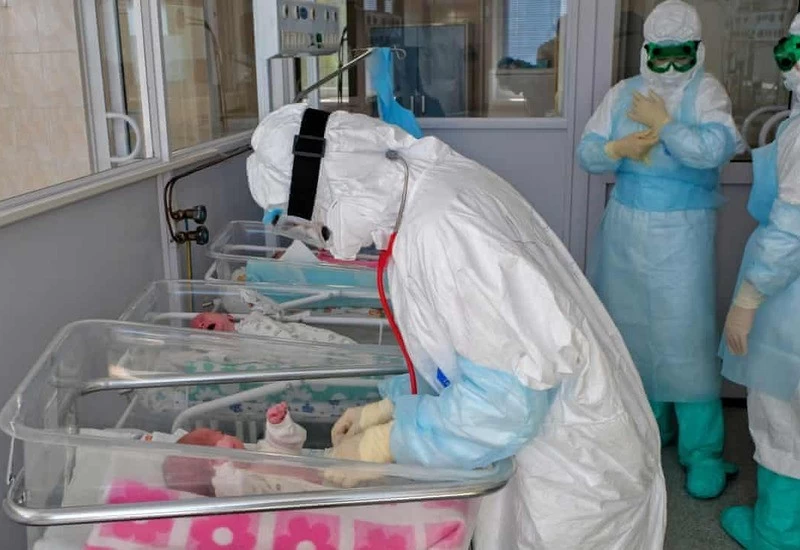
The babies, some born as far back as February, are being cared for mainly by hired caregivers in rented apartments in Moscow, St Petersburg, and other Russian cities.
Border closures have put additional strain on surrogate mothers, who usually give the babies to their biological parents within days of birth. Some surrogates are now being asked to provide additional care in the interim.
Parents are desperate to get to their children and avoid being potentially cut off from them, as a controversial criminal investigation against doctors spreads fear in the surrogacy industry, which is legal in Russia.
“This is an urgent problem,” said Irina Kirkora, the deputy head of the Kremlin’s advisory council on human rights.
Kirkora estimated that as many as 1,000 births to foreign parents may have occurred since February, based on a tallying of clinics in Russia catering to international surrogacy. An employee of a company in St Petersburg that provides surrogacy services estimated that the number was at least 600.
“These are children that are growing up every day. They need their parents,” said Kirkora.
Paid surrogacy is only allowed in a few countries around the world, including Russia, Ukraine, Georgia and some states in the US. The discovery of dozens of stranded babies at a Ukrainian surrogate company in May drew attention to how Covid-19 had disrupted the industry.
James and Ling*, a British-Chinese couple from Shanghai, are expecting a baby girl in the next few days. The surrogate has already been admitted to hospital in Moscow.
For the couple, the bureaucratic struggle to arrive in time for their daughter’s birth caps years of effort to have a child, from unsuccessful attempts to conceive, to infertility treatment, then medical screenings for surrogacy, two trips to Moscow to provide sperm and eggs for in vitro fertilisation, and then several failed implantations in a surrogate mother’s womb before a successful pregnancy was achieved late last year.
Now they are faced with a closed border and often contradictory information about how to get in to Russia.
“We are trying to be adult about it,” said Ling, who along with her husband has approached Russian, Chinese, and UK officials to try to get a Russian entry visa. “But we have been patient for so many months. It is time for us to go full speed.”
Ling said that because she and her husband faced infertility problems after 35, they decided that surrogacy was “a very good solution for us, if we approach it in the right way”.
They’ve collected medical records and news clippings to chart their daughter’s development – and their diplomatic battle to reach her – to show her when she is older. “We want to provide our daughter a history she is proud of. That’s our philosophy,” said Ling.
They are soon to join an estimated 180 families in China who have had children born to surrogates in Russia since February. Other families are in Singapore, France, the Philippines, Argentina and Australia, said Kirkora.
In a Chinese WeChat group with 150 members, other families have expressed pain and shame at missing the first months of their children’s lives.
In video testimonials seen by the Guardian, families wearing masks pleaded for Russian officials to grant them special visas. They described painful histories of infertility and lost pregnancies, and bouts of depression from being unable to reach their children born in recent months.
“Missing our child has been torturing us,” said one. “Because of this epidemic, my child is now born, but I cannot meet my child,” said another.
Russia is not currently issuing visas to Chinese citizens. The Russian foreign ministry has been approached for comment.
Gestational surrogacy, where the birth mother does not share any biological material with the child, is legal in Russia, but the practice is controversial. Its critics say it commercialises the birth process and can lead to the exploitation of surrogate mothers, including in cases where the pregnancy is lost.
