

- India,
- 05-Jan-2026 10:32 AM IST
- (Updated 05-Jan-2026 10:37 AM IST)


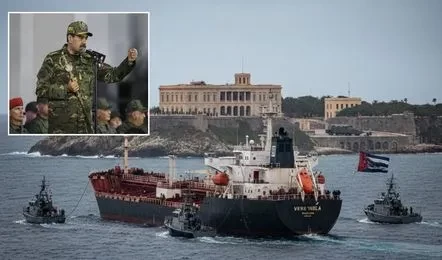
In a significant development on January 3, 2026, the United States launched. An attack on Venezuela, leading to the arrest of its President, Nicolas Maduro. The operation tragically resulted in the deaths of 32 Cuban soldiers who were defending the Venezuelan leader, while following this devastating loss, the Cuban government has declared a period of national mourning, highlighting the deep ties between the two nations and the escalating geopolitical tensions in the region.
The US Military Operation and Maduro's Capture
On Saturday, January 3, 2026, the United States initiated a military assault on Venezuela, culminating in the apprehension of President Nicolas Maduro and his wife. The operation, which took place in Caracas, saw US forces successfully capture the Venezuelan leader. This aggressive move marks a direct intervention in Venezuela's internal affairs and has sparked widespread international concern, while president Maduro has since been transported to New York, where he's slated to appear in a US court on Monday to face drug-related charges. The swiftness and precision of the American operation underscore the strategic intent behind the intervention.
Cuba's Profound Loss and National Mourning
The Cuban government has expressed profound sorrow over the deaths of its 32 soldiers, who perished during the US military operation to abduct Venezuelan President Nicolas Maduro. In an official statement, Cuba declared, "It's with deep sorrow that our people learned that 32 Cubans were killed during the criminal attack carried out by the government of the United States against the sister nation of Venezuela on January 3, 2026. " In response to this grave loss, Cuba has declared two days of national mourning, effective from 6:00 AM on January 5 to 12:00 AM on January 6, 2026. During this period, the national flag will be flown at half-mast on all public buildings and military institutions,. And all public events and celebratory activities have been suspended, reflecting the immense grief felt across the nation. Cuban soldiers were present in Venezuela at the specific request of the Venezuelan government. The state-run Prensa Latina agency confirmed that these Cuban fighters were killed while carrying out. Missions on behalf of the Venezuelan military, responding to the Venezuelan government's plea for assistance. Their primary objective was to resist the American forces and ensure the safety of President Maduro. Their presence underscores the deep military cooperation and mutual commitment between Cuba and Venezuela, with these soldiers making the ultimate sacrifice in defense of their ally. This tragic event highlights the perilous nature of their mission and the unwavering loyalty of the Cuban contingent.
A Deep-Rooted Alliance: Cuba and Venezuela
Cuba and Venezuela have maintained a close and enduring alliance for many years. Cuba has been a steadfast ally of the Venezuelan government, consistently sending military and police personnel to assist in operations within the Latin American nation. This long-standing partnership has been largely underpinned by Cuba's reliance on Venezuelan oil, which has historically provided crucial economic support to the island nation. In return for military aid and security assistance, Cuba has often provided. Venezuela with medical personnel and other specialized expertise, fostering a mutually beneficial relationship. The recent events, however, test the resilience of this alliance and highlight the significant costs involved.
Maduro's Legal Ordeal and Vehement Denial
Following his capture, President Nicolas Maduro was transported to New York to face serious drug-related charges. He's scheduled to appear in a US court on Monday. However, Maduro has vehemently denied all accusations leveled against him, while his strong rejection of the charges suggests a belief that these allegations are politically motivated and part of a broader effort by the US to destabilize his government. This legal battle is expected to draw significant international attention. And could further inflame debates surrounding international law and national sovereignty.
Venezuela's Official Response to the Attack
General Vladimir Padrino, Venezuela's Defense Minister, addressed the nation on state television following the attack. He stated that the US assault resulted in the deaths of soldiers, civilians, and a significant portion of Maduro's security team. General Padrino's statement underscores the brutal nature of the American operation and its widespread impact on Venezuelan lives. His remarks serve as a strong condemnation of the attack and express the Venezuelan government's profound sorrow. Over the loss of its citizens and military personnel, painting a grim picture of the conflict's immediate aftermath.
President Trump's Perspective on the Operation
Speaking to reporters aboard Air Force One on Sunday, US President Donald Trump commented on the operation. He acknowledged that there were "many Cuban deaths" on the other side during the attack, while asserting that there were "no deaths on our side. " Trump also hinted at the unlikelihood of direct US military intervention in Cuba, suggesting that the island nation appears to be on the verge of collapse on its own. Trump stated, "Cuba is ready to fall. I don't know how they're going to handle it, but Cuba has no income now. All of their income came from Venezuela, from Venezuelan oil. Now they're getting none of that, while cuba is really in a state of falling. " He further added that many Cuban-Americans in the US would be very happy with this situation. Trump's remarks provide crucial insight into the US policy in the region and the anticipated future of Cuba, particularly in light of the cessation of Venezuelan oil revenue.
The Future of Cuba: Economic Vulnerability and US Stance
President Trump's assessment of Cuba's economic vulnerability highlights a critical aspect of the geopolitical landscape. Historically, Cuba's economy has been heavily reliant on subsidized oil from Venezuela. With the disruption of this vital income source, as implied by Trump, Cuba faces severe economic challenges that could lead to internal instability. Trump's suggestion that Cuba is "ready to fall" without direct US intervention indicates a strategy of allowing economic pressures to take their course. This approach could have significant ramifications for the Cuban people and the broader Caribbean region, potentially reshaping political dynamics and alliances in the coming years. The loss of its soldiers in Venezuela, coupled with its economic woes, places Cuba in a precarious position.
