

- India,
- 21-Jan-2026 01:51 PM IST


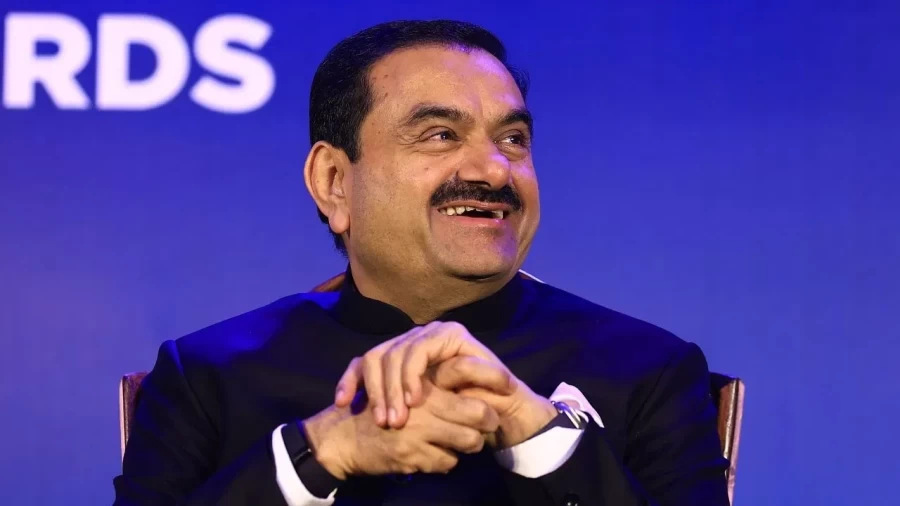
At the 56th Annual Meeting of the World Economic Forum in Davos, Gautam Adani sent shockwaves through the global financial community by announcing a massive investment blueprint worth 6 lakh crore INR. Addressing a gathering of leaders from over 60 countries, the Adani Group chairman detailed a strategic roadmap aimed at transforming India's infrastructure landscape, while this ambitious plan targets critical sectors including aviation, clean energy, urban redevelopment, digital platforms, and advanced manufacturing. The announcement signals a new era of large-scale private capital infusion aligned with India's national growth priorities, positioning the country as a global manufacturing and energy hub.
Maharashtra's Digital and Industrial Revolution
One of the primary focuses of this investment is the development of Northeast India, particularly Assam. The Adani Group plans to turn the Lokpriya Gopinath Bordoloi International Airport in Guwahati into a world-class regional aviation hub. Following the inauguration of its new terminal by Prime Minister Narendra Modi in December 2025, the group is now expanding the ecosystem to include hospitality, retail, and a specialized aviation academy equipped with Level-D full-flight simulators. Also, the establishment of Maintenance, Repair, and Overhaul (MRO) facilities for. Both narrow-body and wide-body aircraft will create high-tech jobs in the region. In the energy sector, the group is launching massive renewable projects in Karbi Anglong and Dima Hasao districts, adding over 2,700 MW of solar capacity to the grid.
In Maharashtra, the Adani Group's investments are set to redefine urban living and digital infrastructure. The highlight of the plan is the Dharavi Redevelopment Project, alongside the operationalization of the Navi Mumbai International Airport and its surrounding logistics and commercial ecosystem. Maharashtra's leadership has welcomed these initiatives, emphasizing that such investments are crucial for generating employment for the youth. The group also plans to build a 3,000 MW Green Data Center Park and 8,700 MW of pumped storage hydroelectric projects, while notably, the blueprint includes forays into semiconductor and display fabrication, as well as potential participation in nuclear power projects under evolving government frameworks.
A Decade of Strategic Growth
Pranav Adani, Director of Adani Enterprises, outlined that the planned capital expenditure will be deployed over the next seven to ten years, while this long-term vision is designed to foster job creation, skill development, and technology-driven inclusion across the country. By focusing on energy transition and self-reliance in manufacturing, the Adani Group aims to support India's goal of becoming a developed economy. The scale of these announcements at the WEF underscores the pivotal role of long-term private capital in shaping the next phase of India's economic expansion, leaving global investors and policymakers in awe of the group's scale and ambition.
Global Impact and Future Outlook
The global reaction to Adani's announcement has been one of intense interest, as the scale of investment rivals the GDP of several small nations. By integrating advanced manufacturing with green energy and digital infrastructure, the group is creating a vertically integrated model that could serve as a template for emerging markets. As these projects move from the planning stage to execution, they're expected to Importantly boost India's GDP and strengthen its position in the global supply chain. The Davos declaration has firmly placed the Adani Group at the center of the global conversation on infrastructure and sustainable development.
