

- India,
- 07-Nov-2025 11:12 PM IST
- (Updated 07-Nov-2025 11:12 PM IST)


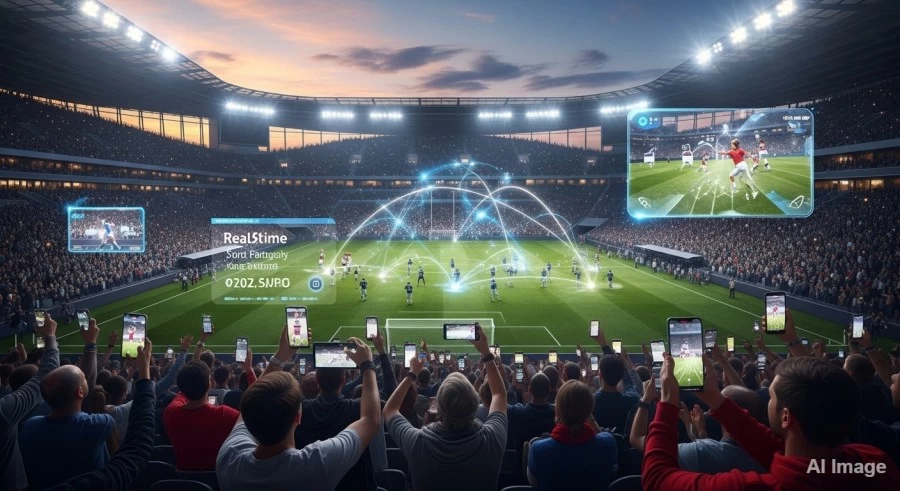
Augmented reality (AR) is a technology that superimposes digital content, such as graphics, statistics, directions, onto the real world through the phone, glasses, or the screens of the venue. Context-aware layers, which you have in your specific seat, the play being shown, and even a queue to order food are seen as in stadiums. Recent activations include invention of film venue occupations to hyper-utility navigation tools to get in. An example provided by Tottenham Hotspur 2024 matchday lens in 2024, which turned the arena into a Colosseum-like arena in Snapchat, demonstrates that AR can be adopted on a mass-market level by the Premier League.
Why fans love AR at live games
Less friction: Wayfinding layers guide you to gates, restrooms, or merch—vital for first-timers and essential for visually impaired fans. Lord’s Cricket Ground piloted a navigation app that maps complex venues for blind and partially sighted supporters, signaling how AR-style guidance boosts inclusion.
More insight: Tap a player to see form, heat maps, or expected metrics without leaving your seat.
Shared moments: Stadium-wide AR reveals, tifo-style effects, and synchronized crowd prompts turn phones into part of the spectacle.
Keepsakes: Post-match AR selfies and “you were here” collectibles extend the experience beyond full-time.
Core use cases teams are rolling out now
Live data overlays: Opt-in cards with on-field speed, possession, expected goals, or ball-by-ball lines in cricket.
Queue intelligence: AR arrows to the shortest concession lines with dynamic wait times.
Seat-level replays: Aim your camera and see multiple angles anchored to the pitch.
Safety & accessibility: Step-by-step indoor navigation, color-safe palettes, and screen-reader-friendly AR labels (see Lord’s example).
Cricket focus: overlays meet second-screen habits
Cricket’s stop-start rhythm and stat-rich culture make it perfect for AR—think instant wagon wheels, predictive win probability, and bowler-vs-batter matchups as you watch. High-quality records and structured data (ODI, T20, Test) already fuel visualizations, which AR can pin to your real-world view of the ground. For deeper data browsing and recaps between innings, official databases like ESPNcricinfo provide the canonical backbone that AR players can pull from.
Example: cricket fans and real-time markets
In Bangladesh, fans often follow live stats while checking odds and markets. During peak fixtures, AR can surface key trends—recent boundaries, bowling changes, or field adjustments—right when you glance at the pitch, complementing a deeper stats view in the app. For readers comparing live data with in-play markets, many explore the soccer, basketball, hockey, or cricket betting bd to review formats, pre-match lines, and evolving odds alongside their matchday dashboards. This synergy works best when AR highlights are timely, verifiable, and paired with official data feeds that match broadcast clocks.
Localized onboarding and language fit
Stadium AR must meet fans where they are—device mix, bandwidth, and language. For Bangladeshi supporters who split time between domestic leagues and global tournaments, localized onboarding, payment options, and familiar UI patterns reduce friction. Many users also compare app experiences and promos across operators. In that context, readers often reference MelBet bd to evaluate registration flows, bonuses, and live features before matchday. The same UX heuristics—clarity, speed, and transparent odds presentation—apply whether you’re exploring AR inside a venue or browsing on the way there.
Practical business wins for venues & rights holders
Revenue: Sponsored filters, collectible AR moments, and seat-mapped offers raise CPMs beyond static signage.
Operations: Heat maps from anonymous AR interactions improve staffing and logistics.
Sustainability: Digital overlays reduce printed maps and paper promos.
Hybrid reach: AR also powers off-site experiences (e.g., Cosm’s immersive venues), extending matchday to fans who can’t attend.
What’s next
Expect tighter blends of broadcast-grade graphics with seat-anchored layers, broader accessibility pilots (tactile + audio AR), and persistent “venue twins” that power off-season tours and sponsor activations. Clubs are already experimenting—from Tottenham’s cinematic matchday lenses to 5G/MEC-ready arenas and inclusive navigation at historic grounds—so the fan experience of the future is arriving section by section.
