

- India,
- 12-Feb-2026 10:34 AM IST


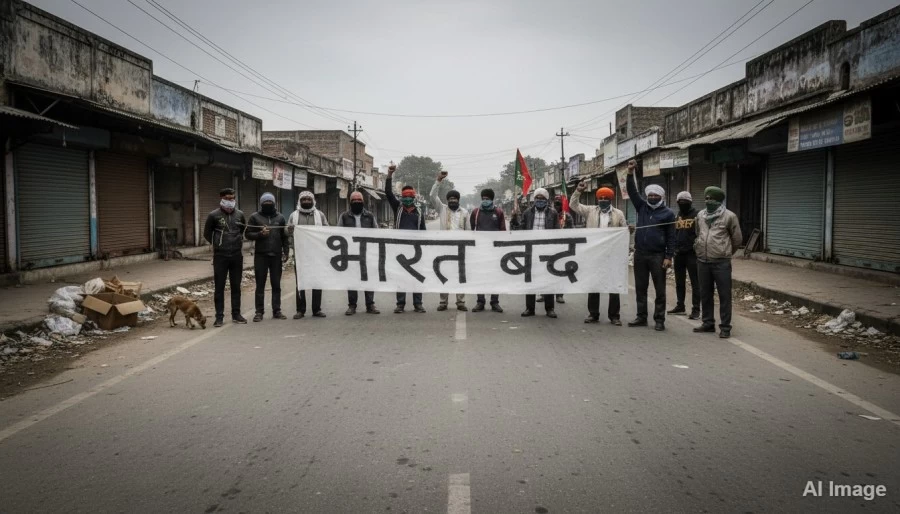
The nationwide 'Bharat Bandh' called by 10 major central trade unions on February 12, 2026, failed to disrupt daily life in Rajasthan. Most parts of the state reported normal activity, with commercial establishments and educational institutions functioning as per their regular schedules, while while the unions claimed a massive participation of nearly 30 crore workers across the country, the ground reality in Rajasthan's urban and rural sectors indicated a negligible impact of the strike.
Status of Markets and Education in Major Cities
In Kota, the prominent coaching hub of India, all institutes and markets remained fully operational. Local trade associations decided not to support the shutdown, ensuring that daily commerce continued without interruption. Similar reports emerged from Ajmer and Anupgarh, where shops opened early in the morning, while in Udaipur, the strike remained largely ineffective, although some employee unions registered symbolic protests at designated locations.
Impact on Board Examinations and Transport
The day holds significant importance for Rajasthan as the Class 10th and 12th board examinations commenced today. Prioritizing the convenience of students, the administration issued strict directives to maintain smooth transport services. Public transport and private buses operated normally in major cities like Jaipur, Jodhpur, and Bikaner. Candidates reached their examination centers without facing significant hurdles, supported by heavy police deployment around sensitive areas to prevent any untoward incidents.
District-wise Protest Observations
30 AM. In Sri Ganganagar, laborers in agricultural mandis decided to suspend work, though schools and other shops functioned normally. In Dungarpur, the Employees' Joint Federation planned a rally from Nehru Park to the Collectorate. Districts like Nagaur, Bharatpur, and Sawai Madhopur reported no impact, with all government and private offices operating regularly.
Core Demands and Reasons for the Strike
According to the trade unions, the strike was organized to protest against the four new Labor Codes, the privatization of Public Sector Undertakings (PSUs), and the 100% FDI allowance in the insurance sector. Also, the Samyukta Kisan Morcha (SKM) supported the call, raising concerns over the India-US Trade Deal and the Electricity Amendment Bill 2025. Workers are also demanding the restoration of the Old Pension Scheme (OPS) and the cessation of outsourcing in favor of regular recruitment.
Analytical Perspective and Administrative Measures
According to analysts, the primary reason for the strike's limited impact in Rajasthan was the ongoing board examinations and the lack of active participation from local trade bodies. The state government deployed additional police forces to maintain law and order. Officials stated that while peaceful protests are permitted, strict action would be taken against anyone attempting to forcibly close shops or damage public property. Currently, all national highways and railway services in the state are functioning without disruption.
