

- India,
- 12-Nov-2025 05:48 PM IST


China is making rapid progress on its highly anticipated human moon mission, with the ambitious goal of landing humans on the lunar surface by 2030. This objective could redefine the landscape of global space exploration and solidify China's position as a leading space power. On October 30, 2025, a spokesperson for China's human space program confirmed that the nation's plan to launch a lunar mission by 2030 is 'on track,' indicating steady progress towards this monumental endeavor.
The New Space Race and US Concerns
Humanity last set foot on the Moon nearly 50 years ago, with the Apollo 17 mission in 1972 marking the last American lunar landing. Now, with China's determined push, a new space race is unfolding. The American space agency's Artemis III mission aims to send the first US astronauts to the lunar surface since 1972, with a scheduled launch in 2027, while however, potential delays in the Artemis III mission could bring its timeline perilously close to Beijing's planned lunar flight in 2030. There is a palpable fear among Americans that if China manages to land on the Moon before NASA's efforts, it could Notably. Damage the United States' standing as a premier spacefaring nation, raising questions of prestige and leadership in both scientific and geopolitical spheres.
China's Methodical Ascent in Space
The upcoming date for China's human lunar mission represents a remarkable trajectory for the country, while beijing first sent its astronaut, Yang Liwei, into space on the Shenzhou 5 mission in 2003, marking its initial foray into human spaceflight. From that point, China has systematically built its capabilities, progressing from sending a single astronaut to two, and then launching a three-member mission that included the first spacewalk by a Chinese astronaut. This methodical and step-by-step approach echoes the characteristics of the 'first' achievements seen in the space race between the US. And the Soviet Union in the 1960s and 70s, but China has pursued its goals with its own pace and strategy.
The Significance of the Tiangong Space Station
Further solidifying its space capabilities, China constructed the Tiangong space station in low Earth orbit. This station is a crucial component of China's long-term space exploration goals. When the International Space Station (ISS) retires in 2030, Tiangong will make China the only country with a permanent human outpost in Earth orbit. This unique position will provide China with a significant strategic advantage in space, allowing for continuous human presence and ongoing scientific research.
Successful Crew Rotations and Inherent Challenges
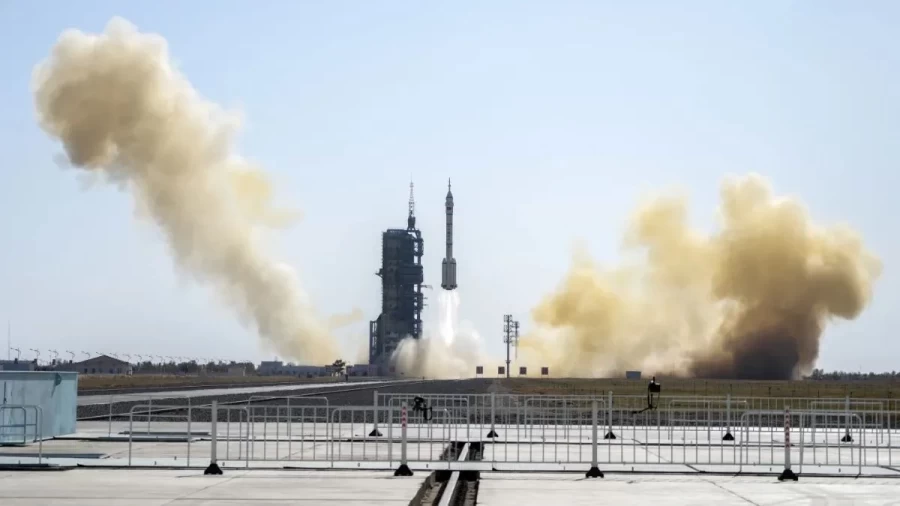
On October 31, China's Shenzhou-21 flight successfully transported three crew members to the Tiangong orbital outpost. These new arrivals took over operations from three other Chinese astronauts who had been residing on the space station since April 2025, demonstrating China's routine and efficient crew rotation capabilities, while such crew swaps have now become commonplace for China, further showcasing the nation's impressive capabilities as it prepares for its lunar mission. However, space remains a hostile environment, and its challenges are ever-present. The return of the Shenzhou-21 crew to Earth was delayed due to a collision with space debris impacting their capsule. This incident serves as a stark reminder that space missions,. No matter how routine they may seem, always carry inherent risks.
China's Technological Prowess and Rocketry
The manner in which China has steadily strengthened its presence in space highlights its formidable technical capabilities. Since the 1970s, China has developed over 20 types of the Long March rocket family, with 16 of them currently active. These rockets boast a success rate of 97%, which is slightly lower than SpaceX's Falcon 9 rocket's 99. 46% success rate, but remains an impressive figure. With its reliable launchers, China has been able to create precise plans and realistic timelines for its space milestones. In August of this year, China conducted a ground test of its latest Long March 10 model. This model is specifically designed to send astronauts to the Moon in 2030 aboard the next-generation Mengzhou crew capsule. This new rocket and capsule system will replace the Shenzhou spacecraft, which has been the primary vehicle for human missions thus far, marking a significant leap in China's lunar exploration capabilities.
