

- India,
- 07-Feb-2026 06:19 PM IST


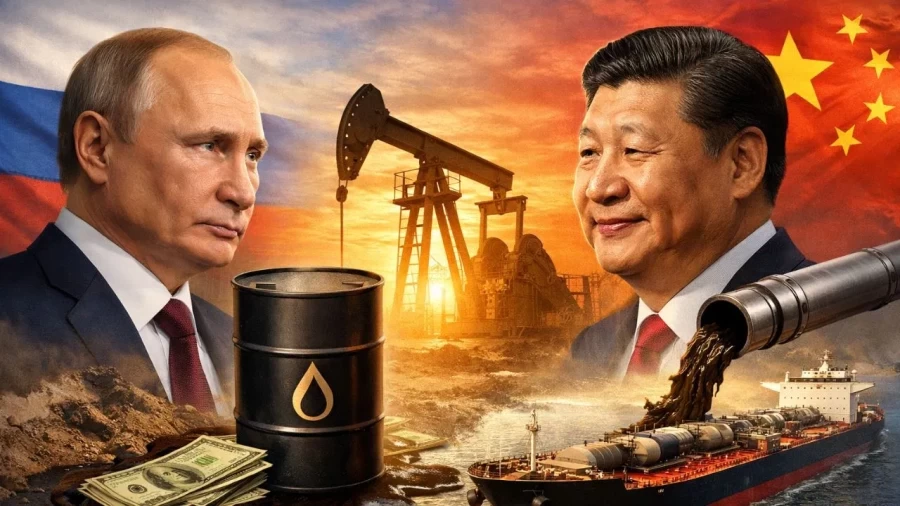
The global energy landscape is witnessing a significant shift as India reduces its reliance on Russian crude oil following a strategic trade pact with the United States, while according to market reports, Russia has responded by offering unprecedented discounts to China to clear its mounting inventories. This tactical move has propelled China’s Russian oil imports to record highs, marking a new phase in the Moscow-Beijing energy alliance as New Delhi recalibrates its procurement strategy.
The US-India Trade Pact and Energy Implications
The primary catalyst for this shift is a recent trade agreement between India and the United States. Under this deal, Washington has reduced tariffs on several Indian exports. However, industry analysts suggest that these concessions were linked to a reduction in India's energy dependency on Russia. As a result, Indian state-run and private refineries have begun diversifying their sources, increasing imports from the United States and Venezuela to fill the gap left by reduced Russian supplies.
Deepening Russian Discounts for Chinese Markets
Faced with a decline in demand from its largest post-war customer, India, Russia has intensified its efforts to secure the Chinese market. According to a report by Reuters, Moscow has Importantly increased the discounts offered to Chinese refiners, while the discount on the ESPO Blend crude, a staple for Chinese independent refineries, has widened to approximately $9 per barrel, up from the previous range of $7 to $8. Plus, the Urals grade, which was previously the mainstay of Indian imports, is now being offered to China at discounts nearing $12 per barrel.
China Records Historic Import Volumes
The availability of discounted Russian crude has led to a surge in Chinese procurement. 7 million barrels per day (bpd). 6 million barrels for the entire month, surpassing all previous historical benchmarks. Chinese independent refiners, often referred to as 'teapots,' are the primary beneficiaries, utilizing the cheap crude to bolster strategic reserves and improve refining margins.
Analyst Perspectives on India's Future Imports
Despite the current downward trend, analysts at JP Morgan suggest that India is unlikely to completely halt Russian oil purchases. They estimate that India will maintain a baseline import level of approximately 800,000 to 1,000,000 bpd. This volume would represent about 17% to 21% of India's total crude requirements. 0 million bpd recorded in June last year. 1 million bpd, the lowest level since November 2022.
Conclusion
The realignment of oil trade routes between Russia, India, and China reflects the complex interplay of geopolitics and energy security. While India prioritizes its trade relationship with the US, Russia has successfully pivoted its export strategy toward China, while this shift underscores the volatility of the global energy market and the continuous search for equilibrium among the world's largest producers and consumers.
