

- India,
- 08-Jan-2026 10:59 PM IST


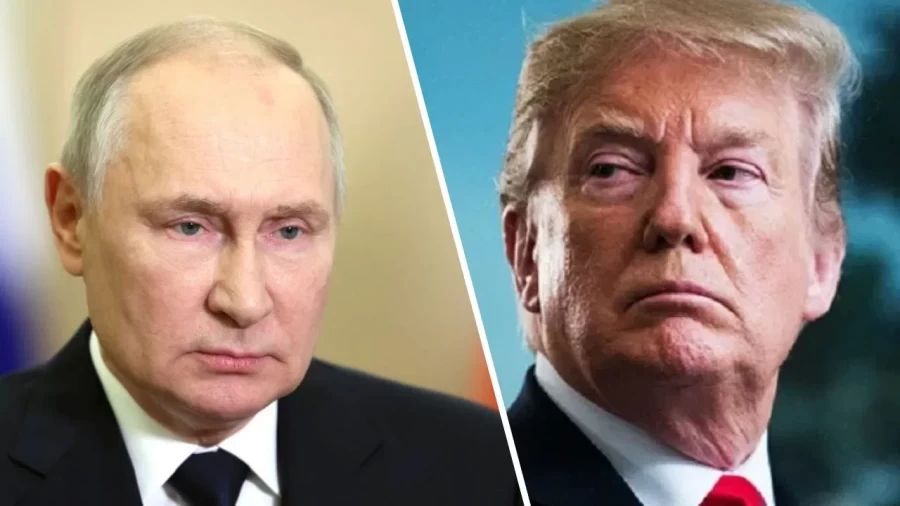
The escalating tensions between Russia and the United States have once again brought the world to the brink of potential nuclear conflict, while the crisis surrounding Venezuela has become a critical flashpoint, pushing the confrontation between these two superpowers to an unprecedented level, raising fears of a global catastrophe. While a direct nuclear confrontation between these two nations is projected for 2026, the current aggressive rhetoric and military deployments have already created an extremely volatile environment.
Venezuela: The Epicenter of Conflict
At the heart of this intensifying dispute lies Venezuela, a nation that has long been a subject of geopolitical maneuvering. This is the same Venezuela where, in a past incident, the country's president was reportedly taken from his home in the middle of the night through what was termed 'kidnap diplomacy' by the US. Venezuela has historically been a significant supplier of crude oil to countries like China and Russia, which elevates its strategic importance. Despite American sanctions, China had been covertly purchasing cheap Russian oil via this maritime route, a trade that the US is now determined to halt, while it's against this backdrop that the US military seized Russian oil tankers in the Atlantic Ocean, an action that profoundly angered Russian President Vladimir Putin.
Seizure of Russian Oil Tankers and Putin's Fury
The American action directly challenged Russia's maritime interests and sovereignty. The US seized the Russian oil tanker 'Bella-1' in the North Atlantic after a two-week pursuit, accusing it of violating sanctions, while in addition to 'Bella-1', the US also gained control of the 'M/T Sofia' tanker in international waters. Both tankers are now being escorted to Britain by the US Coast Guard,. With Britain claiming to have provided intelligence and logistical support for the operation. This marked the first instance of a direct US seizure of Russian maritime assets, an act widely perceived as a grave insult to Putin and the Kremlin. Both seized tankers were en route from Venezuela to China with crude oil, indicating a significant blow to the Russia-China oil trade, while the profound indignation within the Kremlin over these seizures is the primary driver behind Russia's subsequent military actions.
Russia Unleashes the 'Yamraj' Submarine
In response to the American aggression and to safeguard its oil tankers from further US interference, Putin has deployed a nuclear submarine and warships near Venezuela in the Atlantic Ocean, while while these vessels are part of Russia's Northern Fleet, the most significant attention is focused on the submarine dubbed the 'Yamraj' (Lord of Death) of the seas. This is the Russian nuclear submarine BS-329 Belgorod, renowned as the world's longest and most mysterious submarine. It's equipped with a 100-megaton nuclear payload and is uniquely capable. Of carrying the Poseidon, the world's only super torpedo and underwater drone. Launched from this submarine, the Poseidon could generate a 500-meter-high radioactive tsunami beneath the ocean, capable of turning US coastal cities into instant graveyards. The resulting radiation could render these areas uninhabitable for many years, while it's widely believed that no country in the world, including the United States, possesses a countermeasure against this formidable nuclear submarine, contributing to a palpable sense of fear in America.
US Activates the 'Doomsday Plane'
The presence and movements of the Russian nuclear submarine near Venezuela have caused significant alarm in the United States. In response, the US has activated its 'Doomsday plane'. This colossal aircraft, a Boeing E-4B Nightwatch, has been deployed to Camp Springs Airfield outside Washington D. C, while its last known activation was during the September 11, 2001, terrorist attacks, and since then, it has only been brought into service during extremely sensitive situations.
Capabilities of the Doomsday Plane
This aircraft serves as an airborne command center during a nuclear war. It's equipped with very low-frequency and high-frequency antennas, ensuring global communication even amidst a nuclear conflict. Designed to withstand threats like nuclear explosions and electromagnetic pulses, the aircraft can directly contact nuclear submarines, bombers, and Intercontinental Ballistic Missile (ICBM) silos. This means that from this plane, the US President can issue orders to launch nuclear missiles against an enemy nation, while the aircraft ensures that the US military, the President, the Secretary of Defense, and top military commanders can maintain command and control over US forces even if ground-based facilities are destroyed. The Boeing E-4B Nightwatch is an airborne fortress, capable of remaining airborne for several days due to its in-flight refueling technology and can carry over 110 people at a time, while however, a common misconception is that it can launch nuclear weapons; it's strictly a command center, not a weapon-launching platform.
Nuclear Threats and Verbal Exchanges
The verbal sparring between Russia and the US has also reached a fever pitch, while alexei Zhuravlev, the first Deputy Head of the Russian State Duma's defense committee and a close associate of Putin, issued a stern warning to the US. He suggested attacking America with torpedoes, dropping nuclear bombs, or sinking some American vessels in the Atlantic, while the US responded sharply, with Secretary of State Marco Rubio stating that the entire Western Hemisphere is US territory and that Venezuela wouldn't be allowed to become an operating hub for adversarial nations. He further emphasized that enemies wouldn't be allowed to control Venezuela's oil. This combination of verbal threats, military deployments, and oil tanker seizures has brought the. World to a critical juncture where the 'oil game' could potentially trigger a nuclear war. The tension between these two global powers is extremely high, posing a severe threat to international peace and stability.
