

- India,
- 12-Jan-2026 05:49 PM IST


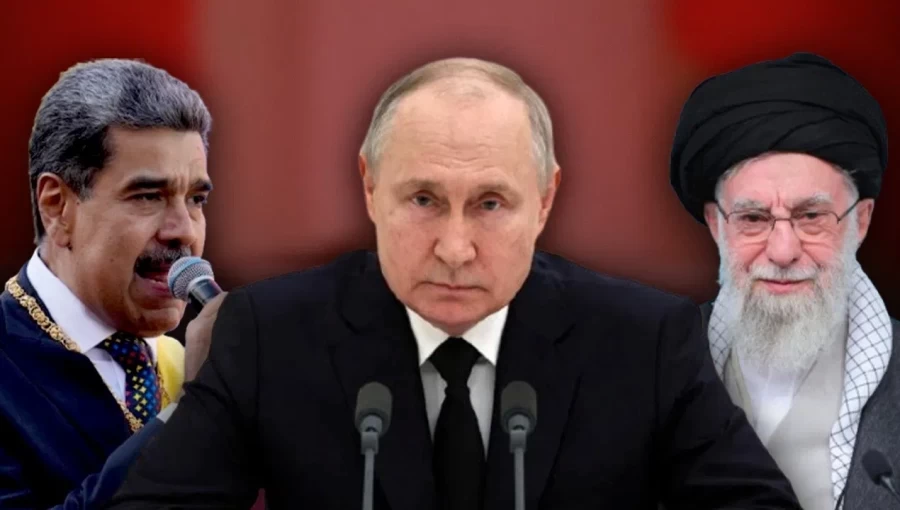
Over the past two decades, a remarkable and often unsettling pattern has unfolded across the global political landscape. This pattern involves leaders of nations closely aligned with Russia, whose tenures. In power have come to an abrupt end, often under controversial circumstances. Between 2003 and 2026, a total of seven such leaders or governments were either overthrown or saw their authority dismantled, while in each instance, the role of the United States, whether through direct intervention or subtle, behind-the-scenes influence, has been a recurring theme. This series of events, spanning from Iraq and Georgia to Ukraine, Armenia, Syria, and Venezuela, highlights a consistent geopolitical strategy that has Notably altered regional and global power dynamics. The implications of this pattern are profound, suggesting a concerted effort to diminish Russian influence by targeting its key allies, with Iran and North Korea now being identified as potential future targets.
Saddam Hussein (Iraq, 2003)
Saddam Hussein, the long-standing president of Iraq, was among the first prominent leaders whose rule ended dramatically, largely attributed to his perceived alignment with Russia and direct US intervention. On March 20, 2003, the United States and the United Kingdom launched 'Operation Iraqi Freedom,' a military campaign predicated on allegations that Iraq possessed Weapons of Mass Destruction (WMD), claims that were later found to be unsubstantiated. This military offensive swiftly led to the overthrow of Saddam's regime on April 9, 2003. He was subsequently captured on December 13, 2003, and after a trial by an Iraqi court, was sentenced to death in November 2006 for the 1982 killing of 148 Shi'ites in Dujail, while saddam Hussein was executed on December 30, 2006, marking the end of his more than two-decade rule. This event was a significant step in expanding US influence in the Middle East and removing a key, albeit complex, ally of Russia in the region.
Eduard Shevardnadze (Georgia, 2003)
Eduard Shevardnadze, a former Soviet Foreign Minister from 1985 to 1991 and a close associate of Mikhail Gorbachev, became the President of Georgia in 1995. While not entirely pro-Russian, Georgia traditionally fell within Russia's sphere of influence, while in November 2003, widespread protests erupted in Georgia following allegations of fraud in parliamentary elections. These demonstrations, known as the 'Rose Revolution,' were led by opposition figure Mikheil Saakashvili. On November 23, 2003, protesters stormed the parliament building, forcing Shevardnadze to flee and resign from his position. Shortly thereafter, on January 4, 2004, Saakashvili was elected president with an overwhelming 96% of the vote. The transition was Notably influenced by US non-governmental organizations (NGOs) and George Soros's Open Society Foundation, which invested millions of dollars in promoting democracy in Georgia, while upon assuming power, Saakashvili immediately sought to join NATO, demanded the closure of Russian military bases, and strengthened Georgia's alliance with the West, thereby diminishing Russia's regional footprint.
Viktor Yanukovych (Ukraine, 2014)
Serzh Sargsyan (Armenia, 2018)
Viktor Yanukovych, the President of Ukraine, was widely regarded as one of Russia's closest allies. In November 2013, he controversially refused to sign an Association Agreement with the European Union, opting instead for a $15 billion aid package from Russia. This decision sparked massive protests on Kyiv's Maidan Square on November 21, 2013, which became known as the 'Maidan Revolution. ' By February 2014, the protests had turned violent, resulting in over 130 deaths. On February 22, 2014, Yanukovych fled to Russia, and a pro-Western interim government took power. The extent of US involvement became evident when a phone call between US Deputy Assistant Secretary of State Victoria Nuland and the US Ambassador was leaked in February 2014. In the call, they were heard discussing who should be appointed to Ukraine's new government, with Nuland stating that 'Yats' (Arseniy Yatsenyuk) would be the best choice; Yatsenyuk subsequently became Prime Minister. The US government also provided millions of dollars in aid to the Ukrainian opposition, playing a crucial role in the downfall of Yanukovych's government. Armenia has historically been a staunch ally of Russia, hosting a Russian military base in Gyumri with over 3,000 troops. Serzh Sargsyan, who had been in power since 2008, was considered close to Russia. In April 2018, Sargsyan attempted to transition from president to prime minister, a move widely perceived by the public as an attempt to cling to power. This triggered widespread protests on April 23, 2018, led by opposition leader Nikol Pashinyan, while on the same day, Sargsyan resigned, and Pashinyan became prime minister on May 8, 2018. While Pashinyan isn't explicitly pro-Western, he has sought to reduce Armenia's dependence on Russia and foster closer ties with the European Union, while a conflict erupted between Armenia and Azerbaijan over Nagorno-Karabakh in September, leading Pashinyan to cede Nagorno-Karabakh to Azerbaijan, further straining Russia-Armenia relations. The US played a role in de-escalating this conflict; in September 2023, the US National Security Advisor called Azerbaijani President Ilham Aliyev to urge against further attacks on Armenia. Both Azerbaijan and Armenia have since moved closer to the US, Importantly diminishing Russia's influence in the Caucasus region.
Bashar al-Assad (Syria, 2024)
Syria has been Russia's oldest and closest ally, hosting Russia's only Mediterranean. Naval base in Tartus since 1971 and an airbase in Khmeimim since 2015. In 2020, when ISIS and rebel forces nearly toppled Assad's government, Russian airstrikes, cruise missiles, and thousands of troops intervened, turning the tide of the war and preserving Assad's rule. However, on November 27, 2024, rebels launched a sudden offensive on Aleppo, capturing Damascus in just 11 days. This unexpected turn of events forced Assad to flee Syria for Russia, while ahmed al-Shara emerged as the new president of Syria and promptly initiated talks with the United States. The US maintained over 900 troops in Syria and provided weapons and training to Kurdish forces (SDF). In January 2025, the Trump administration signaled its willingness to work with the new Syrian government, marking the collapse of a critical Russian stronghold in the Middle East and an expansion of US influence.
Nicolás Maduro (Venezuela, 2026)
Venezuela has been Russia's closest ally in Latin America, purchasing $17 billion worth of weapons from Russia between 2005 and 2019 and accumulating approximately $4 billion in Russian loans. The Russian oil company Rosneft invested heavily in Venezuelan oil. Projects, and in 2019, Russia supplied Venezuela with S-300 missile systems. Venezuela also openly supported Russia's invasion of Ukraine, underscoring the deep ties between the two nations, while nicolás Maduro held power in Venezuela from 2013 to 2026. On January 3, 2026, a US special unit raided Maduro's home in Caracas, while maduro and his wife were arrested and taken to Florida, signifying the end of another key Russian ally's rule in Latin America. This event reinforces US 'backyard' policy and diminishes Russian influence in the region.
Next Potential Targets: Iran and North Korea
Given this consistent pattern, the next potential targets for similar geopolitical maneuvers are widely considered to be Iran and North Korea, both critical allies of Russia, while iran has supplied Russia with Shahed drones for the war in Ukraine, while North Korea stands as Russia's last Asian ally, with over 10,000 North Korean soldiers reportedly fighting alongside Russian forces in Ukraine. The United States has already signaled potential actions against Iran, indicating that this geopolitical strategy of targeting Russia's allies may continue. This ongoing dynamic is continually reshaping the global balance of power and sets the stage for potential future regime changes in nations that maintain strong ties with Russia.
