

- India,
- 16-Jan-2026 09:23 PM IST


The Congress party on Friday leveled a serious accusation, claiming that Prime Minister Narendra Modi's government. Relinquished India's control over Iran's strategically vital Chabahar Port under pressure from former US President Donald Trump. The party stated on its social media platform 'X' that the Modi government had invested 120 million dollars (approximately ₹1100 crore) of public money into the Chabahar project, and this investment has now been wasted. This allegation raises significant questions about India's foreign policy and economic interests, especially at a time when the Chabahar Port's role in regional geopolitics is becoming increasingly crucial. The opposition's claims suggest a potential misstep in India's diplomatic strategy, particularly concerning its engagement with Iran amidst complex international sanctions regimes.
Ministry of External Affairs Rejects Allegations
In a swift response, the Ministry of External Affairs (MEA) spokesperson, Randhir Jaiswal, categorically rejected the Congress's allegations, while he clarified that the plans related to Iran's Chabahar Port are still ongoing, and India is actively engaged in discussions with the United States to further advance these initiatives. Jaiswal emphasized that the Chabahar Port remains a critical project for India, and the government is fully committed to its development and operation. His statement directly challenges the Congress's claims and presents the government's official stance on the project's current status. This clarification underscores India's diplomatic engagement and its steadfast resolve towards the project, highlighting the continuous efforts to navigate the geopolitical complexities surrounding it.
Extension of US Sanctions Waiver for Chabahar
The United States has granted India a special sanctions waiver, allowing it to continue work related to the Chabahar Port despite the comprehensive sanctions imposed on Iran, while this waiver is of paramount importance to India as it permits engagement in trade and development projects with Iran, unlike other nations that face stringent restrictions. The duration of this waiver, which was previously set to expire on October 27, 2025, has been extended by the US for another six months. Consequently, this exemption will now remain in effect until April 26, 2026. This extension provides significant relief to India and ensures the uninterrupted operation of the Chabahar project, while mEA spokesperson Randhir Jaiswal stated that on October 28, 2025, the US Treasury Department sent a letter to India outlining the guidelines related to this waiver. He added that India is currently negotiating with the US under this established framework to ensure that work on the Chabahar Port continues without hindrance, while this indicates a functional understanding between India and the US on this sensitive issue, allowing for continued strategic cooperation.
US Policy to Exert Economic Pressure on Iran
The United States has imposed sanctions on Iran's Chabahar Port as part of its broader strategy to exert economic and political pressure on the Islamic Republic, while the US believes that Iran utilizes funds obtained from its ports, oil trade, and other international projects to finance its nuclear program, missile development, and to expand its influence in West Asia. Consequently, the US aims to limit all major sources of income for Iran, thereby compelling it to alter its policies. Plus, since its withdrawal from the Iran nuclear deal (JCPOA) in 2018, the US has adopted a 'Maximum Pressure' policy, while this policy is designed to weaken Iran's economy and isolate it within the international community, ultimately forcing it to retreat from its regional and nuclear ambitions. The sanctions are a key tool in this strategy, aiming to disrupt Iran's financial flows and restrict its ability to fund activities deemed destabilizing by the US.
Strategic and Economic Advantages of Chabahar Port for India
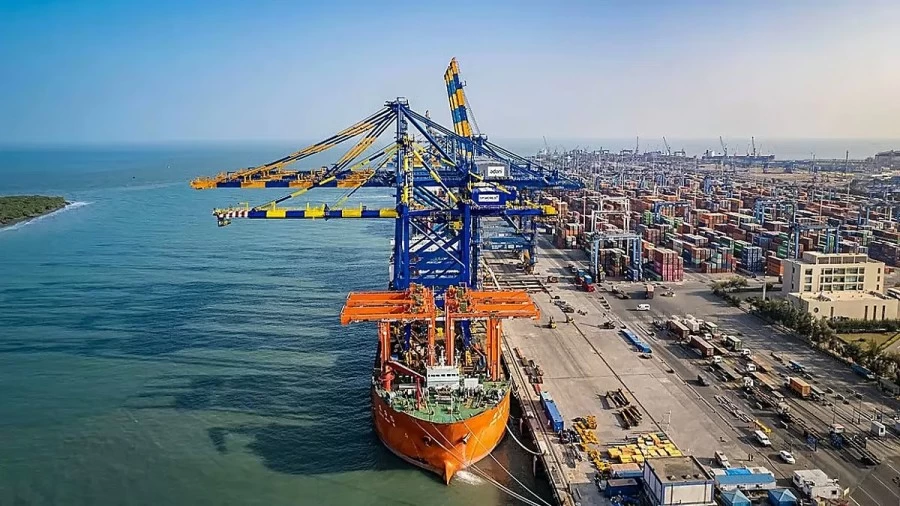
Chabahar Port offers numerous strategic and economic advantages for India, making it an exceptionally crucial project. Its primary benefit is providing India with direct access to Central Asia, bypassing Pakistan. Previously, India had to transport goods to Afghanistan or other Central Asian countries via Pakistan, which was often complicated by border disputes and political tensions, while through Chabahar Port, India can directly send its goods to Afghanistan and Central Asia, saving both time and money. This port is a cornerstone of India's 'Connect Central Asia' policy, facilitating trade and strengthening regional ties. The port's strategic location also enhances India's geopolitical footprint, allowing it to project influence and secure its economic interests in a vital region.
Boost in Trade and Reduction in Logistics Costs
Through Chabahar Port, India can easily send its goods, such as medicines, food products, and industrial items, to other countries. This will boost India's exports and reduce logistics costs, thereby enhancing the competitiveness of Indian products in international markets. The port also facilitates India's ability to purchase oil from Iran, strengthening its energy security. Both countries can collaborate to develop Chabahar into a significant trade hub, promoting regional commerce and fostering economic integration. This port will serve as an economic corridor for India, providing access to new markets and diversifying its trade routes. The reduced transit times and costs will make Indian goods more attractive, potentially leading to increased trade volumes and economic growth for the region.
Safeguarding India's Investment and Geopolitical Counterbalance
India has invested substantial funds and resources in the development of Chabahar Port, giving it a significant economic stake in the project. Ensuring the security of this investment is a top priority for India, while Plus, the Chabahar Port is located near Pakistan's Gwadar Port, where China is making considerable investments. So, this port strategically strengthens India and helps effectively counter the China-Pakistan nexus in the region. It also provides India with an opportunity to enhance its presence and influence in the Indian Ocean region, contributing to the maintenance of regional power balance, while the port serves as a critical asset in India's broader strategy to secure its maritime interests and maintain a solid presence in a geopolitically sensitive area.
Humanitarian Aid and Trade Route to Afghanistan
Chabahar Port also serves as a crucial route for India to send essential goods to Afghanistan. Previously, India had to rely on transit through Pakistan to deliver goods to Afghanistan, which was often difficult due to border disputes and political instability. Chabahar has simplified this route, allowing India to send essential commodities like wheat to Afghanistan and import vital resources such as gas and oil from Central Asia. This port acts as a lifeline for Afghanistan's economic stability and humanitarian aid, simultaneously enhancing India's soft power in the region, while the direct access ensures that aid can reach those in need more efficiently, bypassing traditional bottlenecks and fostering goodwill.
Historical Perspective of the Chabahar Project
India's interest in the Chabahar Port project began in 2003 during the Atal Bihari Vajpayee government, when discussions with Iran were initiated, while however, the project was temporarily halted due to US-Iran tensions. In 2013, the then Prime Minister Manmohan Singh's government proposed an investment of ₹800 crore in the project, demonstrating India's long-term commitment, while in 2016, Prime Minister Narendra Modi signed a significant agreement with the leaders of Iran and Afghanistan, under which India pledged ₹700 crore for a terminal and a loan of ₹1250 crore for the port's development. This agreement was intended to provide new momentum to the project. More recently, in 2024, then Foreign Secretary Vinay Kwatra discussed connectivity with the Iranian Foreign Minister, indicating continuous diplomatic efforts to advance the project. According to the Indian company IPGL, upon completion, the port will have a capacity of 82 million tons, making it a major regional trade hub.
US Tariffs on Iran Trade and India's Stance
The United States announced on January 12 its intention to impose a 25% tariff on trade with Iran. When questioned about this, MEA spokesperson Jaiswal stated that India is closely monitoring these developments, while he also informed that the total trade between India and Iran in the last financial year was approximately 1. 6 billion dollars (about ₹145. 1 billion). Of this, India's exports to Iran accounted for roughly 1. 2 billion dollars (about ₹108, while 8 billion), while imports from Iran were approximately 0. 4 billion dollars (₹36, while 3 billion). Jaiswal further clarified that Iran's share in India's total global trade is very small, approximately 0. 15%. This figure suggests that the direct impact of US tariffs on India-Iran trade might be limited, but. India is nonetheless keeping a watchful eye on the situation, assessing any potential ramifications for its economic interests.
Detained Indian Citizens in Iran and Diplomatic Efforts
MEA spokesperson Jaiswal also confirmed that India has sought consular access for 10 Indian citizens detained in Iran. These 10 individuals were taken into custody because Iran alleges that the vessel they were working on was involved in fuel smuggling. India is taking all necessary diplomatic steps to ensure the safety and well-being of its citizens abroad. On top of that, he informed that External Affairs Minister S. Jaishankar has spoken with Iranian Foreign Minister Abbas Agharachi regarding the ongoing violence in Iran. This conversation underscores India's commitment to maintaining peace and stability in the region,. As well as its active diplomacy in protecting the interests of its citizens. The government continues to engage with Iranian authorities to resolve the situation concerning the detained individuals and to address broader regional concerns.
