

- India,
- 24-Oct-2025 02:17 PM IST


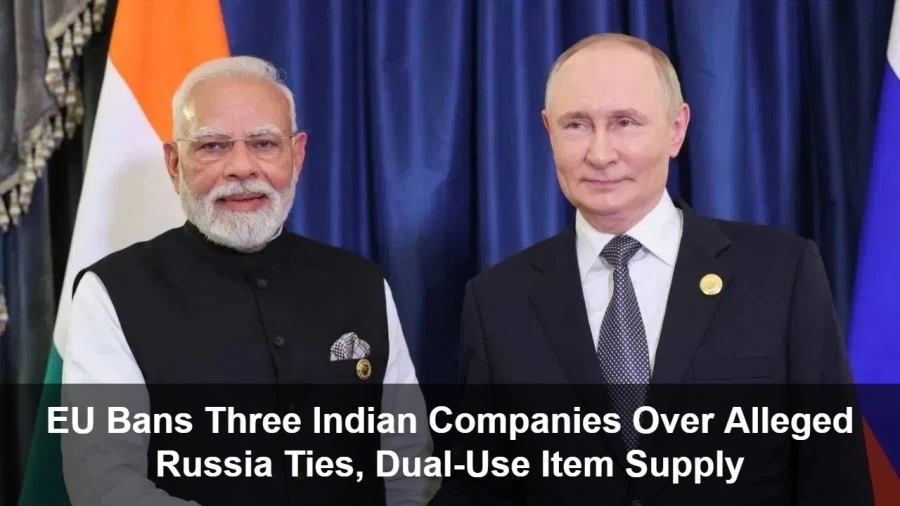
The European Union (EU) has imposed sanctions on three Indian companies as part of its latest package of restrictions against entities allegedly linked to Russia's war machine. This move, part of the EU's 19th sanctions package, targets 45 new entities globally, stressing that any technical or economic ties aiding Russia's military activities won't be tolerated.
Indian Companies Under Scrutiny
The three Indian companies named in the sanctions list are Aerotrust Aviation Private Limited, Ascend Aviation India Private Limited, and Shri Enterprises. According to the EU, these companies are either based in Russia or are involved in the supply of items such as CNC machine tools, microelectronics, and unmanned aerial vehicle (UAV) components, which could be used to enhance Russia's advanced military capabilities.
India's Reaction Awaited
The EU statement clarified that these entities are engaged in the supply of "advanced dual-use items. " These are goods that have legitimate civilian applications but can also be adapted for military purposes. For instance, CNC machine tools and microelectronics can provide significant technological support to Russia's defense and industrial sectors. The 19th package includes 17 entities located outside Russia, with 12 from China and Hong Kong, three from India, and two from Thailand. As of now, there has been no immediate formal response from Indian authorities regarding the imposition of these sanctions, while it's important to note that EU sanctions don't imply a conviction by the Indian judicial system but represent a political-economic measure aimed at exerting pressure on Russia. This decision could potentially impact trade relations between India and the EU, and serves as a signal for other Indian companies to exercise caution in international technological collaborations, particularly concerning dual-use technologies.
