

- India,
- 16-Dec-2025 06:00 PM IST


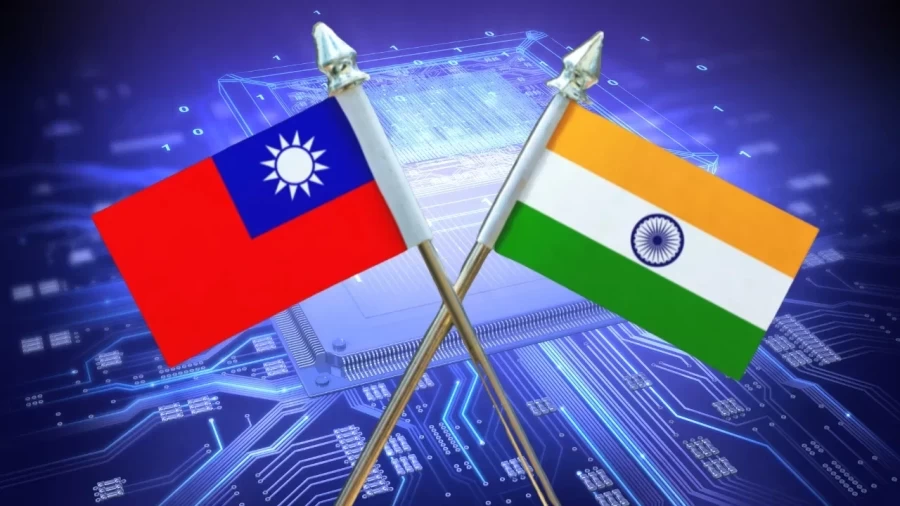
The relationship between India and Taiwan is poised for a significant transformation, particularly in the critical domain of semiconductor technology. A recent report highlights the immense potential for enhanced collaboration between the two nations, emphasizing the need for deeper engagement across educational, industrial, and policy levels. This burgeoning partnership isn't merely an economic endeavor but also carries profound. Strategic implications, especially in the context of China's increasingly assertive posture in the region. India views Taiwan as an indispensable technological partner, particularly in the intricate and high-stakes field of semiconductor and chip manufacturing. This collaboration is envisioned as a strong pathway for India to achieve substantial economic growth, accelerate its technological progress, and bolster its strategic self-reliance in a rapidly evolving global landscape.
Taiwan's Pivotal Role in Global Chip Manufacturing
Taiwan stands as a global powerhouse in chip manufacturing, home to some of the world's leading semiconductor producers, while this preeminence makes Taiwan an exceptionally critical partner for India, which is actively seeking to establish and expand its own semiconductor ecosystem. The report underscores that for India, leveraging Taiwan's advanced capabilities and extensive experience in this sector could prove to be a truly decisive factor in its journey towards technological sovereignty. The expertise that Taiwan brings to the table, from design and fabrication to packaging and testing, is unparalleled, offering India a unique opportunity to leapfrog in its technological development.
Strengthening Engagement Across Multiple Levels
According to an article published in the Taipei Times, the Indian government has been actively working for several years to attract major Taiwanese companies to invest and collaborate within India. However, the report also points out that there is a discernible need. To further enhance awareness and participation at the institutional, industrial, and policymaker levels. This implies that while governmental intent is clear, the practical mechanisms for deeper collaboration require more strong frameworks and proactive initiatives, while bridging this gap will involve fostering greater understanding of mutual benefits and streamlining processes to facilitate easier cross-border partnerships.
A significant and positive step in fostering this technological alliance is the ongoing joint Master's degree program in semiconductor technology. This innovative program is a collaborative effort between four Taiwanese universities and the prestigious Indian Institute of Science, while the report highly commends this initiative, recognizing its potential to cultivate a highly skilled workforce essential for the semiconductor industry.
The article strongly advocates for encouraging more Indian engineers and tech professionals to participate in such programs. By doing so, India can effectively acquire the necessary technical expertise and practical experience, which are vital for building a strong domestic semiconductor industry. These educational exchanges aren't just about academic learning; they're about transferring. Critical know-how and building a talent pipeline that can sustain long-term technological growth.
Proposal for a Taiwan Science Park in India
Moving beyond academic collaboration, the report puts forth an ambitious suggestion: the establishment of a dedicated Taiwan Science Park in India. Such a specialized center would serve as a powerful magnet for Taiwanese companies, encouraging them to set up operations and invest Notably in India. More importantly, it would foster long-term, structured cooperation between the two nations. A Taiwan Science Park would symbolize India's unwavering commitment to advancing its technological and industrial capabilities in partnership with Taiwan. It would provide a conducive environment for research, development, and manufacturing, creating a hub where Taiwanese expertise and Indian talent can converge to innovate and produce cutting-edge semiconductor solutions. This park could become a cornerstone of India's 'Make in India' initiative in high-tech manufacturing.
Navigating Geopolitical Realities: India's Proactive Stance
The strategic context of this partnership can't be overstated, especially given the rising assertiveness of China in the Indo-Pacific region. An IANS report, referencing the Taipei Times article, criticizes China's aggressive posture, specifically citing the incident involving the detention of an Indian woman from Arunachal Pradesh at Shanghai Airport. The report emphatically states that India can't afford to remain passive in its dealings with China. This isn't about seeking confrontation but rather about the imperative need for India to strengthen its sovereignty, protect its strategic interests, and maintain regional balance. The article warns that if India remains overly cautious in its engagement with Taiwan, it risks missing crucial opportunities to influence and balance the shifting power dynamics in Asia. A proactive and strategic partnership with Taiwan, Because of this, becomes a key component of India's broader foreign. Policy and national security objectives, ensuring its role as a significant player in the evolving regional order.
