

- India,
- 25-Jan-2026 09:08 AM IST


India and the European Union are on the verge of scripting history in global trade. European Commission President Ursula von der Leyen arrived in New Delhi on Saturday, marking the beginning of a high-stakes state visit, while her presence as the Chief Guest for India's 77th Republic Day celebrations isn't just a symbolic gesture but a strategic move to finalize what many are calling the 'Mother of All Deals'—the India-EU Free Trade Agreement (FTA).
A Historic Welcome for EU Leadership
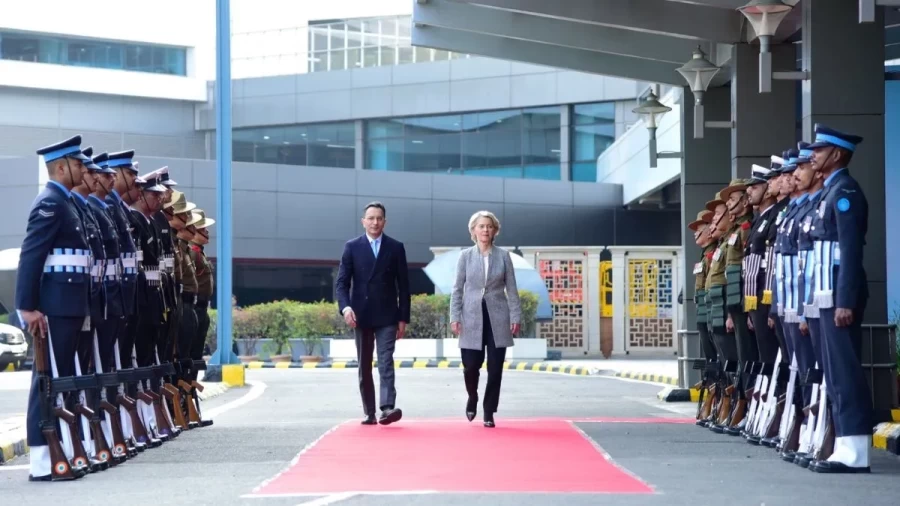
Minister of State Jitin Prasada received President von der Leyen at the airport, highlighting the significance India attaches to this visit, while in an unprecedented move, she's joined by Antonio Costa, President of the European Council, as a co-Chief Guest for the Republic Day parade. This marks the first time both top leaders of the European Union are attending India's national day celebrations together, signaling a deep-rooted commitment to strengthening bilateral ties between the world's largest democracy and the world's largest trading bloc.
Countering the Trump Tariff Era
The timing of this visit is crucial. As US President Donald Trump continues to signal a protectionist stance with. Threats of heavy tariffs on international trade, India is diversifying its economic alliances. A successful FTA with the EU would provide India with a massive alternative market, reducing its dependency on US trade policies. For the EU, India represents a stable, democratic, and rapidly growing economy that offers a counterweight to other volatile global markets.
The Economic Impact of the FTA
The 16th India-EU Summit, co-chaired by von der Leyen, will focus on breaking the deadlock in FTA negotiations. The agreement aims to eliminate trade barriers, reduce tariffs, and streamline regulations, while for India, this means better access for its textile, leather, and pharmaceutical industries. For the EU, it opens doors to India's burgeoning middle class and digital economy, while experts believe this deal could boost bilateral trade by billions of dollars, creating millions of jobs in both regions.
Beyond Trade: Tech and Defense Cooperation
While the FTA is the centerpiece, the discussions will also cover climate change, digital transformation, and defense technology. India is looking for European expertise in green energy and semiconductor manufacturing. On the other hand, the EU views India as a vital. Partner in maintaining a rules-based international order in the Indo-Pacific region. The strategic partnership is expected to evolve into a strong security alliance, focusing on maritime safety and cybersecurity.
Conclusion: A New Global Order
The presence of EU leaders at Rajpath is a testament to India's rising global stature. By aligning closely with Europe, India is positioning itself as a key pillar of a multipolar world, while the next few days in Delhi will likely determine the trajectory of Euro-Indian relations for the next decade, potentially creating a trade corridor that rivals any other in the world.
Charting the next phase of the India–EU Strategic partnership.
— Randhir Jaiswal (@MEAIndia) January 24, 2026
A warm welcome to the President of the European Commission Ursula von der Leyen @vonderleyen, on her State Visit to India. Received by Minister of State for Commerce and Industry; and Electronics and Information… pic.twitter.com/HR9d7XLdYE
