

- India,
- 20-Aug-2025 08:40 PM IST


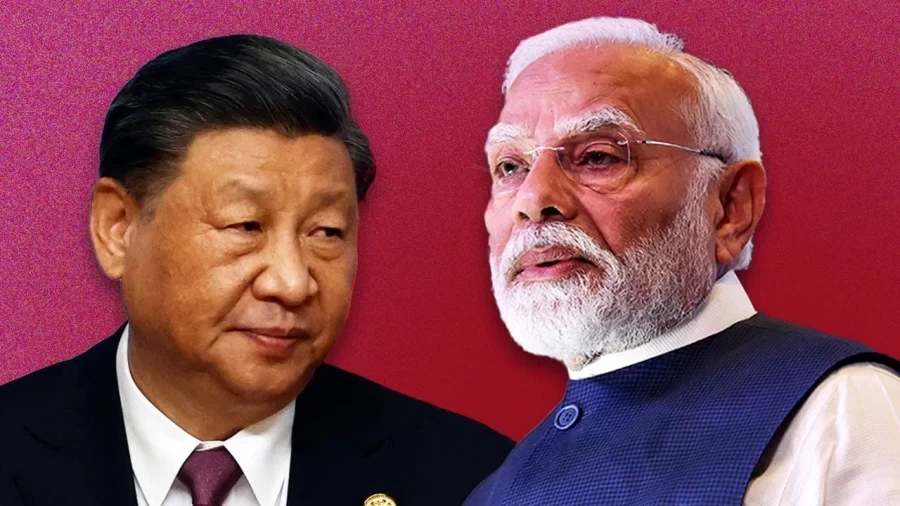
India-China Relation: The ice in the relations between India and China is now slowly melting. A new round of talks has started from Beijing to Delhi, and now all eyes are on the upcoming meeting of Prime Minister Narendra Modi and President Xi Jinping. After the recent high-level talks in Delhi, the next stop is Tianjin, where the two leaders will come face to face during the SCO Summit in September. The agenda of this meeting is wide-ranging, which includes reducing tensions on the border, promoting trade, easing the visa process and increasing people-to-people contact.
New initiative started in Delhi
During the meeting of Chinese Foreign Minister Wang Yi with Prime Minister Narendra Modi in Delhi, the Modi-Jinping meeting held in Kazan last year was mentioned. Wang Yi said that the Kazan meeting gave a new direction to the relations between the two countries and opened the way for resolving the border dispute. This meeting laid the foundation for restoring trust between the two countries, after which the meeting to be held in Tianjin is now being considered an important step.
Agenda of Modi-Jinping meeting
- Several important issues have been included in the agenda for this meeting to be held in the SCO Summit:
- Peace and stability on LAC: Concrete steps to reduce tension on the border.
- Extension of Kailash Mansarovar Yatra: Smooth arrangements for pilgrims.
- Restoration of border trade: Revival of trade through routes like Lipulekh, Shipki La, and Nathu La.
- Restoration of direct flights: Ease of movement between the two countries.
- Simplification in visa process: Relaxation of visa rules to increase contact between people.
- Cooperation in SCO and BRICS: Support each other on regional and global forums.
- Agreement on water-sharing of rivers: Cooperation in the management of water resources.
Big signal from China
- Even before the meeting, China has taken a positive step and announced the removal of restrictions on fertilizers, rare earth materials, and tunnel boring machines. This is going to affect many sectors of India:
- Fertilizer: India is the world's largest fertilizer importer, and a large part of urea and potash comes from China. With the removal of the ban, farmers will get cheap and timely fertilizers, which will strengthen the agriculture sector.
- Rare Earth Material: Rare earth materials are needed in mobile, electric vehicles (EV), and defense technology. China controls 90% of the global supply. This relaxation will give a big boost to India's technology and electronics sector.
- Tunnel Boring Machines: These machines are the backbone of mega projects like metro, highway, and defense infrastructure. With the removal of the ban, construction work in India will be completed faster and at a lower cost.
- These three sectors are the backbone of India's economy. This concession from China will directly benefit farmers, industries, and infrastructure. This is why the Modi-Jinping meeting is being seen as a game-changer.
Shadow of Doklam and Galwan
The incidents of Doklam (2017) and Galwan (2020) had created a deep rift in India-China relations. After several rounds of military and diplomatic talks, the situation has improved somewhat, but mistrust still persists. This is why the Modi-Jinping meeting to be held in Tianjin is being seen as a turning point. This meeting will not be just a formal meeting, but will be an important test case for the future relations of the two countries.
India-China relations in the global context
This visit of Wang Yi has come at a time when some uncertainties related to trade have emerged between India and America. On the other hand, the growing dialogue between the Russia-India-China (RIC) triangle is being seen as an attempt to strike a global balance. Foreign Minister S. Jaishankar's recent visit to Moscow is also a step in this direction.
Will a new chapter be written?
India and China are both Asian superpowers, but mutual distrust has limited their relations so far. If the Modi-Jinping meeting in Tianjin opens new avenues of cooperation, its impact will be felt by India's farmers, industries, and common people. Restoring peace on the border and trust in trade is the biggest goal of this meeting. Will this meeting be able to start a new chapter in India-China relations? This question awaits an answer in Tianjin.
