

- India,
- 29-Dec-2025 08:40 AM IST


The Indian government is gearing up for a significant economic policy shift in the upcoming. Budget 2026, aimed at curtailing the nation's burgeoning trade deficit and reducing its over-reliance on imports. Under this proposed initiative, the government is contemplating an increase in customs duties on products that continue to be imported heavily despite existing local production capabilities. Concurrently, targeted incentives may be announced to bolster domestic manufacturing. This move is seen as a crucial step towards safeguarding. India's economy from external vulnerabilities and advancing towards greater self-reliance.
Strategic Move to Reduce Import Dependency
Currently, India imports a wide array of products, even those for which domestic production exists. To rectify this imbalance, the government has reviewed a list of approximately 100 products, while this comprehensive list includes a diverse range of items such as engineering components, steel products, machinery, and consumer goods like suitcases and floor materials. Decisions regarding either increasing import duties on these products or providing financial assistance to local manufacturers are under active consideration. The core objective of this strategy is twofold: to Importantly reduce the trade deficit and to lessen the reliance on single-source supply chains, thereby enhancing the nation's economic security and resilience.
India's Dual Trade Challenges
India is presently grappling with two significant trade challenges. The first pertains to the tariffs imposed by the United States, while a substantial 50 percent tariff on various Indian products by the US has been detrimental to Indian exporters. While India's overall exports to the US have shown an increase, and the nation's total exports have also grown, the lack of. A resolution on tariffs and a comprehensive trade deal has led to a noticeable disinterest from foreign investors in the Indian stock market. Negotiations between India and the US regarding a trade deal and tariff removal are ongoing, and until both nations reach a consensus on all outstanding issues, India will continue to navigate this challenge.
Mounting Trade Deficit with China: A Grave Concern
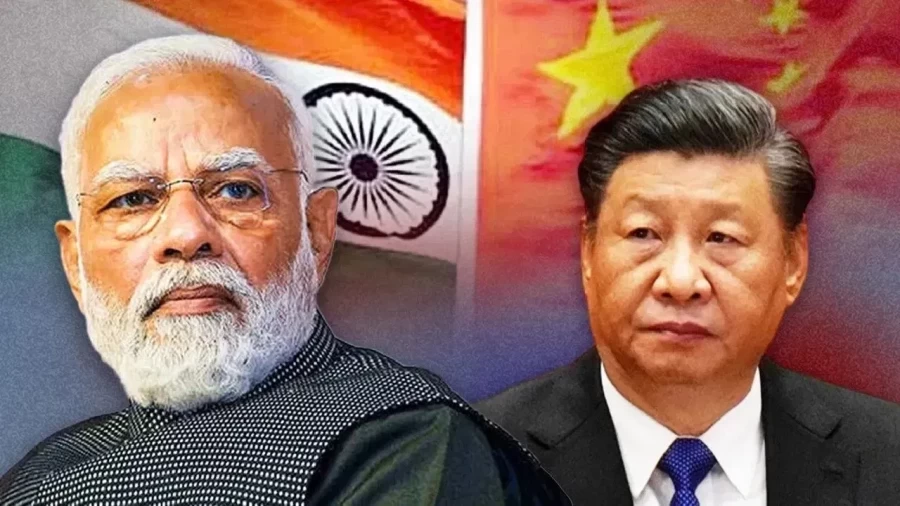
Beyond the US tariffs, a second and arguably more pressing concern is the escalating trade deficit with China. This issue is deemed more critical than the American tariffs because its resolution doesn't necessitate external negotiations but rather requires proactive measures from the Indian government itself. India's trade deficit with China has now surpassed the 100 billion dollar mark, exerting a considerable negative impact on India's economy and revenue generation. The country's heavy dependence on Chinese goods is likened to a 'termite' that's steadily eroding India's Micro, Small, and Medium Enterprises (MSMEs) and simultaneously undermining the national economy.
Anticipated Major Announcements in Budget 2026
To combat this severe economic ailment, the Indian government is expected to make several significant announcements in Budget 2026. These declarations are likely to profoundly impact China, potentially disrupting its current trade dynamics with India. According to available information, India may introduce various measures aimed at reducing import dependency, which could substantially narrow its trade deficit. Such initiatives could particularly affect countries with whom India maintains a large trade deficit, especially those involved in significant non-oil trade. The government's explicit goal is to diminish excessive reliance on specific geographical regions for certain imported goods, thereby mitigating the inherent risks associated with such dependencies.
Detailed Blueprint of Policy Changes
An official familiar with the matter indicated in media reports that India is overly dependent on certain geographical regions for specific commodities. The government is keen on reducing this dependency. The official further clarified that while some items might receive financial support to boost their local production, others could face increased import duties to discourage their inbound flow. A detailed list of approximately 100 items has been compiled by the government. This list encompasses engineering goods, steel products, machinery, and consumer items such as suitcases and floor materials, all of which are being considered for either incentives or duty hikes. Currently, import duties on many of these products range between 7. 5 percent and 10 percent, which could be revised upwards.
Growing Concerns Over Trade Imbalance
This policy initiative is being undertaken in light of the continuous expansion of the country's trade deficit. During the April-November period of fiscal year 2026, India's merchandise exports amounted to 292 billion dollars, while imports reached 515, while 2 billion dollars in the same period. This resulted in a substantial trade deficit of approximately 223. 2 billion dollars, which remains a significant source of concern for policymakers regarding external vulnerabilities. An individual familiar with the deliberations mentioned that industries have also been encouraged to diversify their supply chains away from single sources and to develop local alternatives. A representative from the steel industry highlighted that a challenge lies in the lower quality and higher prices of some locally produced goods compared to imports, an issue that needs addressing.
China: India's Foremost Import Source
China continues to be a dominant supplier for India across numerous categories, exacerbating the trade imbalance, while for instance, in fiscal year 2025, India imported umbrellas worth 20. 85 million dollars, with 17. 7 million dollars originating solely from China, while similarly, imports of spectacles and goggles in 2024-25 totaled approximately 114 million dollars, with nearly half coming from China and a significant portion routed through Hong Kong, while Italy stood as the third-largest supplier. China's share in India's imports of certain agricultural machinery also reaches up to 90 percent. This imbalance is starkly evident in bilateral trade figures.
From April to November in fiscal year 2026, India's merchandise exports to China were 12, while 2 billion dollars, whereas imports from China stood at 84. 2 billion dollars, leading to a massive trade deficit of approximately 72 billion dollars. Given these figures, the government's proposed measures represent a strategic initiative to reduce dependence on China and fortify domestic industries.
The Path Forward Towards Economic Self-Reliance
This proposed government action is expected not only to help in reducing the trade deficit but also to contribute Notably to making India more resilient and self-reliant in the global supply chain. Incentivizing local production will lead to increased employment opportunities and an enhancement of the country's manufacturing capabilities. This policy shift is a crucial step towards strengthening India's economic. Sovereignty and building a solid shield against future global economic uncertainties.
