

- India,
- 21-Nov-2025 08:16 AM IST


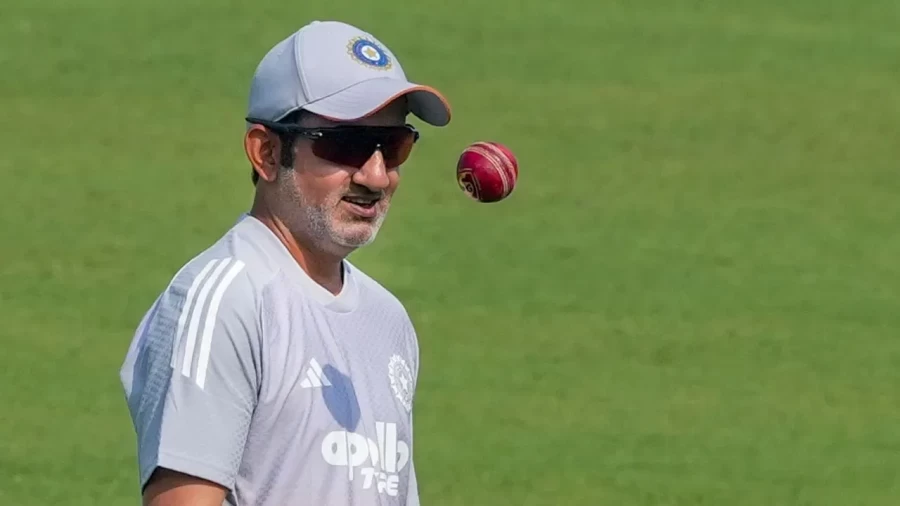
Gautam Gambhir has served as the Head Coach of the Indian cricket team for approximately the last one and a half years. During this period, the Indian team has achieved significant success in white-ball formats, securing two crucial titles. However, the team's performance in red-ball cricket, particularly on home soil, has been a continuous cause for concern. Under Gambhir's leadership, the Test team has suffered unexpected losses at home, a scenario that was almost unthinkable just a few years ago. This situation is raising persistent questions about the team management and Coach Gambhir's strategies.
Test Cricket Woes Under Gambhir
In Gambhir's tenure, the Indian team has lost four Test matches at home over the past 12-13 months. This statistic represents a rare and alarming trend in the history of Indian Test cricket, where India was once considered almost invincible on its home turf. While several reasons are cited for this poor performance, critics believe that Coach Gambhir's continuous experiments, especially in the batting order, are a major contributing factor. The most significant issue arising from these experiments is the constant changes at the crucial number 3 batting position, a glimpse of which was seen in the recent Kolkata Test against South Africa.
The Number 3 Conundrum
The frequent reshuffling of India's number 3 batting order has become a defining characteristic of Gambhir's tenure. This instability is negatively impacting the team's consistency and player confidence. In the recent Kolkata Test, the Indian team surprised everyone by dropping Sai Sudarshan, who had been batting at number 3. Sudarshan had been consistently deployed in this pivotal position in the two preceding Test series against England and West Indies, and was widely considered a strong contender for the future. Although his performance wasn't entirely satisfactory, at 22 years old, it was just. The beginning of his international career, and he was expected to receive more opportunities.
Sai Sudarshan's Unexpected Omission
The decision to drop Sai Sudarshan after giving him opportunities at number 3 raises several questions. In the series against England and West Indies, Sudarshan played some promising innings, leading many to believe that the team had found a stable solution for this vital spot, while given his youth and potential, providing him with continuous chances seemed a logical step for him to establish himself at the international level. However, in the Kolkata Test, Coach Gambhir opted to drop Sudarshan, handing the spot to all-rounder Washington Sundar. This move once again highlighted a shift in the team's strategy and further complicated the number 3 puzzle.
A Carousel of Batsmen at One-Down
Over the past approximately one and a half years, seven different batsmen. Have been tried at the number 3 position in the Indian Test team. This figure underscores the extent of Gambhir's experimentation. When Gambhir became coach last year, Shubman Gill was initially fulfilling this role, batting at number 3 in 7 matches. However, before Gill was fixed at number 4 after becoming captain, players like KL Rahul and even Virat Kohli were sent to bat at number 3 for one match each. Also, Devdutt Padikkal was tried in one match, and Karun Nair was given a chance once in England. Sai Sudarshan was first given an opportunity in this role during the England tour, and he appeared to be. Finding his rhythm by the West Indies series, but he was suddenly removed from this role again against South Africa.
Shubman Gill's Shift and the Unresolved Gap
Shubman Gill began his Test career at number 3, but following Virat Kohli's announcement of retirement, he was shifted to number 4, while gill has performed exceptionally well at number 4, scoring abundant runs, which has virtually cemented his place in that position. However, Gill's move has only deepened the problem at number 3. The team management has yet to find a stable and reliable batsman for this crucial spot. Coach Gambhir's continuous experiments seem to be complicating the issue rather than resolving it, leading to persistent uncertainty in the team's batting lineup.
The Value of Stability: A Historical Perspective
In Test cricket, consistency and stability in the playing XI, especially in the batting order, have always been crucial for success. Looking at the history of the Indian team, for a long time over the past 25. Years, legends like Rahul Dravid at number 3 and Sachin Tendulkar at number 4 played together. After these stalwarts, Cheteshwar Pujara and Virat Kohli took on these important responsibilities, providing a strong foundation for the team. However, since Pujara's exit from the team, India has struggled to find a permanent solution for number 3. This lack of continuity is clearly visible in the team's performance and has become even more pronounced during Gambhir's tenure. The team urgently needs to find a stable solution for this critical position to regain its lost prestige in Test cricket.
