

- India,
- 06-Feb-2026 02:35 PM IST


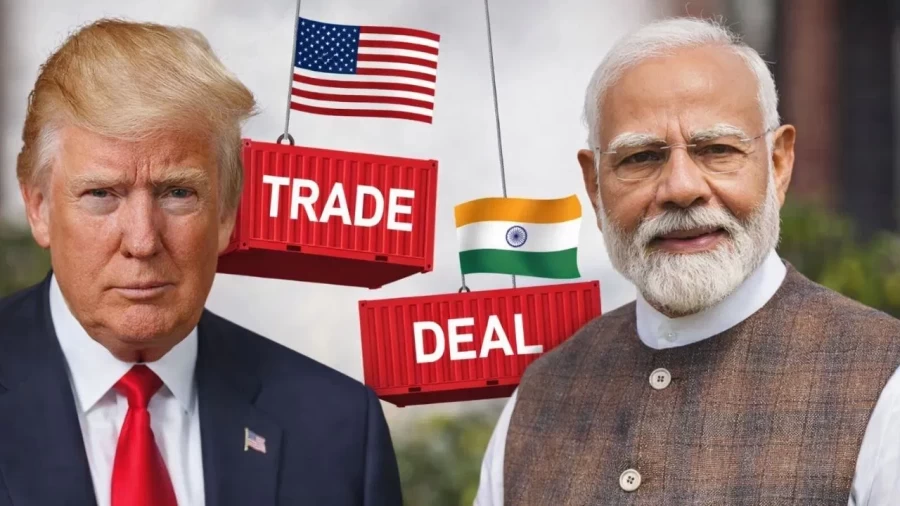
India and the United States have reached a consensus on a significant trade agreement valued at approximately ₹50,000 crore, marking a new chapter in bilateral economic relations. While the deal aims to bolster cooperation in strategic sectors, the Government of India has maintained a firm stance on protecting its domestic agricultural and dairy industries. Official sources have confirmed that sensitive commodities such as wheat, rice, and dairy products have been strictly excluded from the import list under this agreement. This decision underscores India's policy of safeguarding the livelihoods of millions of small and marginal farmers who form the backbone of the national economy. The commerce ministry emphasized that the deal is focused on high-technology, energy, and infrastructure inputs.
The background of this agreement involves years of complex negotiations where market access for agricultural products remained a point of contention. The US administration has frequently sought lower tariffs and greater access to India's vast consumer market for its subsidized agricultural exports, while however, Indian negotiators have consistently argued that such a move would lead to unfair competition for local producers. By finalizing this ₹50,000 crore deal without including the agricultural sector, India has successfully navigated its strategic partnership with the US while maintaining its economic 'red-lines'. This approach reflects a balanced trade policy that prioritizes national food security and rural stability over unconditional market liberalization.
Safeguarding the Interests of Domestic Farmers
The exclusion of agricultural and dairy products is a significant victory for the domestic farming community. According to official details, grains like rice, wheat, maize, and soybean won't be imported under this specific trade framework. On top of that, the dairy sector, which supports millions of rural households, has been kept out of the agreement to prevent the influx of low-cost international dairy items. Analysts suggest that allowing US dairy imports could have disrupted the successful cooperative dairy model in India. The government has reiterated that its trade priorities are aligned with the 'Atmanirbhar Bharat' initiative, ensuring that domestic production isn't undermined by international trade obligations.
Breakdown of the ₹50,000 Crore Procurement Plan
The ₹50,000 crore trade package is strategically distributed across sectors that are vital for India's industrial growth. A substantial portion, exceeding ₹10,000 crore, is dedicated to the aviation sector, including the procurement of aircraft and specialized components. Also, between ₹10,000 crore and ₹15,000 crore is expected to be spent on IT hardware and data center equipment to support India's digital infrastructure. The largest segment of the deal, estimated between ₹25,000 crore and ₹30,000 crore, involves energy imports such as oil, gas, and steel. These imports are essential for meeting India's rising energy demands and fueling its massive infrastructure development projects.
Clarification on US Claims and Policy Red-Lines
The finalization of this deal brings clarity following various claims made by US officials regarding agricultural market access. During previous administrations, there were assertions that India had agreed to open its markets to American farm products. However, Union Minister for Commerce and Industry Piyush Goyal has clarified that India's core interests remain non-negotiable. The government has maintained that while it seeks to increase trade volumes with the US, it won't do so at the expense of its domestic agricultural framework. Commerce Secretary Rajesh Agrawal also noted that the current import plan is designed to complement India's economic expansion without harming local industries.
Strategic Focus on Technology and Energy Imports
According to industry experts, the focus on technology and energy is a calculated move to enhance India's manufacturing capabilities. Major US corporations like Boeing already have significant orders from Indian carriers, which will be facilitated under this trade framework. By increasing energy imports from the US, India is also diversifying its energy sources, thereby enhancing its strategic autonomy. The acquisition of high-end IT hardware is expected to provide the necessary impetus for the 'Digital India' mission. This trade deal demonstrates that India is capable of engaging in high-value international commerce while simultaneously protecting its sensitive domestic sectors through rigorous policy frameworks.
So, to wrap up, the ₹50,000 crore trade agreement between India and the United States represents a pragmatic approach to bilateral commerce. By focusing on technology, aviation, and energy, India is securing the resources necessary for its next phase of economic growth. Simultaneously, by excluding agriculture and dairy, the government has fulfilled its commitment to protecting the rural workforce. This deal serves as a blueprint for future trade negotiations, proving that strategic partnerships can thrive without compromising on essential domestic protections. As these agreements are implemented, the focus will remain on ensuring that the benefits of international trade are balanced with the long-term sustainability of the Indian economy.
