

- India,
- 03-Feb-2026 07:00 AM IST


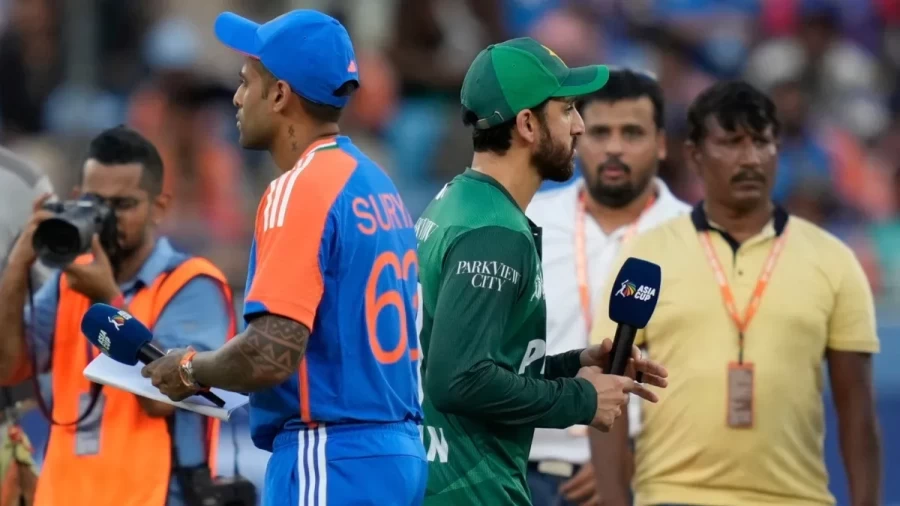
A major controversy has erupted ahead of the ICC T20 World Cup 2026 as the Pakistan government has officially announced its decision to boycott the match against India scheduled for 15 February in Sri Lanka. While the team will travel to Sri Lanka for other fixtures, the refusal to play against India poses a significant threat to their tournament aspirations. According to sports analysts, this strategic move could lead to Pakistan's elimination in the very first round, as the forfeiture of points and the resulting impact on the Net Run Rate (NRR) create a mathematical disadvantage.
Mathematical Impact of Forfeiting Points
In the group stage of the T20 World Cup 2026, Pakistan is placed in a group alongside India, the Netherlands, the USA, and Namibia. As per ICC regulations, the top two teams from each group will advance to the Super-8 stage. By boycotting the match against India, Pakistan will automatically concede two points to their rivals. This leaves the team with no margin for error in their remaining three matches. Analysts point out that even a single loss or a rained-out fixture in the remaining games could mathematically end Pakistan's chances of qualification.
The Net Run Rate Complication
Beyond the loss of points, the boycott carries severe technical implications for Pakistan's Net Run Rate (NRR), while forfeiting a match often results in a significant negative impact on the NRR, which serves as the primary tie-breaker in the standings. Experts suggest that even if Pakistan wins their remaining three matches against the USA, Netherlands, and Namibia, their NRR might remain inferior to other competing teams. This technicality could prove fatal if the group standings come down to a tie, potentially pushing Pakistan out of the top two spots.
Weather Risks and Environmental Factors
The decision to boycott is further complicated by the meteorological conditions in Sri Lanka during the tournament period, while february in Sri Lanka is often prone to unpredictable rainfall. If any of Pakistan's remaining fixtures are washed out, they will receive only one point per match. Having already forfeited two points against India, a rain-affected game would make it nearly impossible for Pakistan to secure enough points for the Super-8. Meteorological data suggests that relying on clear weather for all remaining games is a high-risk strategy for the PCB.
Threat from Emerging Cricket Nations
The competitive landscape of the group adds another layer of risk for Pakistan. The USA team has previously demonstrated its capability by defeating Pakistan in the last T20 World Cup. Analysts emphasize that the Netherlands and the USA are no longer considered easy opponents, while if Pakistan faces another upset in their remaining three games, their exit from the tournament would be confirmed. The pressure to win every single game following the India boycott could also impact the team's on-field performance and mental composure.
Expert Analysis and Conclusion
According to international cricket analysts, the decision by the Pakistan government and the PCB is a significant strategic gamble. Experts believe that the move not only jeopardizes the team's sporting success but also risks potential sanctions or loss of revenue from the ICC. The consensus among journalists is that unless there is a reversal of this decision, Pakistan faces a steep uphill battle to remain relevant in the 2026 edition of the tournament. The coming months will be crucial in determining whether diplomatic interventions or internal policy shifts will alter this stance before the February 15 deadline.
