
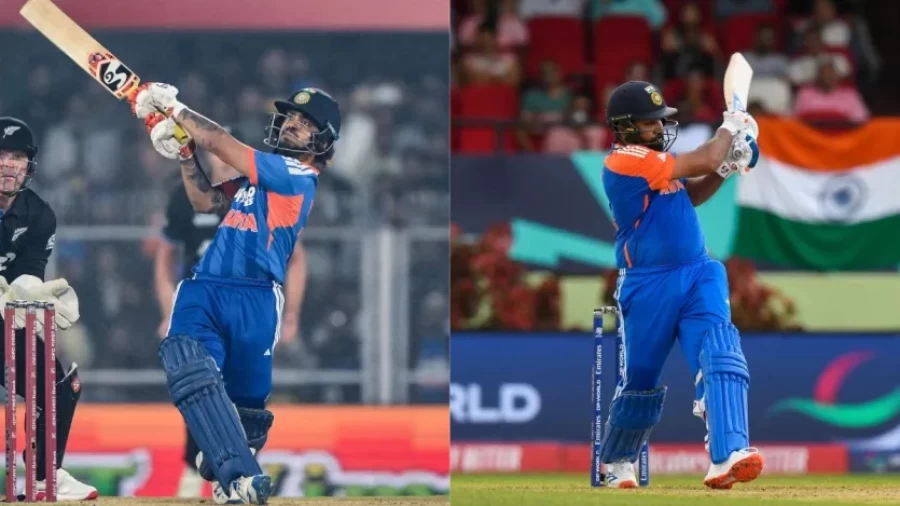

- India,
- 02-Feb-2026 06:00 AM IST
- (Updated 01-Feb-2026 09:59 PM IST)


The return of Ishan Kishan to the Indian T20 squad has prompted a deep dive into his career statistics compared to the early years of veteran opener Rohit Sharma. Kishan featured in the first three matches of the recent series against New Zealand before an injury sidelined him for the fourth game. As Kishan completes a significant milestone of 35 T20I matches, analysts have drawn parallels with Rohit Sharma's performance at the same stage of his career to understand the evolution of Indian opening batsmen.
Comparative Run Totals and Batting Averages
70.5. While Rohit maintained a slightly higher batting average during his initial years, Kishan leads Notably in terms of total runs scored. This disparity is often attributed by experts to the increased frequency of T20 matches and the evolving role of openers in the modern era.
Milestones and Individual High Scores
Regarding half-centuries, Ishan Kishan has managed to score 7 fifties in his 35-match career. In contrast, Rohit Sharma had recorded 5 half-centuries at the same juncture. Neither player had scored a century within their first 35 T20I appearances. Kishan's highest individual score stands at 89 runs, achieved against Sri Lanka in 2023. Rohit Sharma's highest score after 35 matches was an unbeaten 79 against Australia. These figures suggest that Kishan has been more consistent in reaching the fifty-run mark during his early international stint.
Power Hitting and Boundary Statistics
The most striking difference between the two players lies in their boundary-hitting capabilities during their first 35 games. Ishan Kishan has hit 95 fours and 42 sixes in his career thus far. During Rohit Sharma's first 35 T20Is, he had hit 42 fours and 20 sixes. According to sports analysts, Kishan's boundary count is more than double that of Rohit's early figures, reflecting a more aggressive approach from the start of his career. This trend aligns with the global shift towards high-strike-rate batting in the shortest format of the game.
Contextualizing the Eras of Play
Analysts emphasize that the comparison must account for the different eras in which both players started. Rohit Sharma began his T20I career in 2007 when the format was still in its infancy and par scores were lower. Ishan Kishan, debuting in 2021, entered a professional landscape where aggressive intent from the first ball is mandatory. While Kishan's early numbers appear superior in volume, Rohit Sharma's career trajectory saw him evolve into the highest run-getter in T20I history with five centuries, a benchmark for future players.
To sum it all up, the statistical data indicates that Ishan Kishan has had a more prolific start in terms of raw run production and boundary hitting compared to Rohit Sharma's first 35 matches. While Kishan continues to establish his consistency in the national side, the comparison highlights the changing dynamics of T20 cricket over the last decade and a half.
