
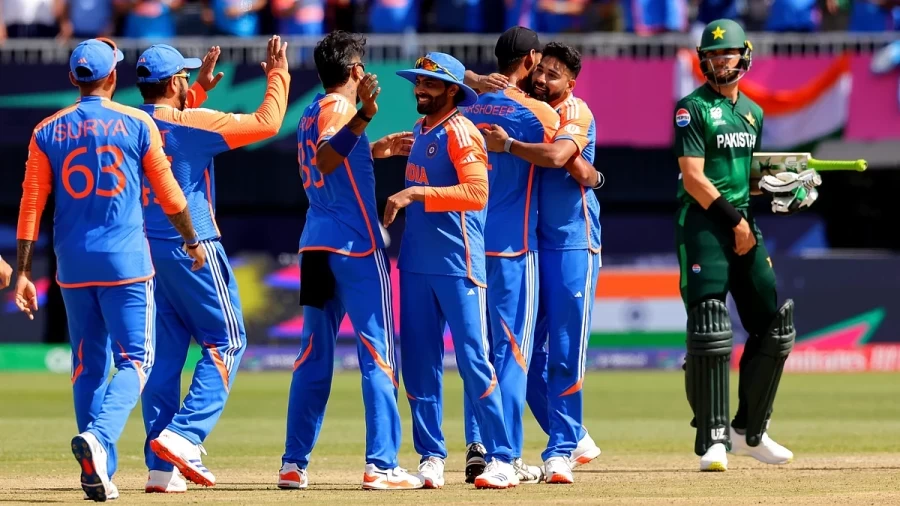

- India,
- 09-Feb-2026 09:58 PM IST


The International Cricket Council (ICC) has formally rejected all conditions proposed by the Pakistan Cricket Board (PCB) regarding their participation in the scheduled T20 World Cup 2026 match against India. Following a crucial meeting held in Lahore on Sunday, the global governing body issued a final ultimatum to the PCB. According to media reports and internal sources, the PCB is now expected to make a U-turn on its previous boycott announcement and proceed with the match scheduled for 15 February 2026 in Colombo, Sri Lanka.
The deadlock began when Pakistan announced a boycott of the match against India, citing various grievances. In response, an ICC delegation comprising Deputy Chairman Imran Khwaja and Mubashir Usmani arrived in Lahore on Sunday morning to hold discussions with PCB officials. The meeting, which lasted approximately five hours, also saw the participation of Bangladesh Cricket Board President Aminul Islam, while ICC CEO Sanjog Gupta joined virtually to deliberate on the crisis.
Pakistan's Three Demands and ICC's Firm Response
During the deliberations at Gaddafi Stadium, the PCB presented three primary conditions to the ICC for agreeing to play against India. First, the PCB demanded an increase in Pakistan's share of the ICC's total revenue, while 75% of the total earnings, trailing behind India, England, and Australia. The ICC rejected this demand, stating that the revenue distribution model is a collective agreement among member nations and can't be altered unilaterally.
The second condition involved the restoration of bilateral cricket series between India and Pakistan. The ICC clarified that bilateral arrangements fall under the jurisdiction of the respective national boards and their governments, and the ICC holds no authority to mandate such series. The third condition pertained to the strict implementation of the 'handshake protocol' on the field. This demand followed an incident during the Asia Cup where Indian players reportedly didn't shake hands with Pakistani players following a terror attack in Pahalgam. The ICC maintained that standard sportsmanship protocols would be followed as per existing regulations.
Financial Implications and Sri Lanka Cricket's Appeal
The potential boycott has raised significant concerns for Sri Lanka Cricket (SLC), the co-host of the tournament, while on 7 February, the SLC sent a formal email to the PCB urging them to reconsider their stance. The Sri Lankan board highlighted that the India-Pakistan match is the cornerstone of the tournament's commercial success. A cancellation would result in substantial financial losses for the host nation, affecting broadcasting rights, sponsorships, and gate receipts.
Sri Lanka Cricket emphasized that they're working closely with India to host the event and that any disruption would damage the image of the tournament and the global cricket ecosystem. The SLC's appeal underscored the interconnected nature of international cricket finances, where high-profile matches generate the bulk of the revenue required to sustain the sport in smaller member nations.
Government Deliberations and BCCI's Stance
Following the ICC's ultimatum, the final decision now rests with the Government of Pakistan. PCB Chairman Mohsin Naqvi is expected to brief Prime Minister Shehbaz Sharif on the details of the meeting and the ICC's firm stance. A final announcement from the board is anticipated within the next 24 hours. This follows the Pakistan government's earlier declaration on 1 February that the team would participate in the World Cup but boycott the specific fixture against India.
On the other side, sources within the Board of Control for Cricket in India (BCCI) have confirmed that the Indian team will proceed to Sri Lanka as per the original schedule. The team is set to arrive in Sri Lanka before 15 February and will adhere to all ICC protocols. The BCCI has maintained a neutral stance, stating that the final decision regarding the conduct of the match on the field lies with the appointed match referees and ICC officials on the ground.
Analysis of the Global Cricket Ecosystem
According to analysts, the ICC's refusal to yield to the PCB's demands reflects a commitment to maintaining the integrity of the international tournament schedule, while experts suggest that if Pakistan fails to comply with the ultimatum, it could face severe sanctions, including potential suspension or loss of hosting rights for future events. The ICC's media release on 1 February had already hinted at the far-reaching consequences of a boycott on the global cricket system.
As per the current group stage format, both teams are scheduled to play four matches each. Pakistan has already secured a victory against the Netherlands on 7 February, with upcoming fixtures against the USA and Namibia. India is scheduled to face the USA, Namibia, and the Netherlands. The 15 February clash in Colombo remains the most anticipated fixture of the group stage, and the ICC's latest move aims to ensure that the match proceeds as planned to safeguard the interests of all stakeholders.
