

- India,
- 31-Oct-2025 01:59 PM IST


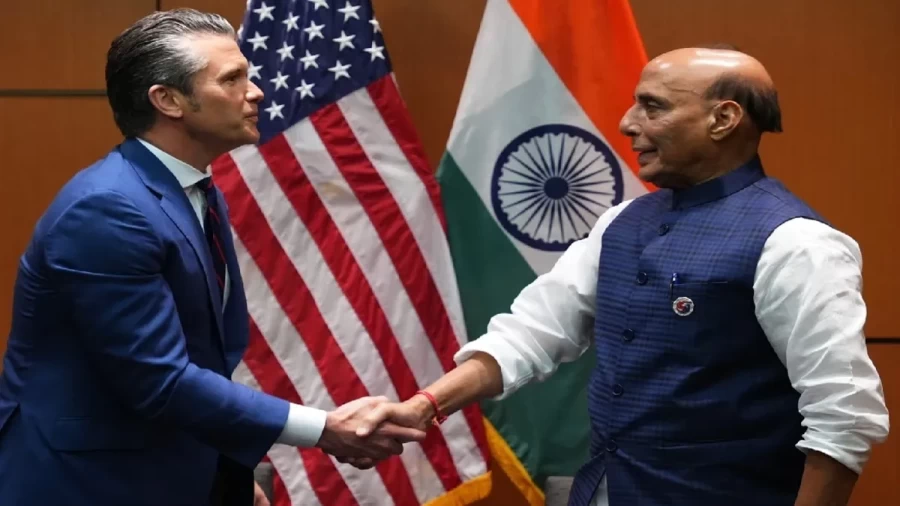
India and the United States have signed a pivotal defense cooperation agreement in Kuala Lumpur, setting the stage for a decade of enhanced strategic partnership between the two nations. The landmark 10-year 'US-India Major Defense Partnership Framework' was formalized during a meeting between Indian Defence Minister Rajnath Singh and his US counterpart, Pete Hegseth. Rajnath Singh described the agreement as the commencement of a "new chapter,". Underscoring the growing strategic convergence and strengthening ties between India and the US.
A Decade of Enhanced Defense Cooperation
This 10-year framework agreement is designed to provide a clear policy direction for the entire spectrum of defense relations between India and the United States. US counterpart Pete Hegseth emphasized that this agreement serves as a cornerstone for regional stability and resilience. He highlighted that it would further strengthen coordination, information sharing, and technology cooperation. Between the two countries, making their defense ties more strong than ever before. This pact is expected to not only deepen bilateral defense collaboration but also. Play a crucial role in ensuring peace and security in the Indo-Pacific region.
Rajnath Singh's Vision for the Partnership
Defence Minister Rajnath Singh characterized his meeting with US counterpart Pete Hegseth in Kuala Lumpur as "useful. " He stated that the signing of the 10-year 'US-India Major Defense Partnership Framework' would usher in a new era in their already strong defense partnership. Rajnath Singh stressed that this defense framework would provide policy direction to the entire dimension of India-US defense relations, signaling their growing strategic convergence and initiating a new decade of partnership. He further added that defense would remain a major pillar of their bilateral relations, and their partnership is crucial for ensuring a free, open, and rule-based Indo-Pacific region.
Pete Hegseth Emphasizes Regional Stability
US counterpart Pete Hegseth expressed his satisfaction with the agreement, stating that it advances their defense partnership, which is a cornerstone for regional stability and resilience, while he further noted that they're strengthening their coordination, information sharing, and technology cooperation, and their defense ties are stronger than ever. Hegseth's remarks underscore the US's view of India as a critical strategic partner, especially at a time when geopolitical challenges in the Indo-Pacific region are escalating. This agreement reflects the shared values of both nations and their commitment to regional security.
Shifting Dynamics in Bilateral Relations
This agreement comes at a time when relations between India and the US had appeared strained in recent times. Earlier, both countries were at odds over tariff disputes and India's purchase of crude oil from Russia. However, circumstances are now changing, and this defense agreement between India and the US signals a move towards a stronger strategic partnership, overcoming past differences. The agreement demonstrates that both nations are committed to cooperating on shared interests and regional security challenges, bringing new dynamism to their bilateral relations.
Broader Diplomatic Engagements
Rajnath Singh and Pete Hegseth's meeting took place just days after External Affairs Minister S, while jaishankar also met with US Foreign Minister Marco Rubio in Kuala Lumpur during the East Asia Summit. Jaishankar and Rubio discussed India-US relations, as well as regional and global issues, while this series of high-level meetings indicates the increasing diplomatic engagement between the two countries and their willingness to cooperate across various sectors. It highlights that the defense agreement is just one aspect,. While the broader strategic partnership is advancing on multiple fronts.
Charting a Course for Future Security
This 10-year defense framework agreement lays the foundation for a strong and enduring partnership between India and the United States, while it won't only enhance the defense capabilities of both nations but also contribute to promoting peace, stability, and prosperity in the Indo-Pacific region. The agreement signifies the shared commitment of both countries to address global security challenges and uphold a rules-based international order. In the coming decade, this partnership is expected to pave the way for unprecedented cooperation in areas such. As technology transfer, joint exercises, and intelligence sharing, making both nations even more reliable partners for each other.
