

- India,
- 14-Dec-2025 08:23 PM IST


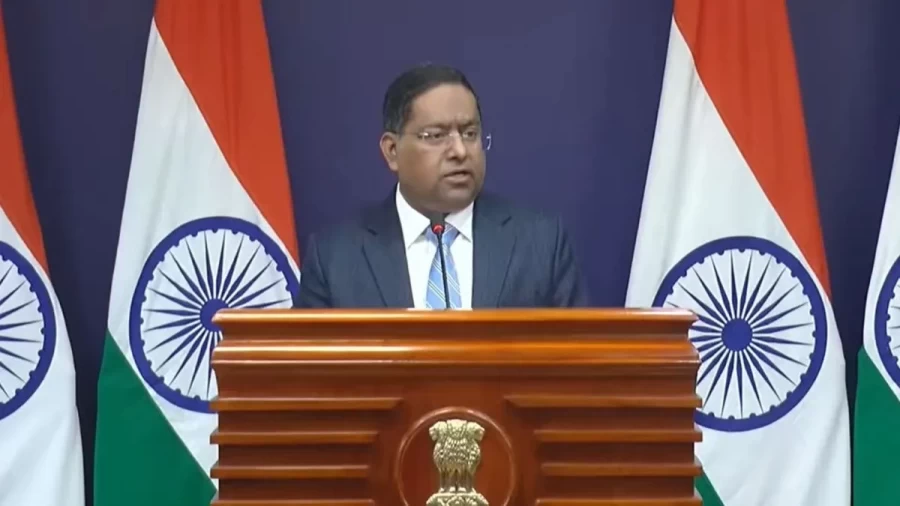
India has issued a strong and unequivocal rejection of allegations made by the interim government of Bangladesh, led by Mohammed Yunus. The Ministry of External Affairs (MEA) in New Delhi categorically stated that Indian territory has never been, and will never be, used for any activities detrimental to the interests of its friendly neighbor, Bangladesh. This diplomatic response comes in the wake of a recent press note issued by Dhaka, which contained claims that India has vehemently dismissed as unfounded. The MEA's statement underscores India's consistent policy of non-interference and its commitment to fostering stable and friendly relations with all its neighbors, particularly Bangladesh, with whom it shares deep historical and cultural ties. The rejection highlights a moment of diplomatic tension, as India seeks to clarify. Its position and dispel any misunderstandings that may have arisen from the Bangladeshi allegations.
Bangladesh's Specific Accusations and Diplomatic Summons
The controversy originated from a press note released by Bangladesh's interim government on December 14, 2025. While the specific details of the claims within the press note weren't fully elaborated in the Indian MEA's public statement,. The Indian government's response indicates that these claims pertained to the alleged use of Indian soil for activities hostile to Bangladesh. This official communication from Dhaka prompted a swift and decisive reaction from New Delhi, which found it necessary to address the accusations directly and publicly. The date mentioned, December 14, 2025, suggests a forward-looking or perhaps a typo in the. Original source, but India's response is clearly to a recent and specific communication from Bangladesh. The diplomatic exchange underscores the sensitivity of cross-border relations and the importance of clear communication channels between sovereign states.
Prior to India's official rebuttal, Bangladesh's Ministry of Foreign Affairs had summoned the Indian High Commission in Dhaka. During this diplomatic meeting, Bangladesh reportedly lodged objections regarding statements attributed to former Prime Minister Sheikh Hasina. The core of Bangladesh's accusation against Sheikh Hasina was that. She was allegedly attempting to incite violence while residing abroad. This particular allegation, though not directly addressed by India in terms of Sheikh Hasina's actions, forms a crucial backdrop to the broader diplomatic spat. Bangladesh's decision to summon the Indian High Commission signifies the seriousness with which it viewed these alleged activities and statements, leading to a formal diplomatic protest.
India's Unwavering Support for Democratic Processes
In its comprehensive statement, India reiterated its steadfast support for the democratic process in Bangladesh. The Ministry of External Affairs emphasized India's consistent position advocating for "free, inclusive, fair, and credible elections" in Bangladesh, while Also, India stressed the critical importance of these elections being conducted in a "peaceful environment. " This stance reflects India's long-standing commitment to democratic values and its desire to see a stable and democratically elected government in its neighboring country. India's support for a peaceful electoral process is a cornerstone of its. Foreign policy towards Bangladesh, aiming to ensure stability and prosperity in the region.
Reaffirming Territorial Integrity and Friendly Relations
The Indian Ministry of External Affairs explicitly refuted the accusation that Indian territory was being utilized against Bangladesh's interests. The statement unequivocally declared that India has "never allowed its territory to be used for activities inimical to the interests of the friendly people of Bangladesh. " This assertion serves to reinforce India's commitment to respecting the sovereignty and territorial integrity of its neighbors and to maintaining the sanctity of its borders. It also highlights the deep-rooted friendly relations between the people of India and Bangladesh, emphasizing that any actions that could harm this friendship are contrary to India's policy.
A Call for Law and Order and Peaceful Elections
Concluding its statement, India urged Bangladesh to take all necessary measures to uphold law and order within its borders, while this appeal is directly linked to India's desire for a peaceful electoral process. By calling upon Bangladesh to ensure internal stability, India implicitly suggests that a conducive environment is essential for the successful conduct of free and fair elections. This diplomatic request underscores India's concern for the internal stability of Bangladesh and its belief that maintaining law and order is paramount for the democratic aspirations of the Bangladeshi people to be realized without hindrance or violence. India's message is clear: a peaceful internal situation is vital for a credible democratic transition.
