

- India,
- 20-Feb-2026 10:19 AM IST


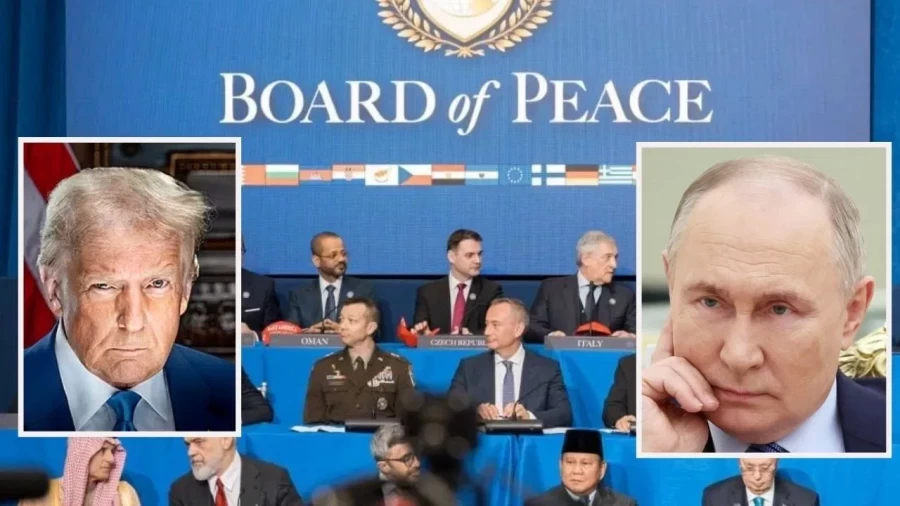
Amid ongoing efforts for the reconstruction and stabilization of the war-torn Gaza Strip, the first official meeting of the 'Board of Peace' was convened on February 19. ' The organization, initiated by US President Donald Trump, aims to oversee the redevelopment of Gaza and strengthen international conflict resolution mechanisms. According to official reports, while India received a formal invitation to become a permanent member of the board, New Delhi has opted to maintain observer status for the time being.
The meeting highlighted a significant geopolitical divide. While the US-led initiative saw participation from numerous nations, major powers such as Russia and China chose to stay away from the proceedings. India's decision to attend as an observer is seen as a continuation of its policy of strategic autonomy, balancing its relations with the US while refraining from joining new blocs prematurely, while notably, India had previously skipped the inauguration ceremony of the Board of Peace held in Davos on January 22, making its presence on February 19 a noteworthy diplomatic development.
India's Diplomatic Stance and Observer Status
India's participation in the high-level meeting on February 19 has drawn significant international attention. According to officials, India utilized the platform to emphasize the necessity of humanitarian aid and long-term peace in the Gaza region. By choosing observer status over full membership, New Delhi has signaled its intent to monitor the board's activities without committing to its formal organizational structure. This move allows India to engage with the US-led peace process while keeping its diplomatic options open regarding other international frameworks and its traditional stance on the Middle East conflict.
Global Participation and Notable Absences
The meeting saw representatives from approximately 50 countries and the European Union. The Board of Peace currently consists of 27 member nations, including Saudi Arabia, the United Arab Emirates (UAE), Pakistan, Argentina, Armenia, Azerbaijan, and Hungary. Several European nations, including Germany, Italy, Norway, Switzerland, and the United Kingdom, also participated in the process. However, the absence of permanent UN Security Council members Russia and China was conspicuous. Other major nations like France and Britain also refrained from joining as full members, reflecting the varying international perspectives on this new American initiative.
Financial Commitments for Gaza Redevelopment
The US administration has announced a substantial financial commitment of $10 billion through the Board of Peace for the redevelopment of the Gaza Strip. These funds are intended for the reconstruction of critical infrastructure, including hospitals, schools, and residential areas destroyed during the conflict. President Trump stated that the board's mandate extends beyond Gaza, aiming to enhance global cooperation in tackling crises. The organization is designed to serve as a mechanism for mobilizing both financial and diplomatic resources to establish stability in volatile regions across the globe.
Trump's Outlook on China and Russia Relations
During the meeting, President Donald Trump addressed the absence of Russia and China, expressing optimism about their potential future involvement. Trump specifically highlighted his relationship with Chinese President Xi Jinping, noting that he maintains a positive rapport with the Chinese leader. He announced an upcoming visit to China in April, suggesting that the trip would be instrumental in discussing global peace initiatives. Trump also emphasized that the newly formed Board of Peace would keep a close watch on the United Nations to ensure the international body functions effectively and fulfills its responsibilities in maintaining global order.
Monitoring the United Nations and Conflict Resolution
The establishment of the Board of Peace is being interpreted by some as the creation of a diplomatic framework parallel to the United Nations. The Trump administration has suggested that this board will be more agile and effective in resolving international disputes where traditional diplomacy has faced hurdles. In the context of Gaza, the board won't only oversee the physical reconstruction but also work with member states to develop a sustainable peace framework, while the participation of countries like India as observers indicates that the board's influence on international relations and conflict management may expand in the coming months.
