

- India,
- 12-Nov-2025 08:20 AM IST


India on Tuesday strongly refuted allegations made by Pakistan's Prime Minister Shehbaz Sharif, who claimed New Delhi's involvement in a recent suicide bomb blast in Islamabad, while terming these claims as "baseless and unfounded," India unequivocally rejected them, asserting that they represent a "predictable ploy" by the Pakistani leadership. This diplomatic exchange further exacerbates the already strained relationship between the two nuclear-armed neighbours, adding a new layer of contention to regional dynamics.
The Islamabad Blast and Pakistan's Accusations
Pakistan's capital, Islamabad, was rocked by a bomb blast on Tuesday. While local agencies immediately launched investigations into the incident, Pakistan swiftly pointed fingers at India, accusing it of orchestrating the attack, while these accusations came despite the Tehrik-i-Taliban Pakistan (TTP) having already claimed responsibility for the suicide bombing. Prime Minister Shehbaz Sharif's decision to blame India, even with the TTP's admission, has ignited a fresh diplomatic row and raised questions about Pakistan's internal political motivations and its approach to regional security issues.
India's Official Response: 'Baseless and Predictable'
The statement from India's Ministry of External Affairs came just hours after Prime Minister Sharif delivered a speech at an inter-parliamentary speakers' conference in Islamabad. During his address, Sharif accused India of actively spreading terrorism with the aim of destabilizing Pakistan. He specifically alleged that the suicide attack was carried out by terrorists trained on Afghan soil with the support of India. In a post made from the official X (formerly Twitter) account of the Government of Pakistan, Sharif. Further claimed that these attacks, purportedly conducted from Afghan territory under India's patronage, couldn't be condemned enough. However, he failed to provide any concrete evidence to substantiate.
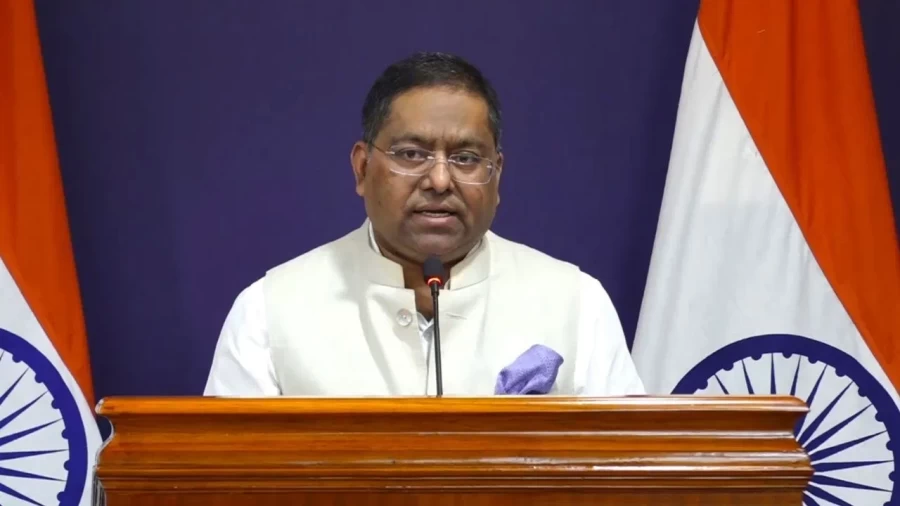
These grave accusations, leaving them open to international scrutiny and skepticism. India's response to these allegations was immediate and firm. Randhir Jaiswal, the spokesperson for the Ministry of External Affairs, issued a statement declaring, “India unequivocally rejects the baseless and unfounded allegations being made by the clearly frustrated Pakistani leadership. This is a predictable ploy. ” Jaiswal's statement underscored India's resolute stance, making it clear that it wouldn't accept fabricated accusations from Pakistan. India views these allegations as an attempt by Pakistan to deflect attention from its own internal challenges, including security issues and political instability, and to tarnish India's image on the international stage. The use of strong language like 'frustrated leadership' highlights India's perception of Pakistan's current political state.
Linking to Other Attacks
Prime Minister Sharif also attempted to link the Islamabad incident to another attack that occurred on. Monday outside a cadet college in Wana, Khyber Pakhtunkhwa, which resulted in the deaths of three individuals. While Pakistani security officials had attributed that attack to the banned TTP, the Prime Minister asserted that both attacks were orchestrated by a single network operating from Afghan soil. Sharif's effort aimed to portray these incidents as part of. A larger regional conspiracy, with India positioned as the primary antagonist. This strategy appears to be an attempt to consolidate various security challenges under a single narrative, implicating India without providing verifiable proof.
Diplomatic Ramifications and Future Tensions
The relationship between India and Pakistan has long been fraught with tension, and such reciprocal accusations only serve to escalate this animosity. India's characterization of Pakistan's allegations as 'frustrated' and a 'predictable ploy' indicates that India doesn't view these claims as credible, but rather as a reflection of Pakistan's domestic political and security struggles. This development could pose new challenges to regional stability and further diminish any prospects for diplomatic dialogue between the two nations. India has made it unequivocally clear that it won't tolerate any baseless accusations against its sovereignty and national security, signaling a firm stance in the face of what it perceives as unwarranted provocations.
