
- India,
- 02-Aug-2026 04:12 PM IST



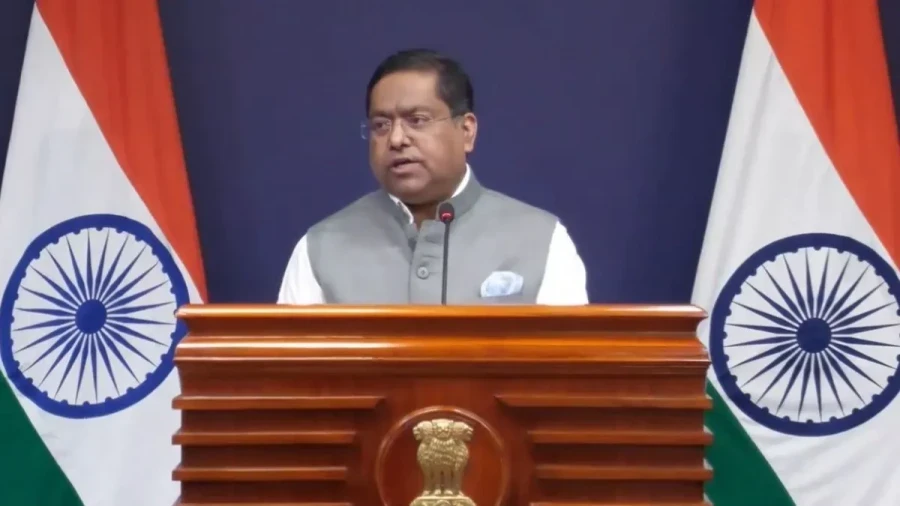
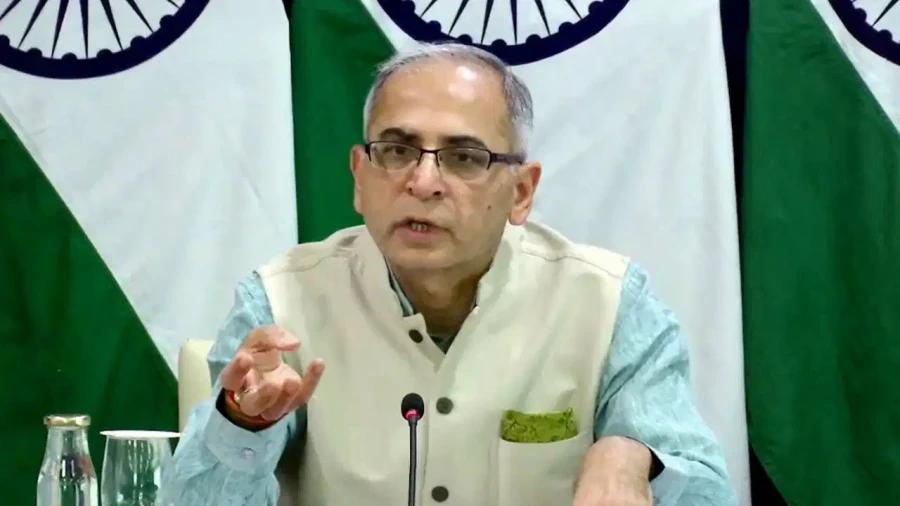
In a significant diplomatic move, India's Ambassador to the United States, Vinay Kwatra, has launched a scathing attack on Pakistan regarding the Indus Waters Treaty (IWT), while through a detailed article, Kwatra exposed what he termed as Pakistan's hypocrisy, asserting that India didn't suspend the treaty without reason. Instead, he pointed out that Pakistan itself has spent decades weakening the very foundation of the agreement through its persistent use of terrorism, engagement in wars, and the systematic misuse of the treaty's provisions. This response comes at a time when Pakistan has been raising questions about India's decision to keep the treaty in abeyance.
The Trigger for Suspension: The Pahalgam Terror Attack
The decision to put the Indus Waters Treaty in abeyance wasn't an arbitrary one. According to Ambassador Kwatra, the turning point came following a brutal terror attack in Pahalgam in April 2025. This horrific incident resulted in the cold-blooded murder of 26 people. Investigations and evidence pointed directly towards Pakistan and the Pakistan-backed terror outfit Lashkar-e-Taiba. Just one day after this tragic event, India took the firm step of suspending the treaty, signaling that the era of unilateral compliance in the face of state-sponsored terror had come to an end.
Countering Pakistan's Allegations
Ambassador Kwatra's article serves as a comprehensive rebuttal to the allegations frequently leveled by Islamabad. Pakistan has often attempted to portray India as a 'water aggressor' on international platforms. However, Kwatra clarified that Pakistan's water-related woes are primarily a result of its own internal policies and gross mismanagement rather than any action by India. He emphasized that Pakistan's attempt to blame India for its domestic failures is a tactic to divert attention from its own shortcomings.
A History of Betrayal and Conflict
The Indus Waters Treaty, signed in 1960, was designed to manage the water resources of the six major rivers of the Indus Basin. Under this agreement, India was given control over the three eastern rivers, while Pakistan was granted control over the three western rivers. Despite the treaty being born out of a spirit of 'goodwill and friendship' as mentioned in its preamble, Pakistan's actions over the decades have consistently violated this spirit. Kwatra reminded the global community that while India adhered to the treaty, Pakistan initiated wars against India in 1965, 1971, and 1999.
The Human Cost of State-Sponsored Terrorism
The article highlights the immense human toll of Pakistan's policies. Beyond the conventional wars, Pakistan has supported numerous terror attacks on Indian soil, including the attack on the Indian Parliament, the 26/11 Mumbai attacks, and strikes in Pathankot, Uri, Pulwama, and most recently, Pahalgam. Ambassador Kwatra noted that more than 40,000 Indian civilians have lost their lives due to Pakistan-sponsored terrorism. He argued that such a hostile environment is fundamentally incompatible with the cooperative framework required for the Indus Waters Treaty to function effectively.
Obstruction of Hydroelectric Projects
India's attempts to work with its rights under the treaty have also been met with constant resistance. Kwatra pointed out that Pakistan has repeatedly entangled India's legitimate hydroelectric projects in complex legal and bureaucratic hurdles. Plus, terror attacks targeting these project sites have further hindered India's ability to fully exercise its rights under the 1960 agreement. This systematic obstructionism has been a key factor in the current diplomatic standoff.
Water Mismanagement in Pakistan
Addressing the technical aspects of water usage, the Ambassador shed light on the inefficiencies within Pakistan's own system. He revealed that only about 40 percent of the water allocated to Pakistan actually reaches the agricultural fields. A staggering 30 percent of the water is lost or wasted during transit, and the remainder flows unused into the sea. This data underscores the argument that Pakistan's water crisis is a self-inflicted wound caused by poor infrastructure and planning.
The Principle of Reciprocity
" He concluded that if Pakistan truly desires cooperation on bilateral issues, it must first take decisive action to dismantle the terror infrastructure operating from its soil. The Ambassador made it clear that the responsibility for restoring the foundation of the treaty lies squarely with Pakistan, which must stop using India as a scapegoat for its internal crises.