

- India,
- 21-Feb-2026 10:30 AM IST
- (Updated 21-Feb-2026 10:31 AM IST)


The United States Supreme Court has delivered a significant blow to President Donald Trump's economic agenda by ruling his broad tariffs on global imports as unconstitutional. In a 6-3 majority decision, the court established that under the US Constitution, the power to impose taxes and tariffs resides exclusively with Congress, not the executive branch. The justices clarified that the President can't unilaterally impose sweeping economic levies using executive orders. This ruling effectively nullifies the previous tariff structure that had been a cornerstone of the Trump administration's trade policy. The court emphasized that Article I, Section 8 of the Constitution mandates that the legislature holds the authority to regulate commerce and raise revenue.
Impact on India and Trade Partners
Following the Supreme Court's intervention, India has emerged as a primary beneficiary of the revised trade landscape. According to White House officials, previous trade negotiations between India and the Trump administration had resulted in an agreed tariff rate of 18% on various Indian products. However, with the court striking down the original tariffs, President Trump has signed a new order implementing a uniform 10% global tariff. This means that Indian exporters will now face a Notably lower duty of 10% instead of the previously negotiated 18%. This reduction is expected to provide substantial relief to Indian industries, making their goods more competitive in the American market despite the new global levy.
Understanding Section 122 of the Trade Act
Within three hours of the Supreme Court's ruling, President Trump invoked Section 122 of the Trade Act of 1974 to impose a new 10% global tariff. Section 122, also known as the Balance-of-Payments Authority, grants the President the power to impose temporary import surcharges of up to 15% for a period of 150 days if the country faces a serious balance-of-payments deficit or a sudden economic crisis. Trump asserted that this specific legal provision allows him to act without immediate congressional approval. The new tariff is scheduled to take effect at midnight on February 24. The administration stated that this measure is necessary to curb the outflow of US dollars and bolster domestic manufacturing capabilities.
President Trump’s Response and Judicial Criticism
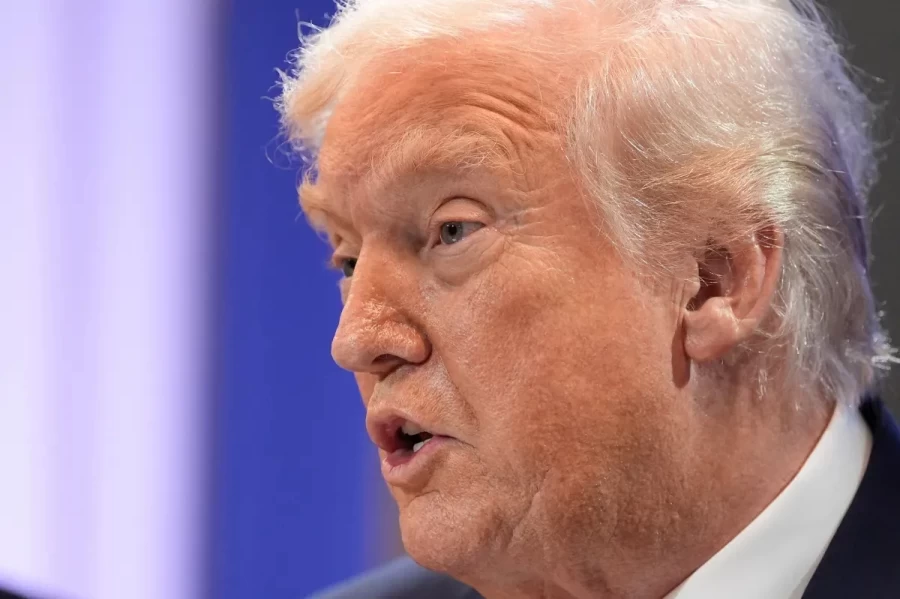
President Trump reacted sharply to the judicial setback, labeling the Supreme Court's decision as very disappointing. During a press conference and via social media, he criticized the majority judges, calling them pets of radical leftists and accusing them of lacking the courage to do what is right for the country. Trump praised the three conservative justices who dissented from the ruling but maintained that the judiciary was interfering with national economic security. He further stated that the government wouldn't issue refunds for tariffs already collected from companies, while trump predicted a prolonged legal battle, suggesting that the matter could remain in the court system for the next 5 years.
Exemptions and Implementation Timeline
The new 10% global tariff order includes specific exemptions for critical goods to prevent domestic shortages and price hikes. According to official documents, certain agricultural products such as beef, tomatoes, and oranges are exempt from the new duty. On top of that, critical minerals, essential medicines, specific electronic components, and passenger vehicles have been excluded from the 10% levy. The US Trade Representative (USTR) has also indicated that Section 301 investigations will be initiated against major trading partners to evaluate trade practices. The 10% tariff will be reviewed after the initial 150-day period, during which the administration will assess its impact on the US economy and trade balance.
