

- India,
- 21-Feb-2026 03:02 PM IST


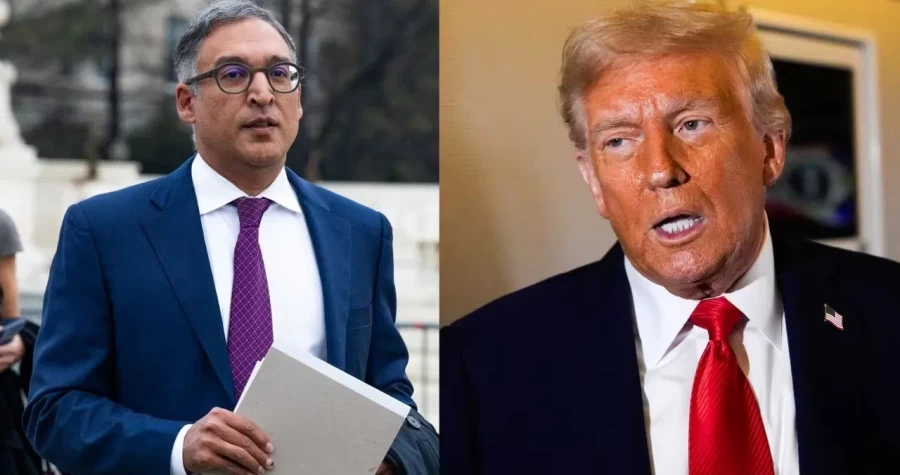
The United States Supreme Court has delivered a significant legal blow to President Donald Trump's administration by striking down his imposed tariffs, while the ruling came after extensive arguments presented by prominent Indian-American lawyer Neal Katyal, who challenged the executive branch's authority to unilaterally impose such taxes. Following the verdict, Katyal stated that the court had upheld the rule of law and the fundamental principles of the US Constitution, emphasizing that while the President holds significant power, the Constitution remains the ultimate authority.
Legal Basis of the Challenge against IEEPA
The core of the legal battle centered on the International Emergency Economic Powers Act (IEEPA) of 1977. Neal Katyal, serving as the lead counsel, argued that the Trump administration had misused this act to bypass Congress and impose arbitrary tariffs. He contended that such actions weren't only unjust but also unconstitutional as they overstepped the boundaries of executive power. Katyal detailed how these tariffs negatively impacted national trade policy and strained international relations with key global partners, leading the court to conclude that the tariff orders were legally flawed.
Separation of Powers and Constitutional Mandate
In his post-verdict remarks, Katyal highlighted that the case was fundamentally about the separation of powers rather than partisan politics. He noted that for over 250 years, the US Supreme Court has served as the bedrock of the government, protecting foundational values. The court's decision reaffirmed that under the US Constitution, only the Congress has the explicit power to levy taxes on the American public. By nullifying the tariffs, the court reinforced the checks and balances designed to prevent any single branch of government from exercising absolute control over economic policy.
Profile and Career of Neal Katyal
Born to Indian immigrant parents, Neal Katyal has established himself as one of the most distinguished constitutional lawyers in the United States. In 2010, he was appointed as the Acting Solicitor General by President Barack Obama. Throughout his career, Katyal has argued more than 50 cases before the Supreme Court, setting a record for minority advocates. His expertise in appellate and constitutional law has made him a central figure in high-stakes litigation involving the federal government and complex legal interpretations of American statutes.
Awards and Professional Recognition
Katyal's contributions to the American legal system have been recognized with numerous accolades, while in 2011, he received the Edmund Randolph Award, the highest civilian honor bestowed by the US Department of Justice. He was also named 'Litigator of the Year' in both 2017 and 2023. Beyond his professional achievements, Katyal has often cited his personal background as a source of inspiration. During the tariff proceedings, he shared reflections on his father's journey to America, stating that the legacy of freedom and the rule of law continues to drive his commitment to defending the Constitution.
