

- India,
- 23-Dec-2025 10:03 PM IST


The brutal murder of a Hindu youth in. Bangladesh has ignited a wave of outrage, not only within Bangladesh but also across its border in India. This heinous crime has prompted a swift and stern response from the Indian government, which has summoned Bangladesh's High Commissioner to India, Riaz Hamidullah, to New Delhi. India conveyed its grave concerns over the incident and underscored the imperative need to ensure the safety and security of minority communities in Bangladesh, while this diplomatic move signals India's firm stance against violence targeting minorities in its neighboring country, emphasizing the seriousness with which it views such incidents.
Widespread Protests Across India Against Violence on Minorities
News of the Hindu youth's murder in Bangladesh quickly spread across India, triggering widespread public anger and protests. Hindu organizations and concerned citizens took to the streets in various parts of the country to voice their condemnation. Major cities including Delhi, Kolkata, Jammu, Hyderabad, and Bhopal witnessed significant demonstrations. Protesters vehemently expressed their outrage against the escalating violence and atrocities faced by Hindus. In Bangladesh, demanding immediate action from the Bangladeshi government to protect its minority population. The intensity of these protests highlighted the deep emotional connection and concern felt in India regarding the welfare of Hindus in Bangladesh.
Delhi Witnesses Intense Demonstrations Outside Bangladesh High Commission
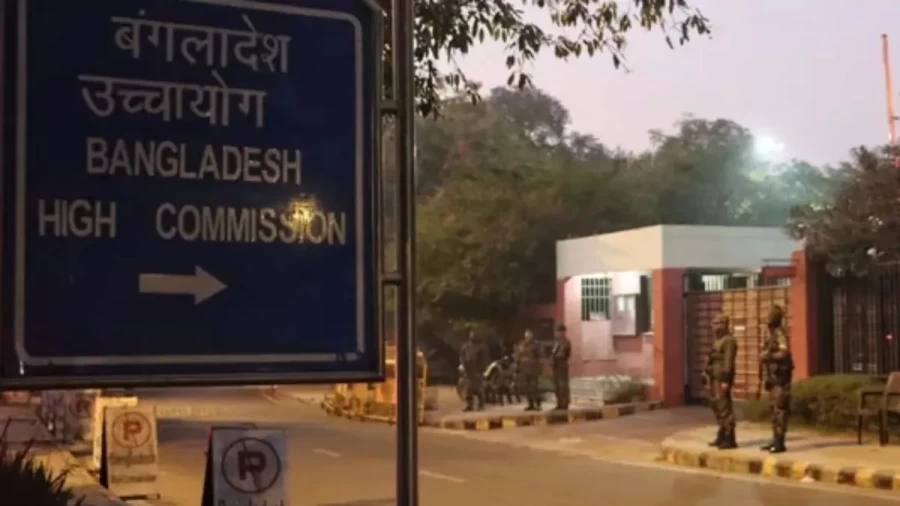
In the national capital, Delhi, a large number of protesters gathered outside the Bangladesh High Commission and its Visa Center, while they chanted slogans against Bangladeshi fundamentalists and demanded adequate security for the minority Hindu community in Bangladesh. The protests were so fervent that managing the crowd became a significant challenge for the police. The intensity of the demonstrations led to the temporary closure of the Bangladesh Visa Center in Delhi, underscoring the gravity of the situation. Despite heavy security arrangements by the Delhi police around the High Commission, protesters attempted to breach barricades, forcing the police to exert full force to prevent them from reaching the diplomatic premises.
Bangladesh Summons Indian High Commissioner in Reciprocal Move
In response to the escalating protests in India and the mounting pressure on its diplomatic missions, Bangladesh took a reciprocal diplomatic step, while bangladesh summoned India's High Commissioner to Dhaka, Pranay Verma, today. The Bangladeshi Ministry of Foreign Affairs expressed serious concerns regarding the security of its missions in India, while this tit-for-tat diplomatic action underscores the growing tension between the two nations, where an incident in one country triggers a reaction in the other, leading to further diplomatic exchanges and heightened sensitivities.
Bangladesh Raises Concerns Over Security of Its Diplomatic Missions
During the meeting with Indian High Commissioner Pranay Verma, Bangladesh's Ministry of Foreign Affairs demanded enhanced security for its diplomatic missions across several Indian cities, including Delhi. Bangladesh specifically highlighted its concern that protesters in India had managed. To reach the residence of the Bangladeshi High Commissioner in Delhi. Also, the Ministry pointed out an act of vandalism at the Bangladesh Visa Center in Siliguri, describing it as a "matter of grave concern, while " The Bangladeshi Foreign Ministry urged India to ensure the safety and security of its diplomats and mission staff, emphasizing that such incidents could impact bilateral relations. This development illustrates how diplomatic tensions can spread from one incident to another, necessitating careful handling and dialogue between the two nations.
Diplomatic Tensions and the Path Forward
The sequence of events, initiated by the murder of a Hindu youth in Bangladesh, has now evolved into a significant diplomatic challenge between India and Bangladesh, while while India has voiced its concerns regarding the protection of its minority community in Bangladesh, Bangladesh has, in turn, raised questions about the security of its diplomatic missions in India. Intensive diplomatic efforts will be crucial to de-escalate these tensions and maintain normal bilateral relations, while this incident also draws international attention to issues of regional stability and minority rights, highlighting the need for continued dialogue and cooperation to address underlying concerns.
