

- India,
- 16-Jan-2026 10:09 PM IST


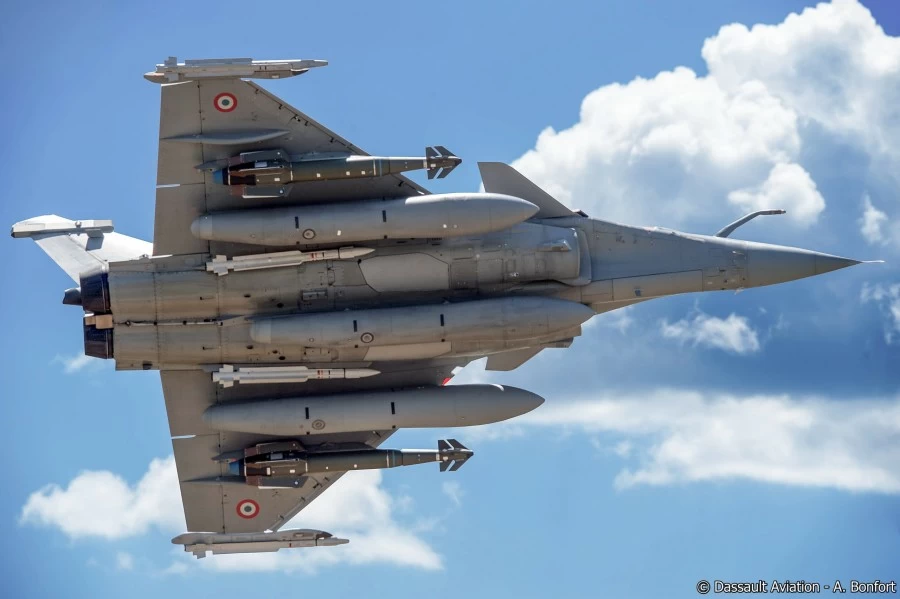
In a significant move to bolster its defence capabilities, India's Defence Procurement Board (DPB) has given its approval for the acquisition of 114 Rafale fighter jets from French company Dassault Aviation. This decision underscores India's commitment to modernizing its air force and promoting the 'Make in India' initiative. The proposed deal is set to substantially increase the Indian Air Force's (IAF) Rafale fleet, promising a significant enhancement in the nation's aerial defence and offensive capabilities.
The Approval Process Underway
Following the green light from the Defence Procurement Board, the proposal will now advance. To the Defence Acquisition Council (DAC), which is chaired by Defence Minister Rajnath Singh. The DAC serves as a crucial body for all major defence. Procurement decisions, evaluating the strategic and financial viability of such proposals. After the DAC's approval, the final sanction is anticipated from the Cabinet Committee on Security (CCS), headed by Prime Minister Narendra Modi, while the CCS is the ultimate authority for sensitive and large-scale decisions related to national security. This multi-layered approval mechanism ensures that the country's defence acquisitions are thoroughly vetted and align with national interests.
Expanding 'Make in India' Footprint
Crucially, this deal will be executed under the ambitious 'Make in India' initiative, marking a substantial stride towards making India a self-reliant hub for defence manufacturing. Dassault Aviation is slated to collaborate with an Indian company for the production of these aircraft, which is expected to invigorate the domestic defence industry and generate significant employment opportunities. Recently, Dassault increased its stake in Dassault Reliance Aerospace Limited (DRAL) from 49% to 51%, signalling its deepened commitment to this joint venture, while anil Ambani's Reliance Infrastructure is also a partner in DRAL, reinforcing private sector involvement. This partnership isn't only vital for manufacturing but also for facilitating the transfer of critical technologies.
A key aspect of this agreement is Dassault's commitment to integrate Indian weapons, missiles, and ammunition into all 114 Rafale jets. This ensures easy compatibility with the Indian armed forces' existing weapon systems. On top of that, Dassault will provide secure data links, enabling these aircraft to be integrated with Indian radar and sensor systems. Such integration will equip the Indian Air Force with a cohesive and strong network-centric warfare capability, while technology Transfer (ToT) is an integral part of this deal, with crucial technologies for airframe manufacturing to be transferred to India. Engine manufacturer Safran and avionics company Thales will also be part of. This process, allowing India to gain expertise in vital aviation technology sectors. Upon completion of the technology transfer, the indigenous content in these aircraft is projected to be between 55% and 60%, a significant achievement towards self-reliance.
Air Force's Growing Demand and Existing Fleet
The Indian Air Force had submitted a request for 114 additional Rafale jets to. The Ministry of Defence in September 2025, reflecting its operational requirements and strategic planning. The IAF already operates a fleet of 36 Rafale aircraft, which are deployed from Ambala and Hasimara airbases, while in addition, the Indian Navy has placed an order for 26 Marine variant Rafales for its aircraft carriers. With the induction of these new 114 aircraft, India's total Rafale fleet will reach 176, Notably enhancing the strategic depth and flexibility of the Indian Air Force.
Maintenance and Operational Efficiency
The increased commonality of aircraft platforms is expected to lead to reduced maintenance costs and enhanced operational efficiency, while the Rafale training and MRO (Maintenance, Repair, and Overhaul) centre at Ambala Airbase is already operational, providing the necessary infrastructure for the upkeep and repair of the new aircraft. The Air Force already possesses the requisite infrastructure, spare parts, and trained personnel to immediately incorporate two squadrons (approximately 36-38 aircraft). This existing capacity will ensure the smooth integration and rapid deployment of the new aircraft, thereby strengthening India's defence preparedness.
Strengthening India-France Ties
This pivotal defence deal is poised to further deepen the solid strategic partnership between India and France, while the agreement is likely to be sealed during the proposed meeting between Prime Minister Narendra Modi and French President Emmanuel Macron in February. This meeting will underscore the shared commitment of both nations towards defence cooperation, technology transfer, and joint production under the 'Make in India' initiative. The Rafale Marine aircraft, which boast more advanced features compared to the Air Force's Rafale jets, will also boost the Navy's capabilities, fortifying India's maritime security. This deal won't only augment India's military might but also establish the credibility of 'Make in India' in the global defence market.
