

- India,
- 25-Nov-2025 07:00 AM IST


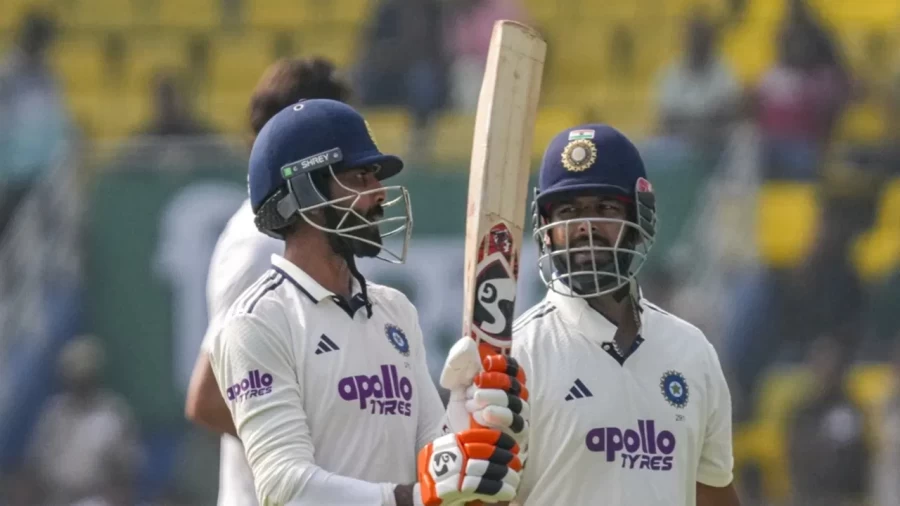
The Indian cricket team's dismal performance, getting bowled out for a mere 201. Runs in their first innings of the Guwahati Test, has raised significant concerns. This poor showing is particularly alarming when contrasted with South Africa's comfortable score of 489 on the very same pitch. Following a similar surrender in the Kolkata Test, where the team struggled against spin-friendly conditions,. Indian batsmen once again faltered in Guwahati, despite what was described as a 'flat' pitch. This time, it was primarily the pace and aggression of South African fast bowler Marco Jansen that troubled them, while the pressing question now is why Indian batsmen are struggling to counter both pace and spin bowling effectively. This consistent struggle points towards deeper issues within the team's batting philosophy and selection.
Indian Batting Struggles: A Deep Dive
The Indian cricket team's dismal performance, getting bowled out for a mere 201 runs in their first innings of the Guwahati Test, has raised significant concerns, especially when contrasted with South Africa's comfortable score of 489 on the very same pitch. This poor showing follows a similar surrender in the Kolkata Test, where the team struggled against spin-friendly conditions. In Guwahati, despite a 'flat' pitch, Indian batsmen once again faltered, this time. Primarily due to the pace and aggression of South African fast bowler Marco Jansen. The pressing question now is why Indian batsmen are struggling to counter both pace and spin bowling effectively. This consistent struggle isn't an isolated incident but appears to be a recurring pattern that's Notably impacting the team's overall performance in Test cricket.
Gautam Gambhir's Strategy and All-Rounder Reliance
The current strategic direction of the Indian team is largely attributed to Head Coach Gautam Gambhir's philosophy, while gambhir has reportedly placed a significant emphasis on all-rounders in the Test squad, often at the expense of specialist batsmen. A prime example of this approach is the inclusion of three all-rounders like Ravindra Jadeja, Nitish Reddy, and Washington Sundar in the team. In the Guwahati Test, Nitish Reddy wasn't extensively utilized in bowling and also failed to make a significant contribution with the bat. This strategy seems to be affecting the team's balance, as players who are expected to fill a specialist batting role aren't consistently performing their primary function. Prior to Gambhir's tenure, the Indian team generally favored specialist players in Test matches, a strategy that often yielded positive results, with batsmen capable of playing long innings and occupying the crease. However, the current approach appears to be a complete reversal, and its consequences are. Now evident on the field, where the team's batting depth seems to be diminishing.
Imbalance in Team Composition: Talent and Age Factor
While it's undeniable that every team aims to invest in talented and younger players, there must be a judicious balance. During his commentary stint in the Guwahati Test, former captain Anil Kumble highlighted this critical issue, while he pointed out that the simultaneous departure of experienced batsmen like Virat Kohli, Rohit Sharma, Ajinkya Rahane, and Cheteshwar Pujara has created considerable difficulties for the Indian team. These four players, each having played over 80 Test matches, were specialist batsmen who provided stability and experience. They not only scored runs but also mentored younger players on how to handle pressure. Their absence has now placed an undue burden on younger players, leading to their struggles against quality bowling attacks. The lack of a proper balance between experience and youthful exuberance is weakening the team's batting unit, and in crucial moments, no batsman seems capable of taking responsibility.
Over-Aggressive Approach Proving Detrimental
In the contemporary era, the Indian cricket team is striving to play an extremely aggressive brand of cricket. This aggressive mindset was evident in the Guwahati Test, where players like Rishabh Pant and Dhruv Jurel lost their wickets attempting attacking shots. In Test cricket, patience and a strong defensive technique are paramount, but Indian batsmen appear to be in a hurry to score runs quickly. This overly aggressive playing style is proving detrimental to Team India in Test matches. A solid defense is essential in the longest format of the game, and it appears that India's young Test cricketers are Notably lacking in this aspect. They seem to be attempting to hit every ball rather than respecting the good deliveries and waiting for scoring opportunities. This is precisely why the team is encountering difficulties against both quality spin and pace bowling attacks, as they're losing their wickets far too easily.
Dearth of Test Specialist Batsmen
Many of the players currently featuring in the Indian team aren't entirely Test specialists. Sai Sudarshan, for instance, has scored runs in white-ball cricket but lacks extensive experience in domestic first-class cricket, especially in the longer format. Dhruv Jurel also appears to be inexperienced in first-class cricket, and Washington Sundar's situation is quite similar. These players are still in the process of learning the nuances of Test cricket. More critically, established domestic performers like Karun Nair, Sarfaraz Khan, and Abhimanyu Easwaran, who have accumulated substantial runs on Indian soil and proven their mettle in first-class cricket, aren't part of the national squad. The absence of these proven performers highlights a clear lack of experience and specialization within the team. Because of this, it's imperative for Team India to identify and nurture genuine Test specialist batsmen in the future, failing which, similar outcomes are likely to persist, and the team will continue to struggle in Test cricket.
