
- India,
- 17-Aug-2026 08:49 AM IST



The state of Indiana is currently grappling with the devastating aftermath of severe storms and relentless flooding that have claimed the lives of at least six individuals and left approximately 130000 homes and businesses without electricity. In the state capital, Indianapolis, the Department of Public Works reported that the White River reached its peak flood level on Sunday morning. While the water is expected to recede gradually, the situation remains critical as emergency services continue their operations across the affected regions.
Tragic Loss of Life and Casualties
The human toll of the disaster has been profound. Liz Woods, a spokesperson for the Indiana Department of Homeland Security, confirmed that the fatalities recorded since the storms began on August 11 include a 4-year-old boy, two men, and three women. Each death highlights the unpredictable and violent nature of the weather system that has gripped the state for several days.
In Jennings County, located in southern Indiana, a heartbreaking incident occurred on Tuesday when powerful winds uprooted a tree, causing it to crash onto a 4-year-old boy's bedroom while he was inside. Deputy Chief Cody Low of the Jennings County Sheriff's Office expressed the community's grief to a local ABC affiliate, stating that the event was entirely unexpected and that no words could truly ease the pain of such a loss, while he emphasized that the community would stand together to face this difficult period.
The fatalities also include 19-year-old Matthew Morey, whose body was recovered by authorities on Saturday. Officials in Delaware County, situated to the east of Indianapolis, reported that Morey had jumped from a bridge into the turbulent waters of the Mississinewa River with friends three days prior to the discovery. Morey was a recent high school graduate who had been looking forward to attending Purdue University. His family and friends gathered at the bridge earlier in the week to honor his memory and to serve as a somber warning to others about the extreme dangers posed by swollen and fast-moving rivers.
In another tragic discovery in Delaware County, officials recovered the bodies of 58-year-old Stephanie Salley and her dog on Saturday. They were found in a cornfield, a short distance from where her car had been located. Investigators believe that Salley was attempting to drive on a flooded roadway when her vehicle was swept away by the rising waters. Her family released a statement remembering her as a kind and loving woman who was deeply devoted to her grandchildren and the younger members of her family.
Infrastructure Damage and Power Outages
The impact on infrastructure and utilities has been widespread. According to Liz Woods and data from online utility trackers, about 130000 utility customers remained without power as of Sunday afternoon. This figure, while significant, represents an improvement from the peak of the crisis when over 300000 customers were in the dark. Utility crews are working around the clock to restore services, though the damaged roads and ongoing flooding have complicated their efforts.
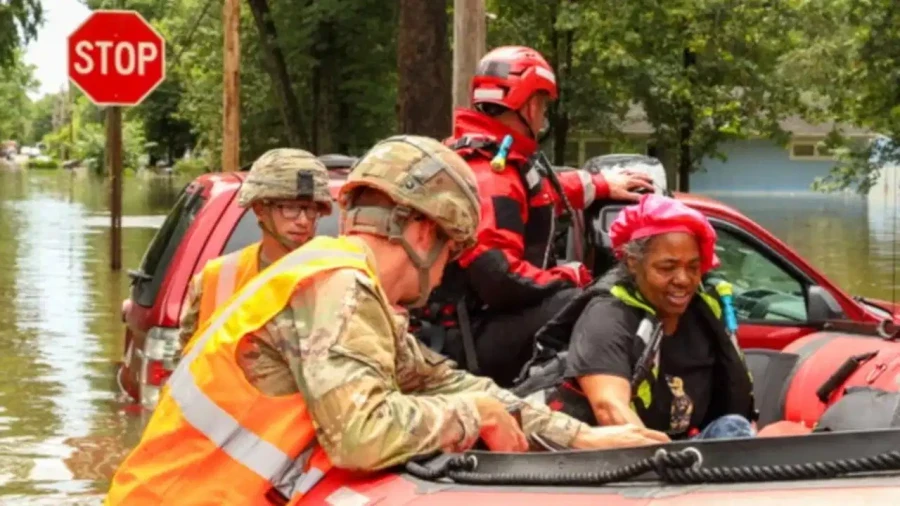
The Department of Public Works in Indianapolis has announced plans to reopen the city's floodgates on Sunday as water levels begin to stabilize. Despite the receding waters in some areas, emergency shelters remain operational to assist the hundreds of residents who were forced to evacuate their homes along the river and its canal systems, while rescue teams have been utilizing boats to navigate flooded neighborhoods and perform welfare checks on those who were unable to leave before the waters rose.
Record-Breaking River Levels
The sheer volume of rainfall over the past week has pushed several rivers to historic heights. 32 meters. This level surpassed the previous all-time record that had stood since 1913. Indianapolis Mayor Joe Hogsett noted that the capital city has not experienced flooding of this magnitude in more than 30 years, highlighting the extraordinary nature of this weather event.
In Hamilton County, just north of Indianapolis, the Board of Commissioners President Christine Altman provided a briefing on Sunday, while she noted that while the county was fortunate to report no loss of life, the physical damage is substantial. Officials are currently evaluating a major bridge that was severely damaged by the floodwaters to determine if it can be salvaged through repairs or if a complete replacement is necessary. Altman expressed a sense of relief that the rain had finally stopped, allowing the recovery phase to begin in earnest.
Government Response and Regional Impact
The scale of the disaster prompted Governor Mike Braun to seek federal assistance. On Saturday, President Donald Trump approved the request for federal disaster aid to bolster the state's response and recovery initiatives. Governor Braun's office reported that more than 350 individuals have been successfully evacuated to safety across the state. These efforts included a significant operation at a senior mobile home community north of Indianapolis, where residents were particularly vulnerable to the rising waters.
The National Weather Service continues to monitor the situation closely, warning that the threat of heavy rain and flash flooding persists for central parts of Indiana. They've urged the public to stay away from fast-moving water and to keep a close watch on weather forecasts. The flooding in Indiana is part of a larger, destructive storm system that has impacted the Midwest, bringing tornadoes and flash floods to a broad region stretching from Illinois to western Pennsylvania.