

- India,
- 31-Mar-2026 05:25 PM IST


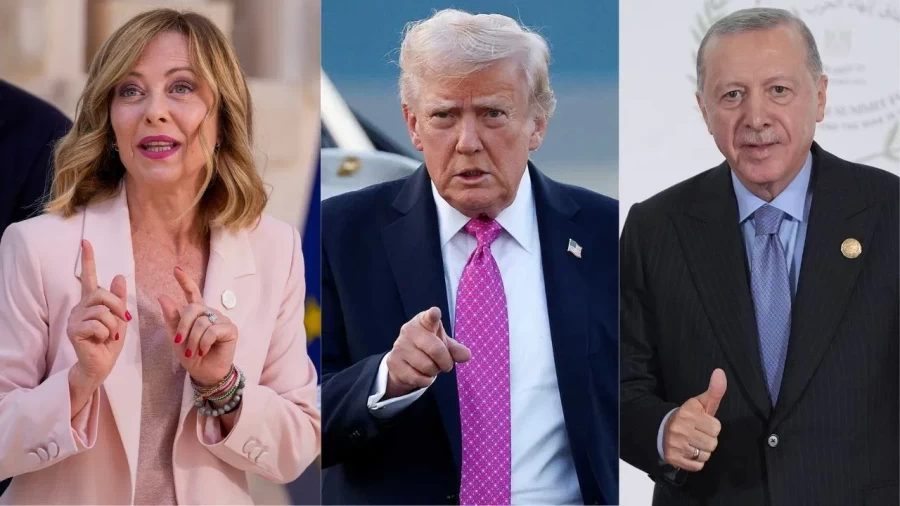
The ongoing military tension between Iran and the United States, which escalated Notably starting February 28, has revealed a major shift in global diplomatic and military alliances. Several of Washington's traditional partners and NATO members have formally declined to participate in the conflict or provide logistical support. This lack of consensus among Western allies has created significant strategic hurdles for US military planning in the Middle East. According to official reports, nations such as Italy, Turkey, and Spain have cited national sovereignty and regional stability as primary reasons for withholding military cooperation and restricting access to their territorial airspace and bases.
Italy Denies Landing Rights to US Military Aircraft
The Italian government recently took a firm stance by refusing permission for a US military aircraft, bound for the Middle East, to land in Sicily. The aircraft had requested landing rights at the Sigonella Air Base, a critical strategic hub in the Mediterranean. Italian Defense Minister Guido Crosetto stated that no formal permission had been sought prior to the request, and the Italian military command had not been consulted, while the Ministry of Defense clarified that flight plans were only communicated while the aircraft were already airborne, which contradicts established bilateral protocols. Italian officials emphasized that these weren't routine or logistical flights covered under existing treaties between Italy and the United States. This decision by a key NATO ally marks a significant diplomatic friction point in the current conflict.
Turkey Opts for Mediation Over Military Involvement
Despite its status as a NATO member with the second-largest standing army in the alliance, Turkey has chosen to act as a mediator rather than a military participant. Turkish officials have made it clear that they oppose any foreign military intervention in Iran. Turkey is currently facilitating communication between the conflicting parties and has repeatedly called for an immediate ceasefire on international platforms. President Recep Tayyip Erdogan stated in an official address that the cost of this war is being borne first by the region and then by humanity at large. Turkey has also imposed strict regulations on the military use of its airspace, complicating northern access routes for US forces. The Turkish government maintains that regional stability can only be achieved through diplomatic dialogue rather than armed escalation.
Spain Imposes Strict Airspace Restrictions on US Forces
Spain has completely closed its airspace to US aircraft involved in the military operations against Iran. Defense Minister Margarita Robles confirmed in a press statement that this position was communicated to US forces at the very beginning of the hostilities, while spanish Prime Minister Pedro Sanchez condemned the conflict shortly after it began and announced that Spanish military bases wouldn't be available for joint military strikes. The Spanish government has emphasized that its military infrastructure is reserved for national defense and authorized international peacekeeping missions only, while this move reflects a broader sentiment within parts of the European Union that are wary of being drawn into a protracted conflict in the Middle East without a clear United Nations mandate.
UK Limits Support to Defensive Operations Only
' Prime Minister Keir Starmer has stated that the UK seeks to avoid the strategic mistakes associated with the Iraq War. While the UK wasn't involved in the initial strikes against Iranian targets, the government has not ruled out defensive cooperation. However, local reports have noted the activity of US B-52 bombers at RAF Fairford, a base frequently used for long-range missions. The British government maintains that any involvement will be strictly governed by international law and the necessity of protecting global shipping lanes. This limited support highlights the internal political challenges and the desire to prevent a wider regional conflagration.
France and Germany Advocate for Diplomatic De-escalation
France and Germany, the two largest economies in Europe, have consistently advocated for de-escalation and the adherence to international legal frameworks. German Chancellor Friedrich Merz stated that taking further military steps without a clear path to ending the war would be counterproductive. Similarly, French President Emmanuel Macron has urged the international community to prioritize diplomacy over military force. A joint statement issued by 7 nations, including Germany, the UK, France, Italy, the Netherlands, Japan, and Canada, indicated a willingness to cooperate on securing maritime trade routes, but only under the condition of an immediate cessation of hostilities. These nations have expressed concern over the potential for a global energy crisis and the destabilization of the entire Middle East region.
