

- India,
- 02-Mar-2026 09:17 AM IST


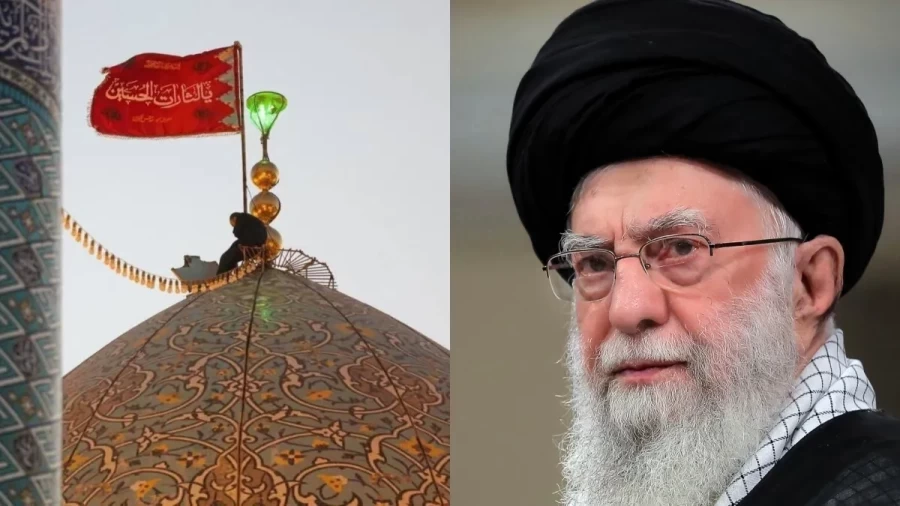
In the wake of the death of Iran's Supreme Leader Ayatollah Ali Khamenei during an airstrike in Tehran, the nation has signaled a period of mourning and potential escalation. Immediately following the confirmation of his demise, a red flag was hoisted atop the dome of the Jamkaran Mosque in the holy city of Qom. According to official reports, the airstrike was a joint operation conducted by Israeli and United States forces, targeting the leadership's compound in the capital.
The death of Ayatollah Ali Khamenei occurred on Saturday, marking a significant shift in the geopolitical landscape of the Middle East. S. and Israeli leadership have described the event as the beginning of a new era for Iran, the Iranian religious and military establishment has responded with symbols of defiance and calls for justice. The hoisting of the red flag is the most prominent of these symbols, indicating a state of readiness for conflict and a demand for retribution.
Symbolism and History of the Red Flag in Shia Tradition
In Shia Islamic tradition, the hoisting of a red flag carries profound historical and religious weight. It's traditionally known as the flag of retribution, symbolizing blood that has been shed unjustly and has yet to be avenged. This practice dates back to the 7th-century Battle of Karbala and the martyrdom of Imam Hussain. In ancient Arab custom, when a tribal leader or an innocent person was killed, a red flag was placed over their home or grave until the death was avenged.
According to religious scholars, the flag remains flying as long as the act of vengeance is outstanding. Once the retribution is considered complete, the red flag is replaced with a black or green one. By raising this flag over the Jamkaran Mosque, the Iranian leadership is communicating to both domestic and international audiences that the death of the Supreme Leader is viewed as an act of war that necessitates a formal and severe response.
Religious Significance of the Jamkaran Mosque in Qom
The Jamkaran Mosque is one of the most significant religious sites in Iran, located on the outskirts of the holy city of Qom. According to Shia belief, the mosque is closely associated with the 12th Imam, Imam Mahdi, who is expected to return to bring justice to the world. The mosque is a site of pilgrimage for millions of devotees who believe that the 12th Imam personally requested its construction. Consequently, any symbolic action taken at this site is viewed through a religious lens rather than a purely political one.
Hoisting the red flag at Jamkaran elevates the call for revenge from a state policy to a sacred duty. Officials at the mosque stated that the act serves to unite the faithful in a period of national crisis. The mosque has historically been used as a platform for major announcements during times of conflict, and the current display of the red flag is intended to signify that the struggle against those responsible for the airstrike is now a sanctified mission.
Administrative Transition and the Three-Member Council
To manage the immediate governance of the country following the loss of its top leader, Iran has established a three-member council. This interim body includes President Masoud Pezeshkian, Chief Justice Mohseni Ejei, and the 66-year-old senior cleric Alireza Arafi. This council is tasked with overseeing the executive, judicial, and religious functions of the state until a permanent successor is chosen by the Assembly of Experts.
The inclusion of Alireza Arafi is seen as a move to ensure continuity within the religious establishment, as he holds significant influence among the clergy in Qom. The council's immediate priorities include maintaining internal security, managing the national economy amidst the crisis, and coordinating with the military leadership. Under the Iranian constitution, this transitional phase is critical for preventing a power vacuum and ensuring that the state's defense mechanisms remain operational.
Geopolitical Implications and Global Reactions
The international community has reacted with a mixture of celebration and concern following the events in Tehran. S. President Donald Trump and Israeli Prime Minister Benjamin Netanyahu issued statements suggesting that the removal of the Supreme Leader provides the Iranian people with an opportunity to choose a different path for their nation. They characterized the airstrike as a defensive measure aimed at neutralizing threats to regional stability.
Conversely, the event has triggered widespread protests in several countries with significant Shia populations, including Lebanon, Iraq, and Yemen. Security analysts have noted that the hoisting of the red flag often precedes military mobilization by the Islamic Revolutionary Guard Corps (IRGC) and its regional allies. S. and Israeli interests in the region.
The Role of the Assembly of Experts in Succession
The long-term stability of the Iranian government now rests with the Assembly of Experts, a deliberative body consisting of 88 Islamic jurists. This assembly is constitutionally mandated to elect, supervise, and, if necessary, dismiss the Supreme Leader. The process of selecting a new leader is expected to involve intense deliberations among the various factions within the Iranian establishment, including the military, the clergy, and the political elite.
