

- India,
- 02-Mar-2026 09:26 AM IST


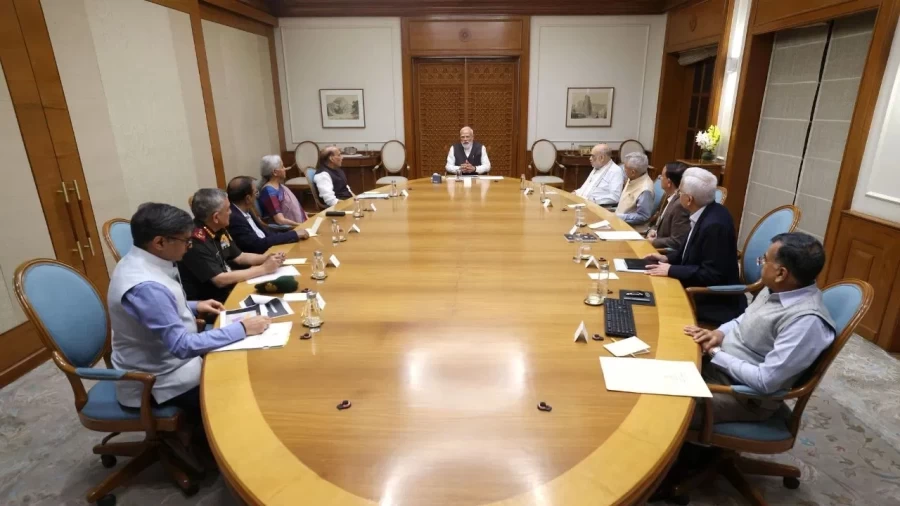
Prime Minister Narendra Modi convened a high-level meeting of the Cabinet Committee on Security (CCS) late Sunday night immediately after returning to New Delhi from his two-day visit to Rajasthan, Gujarat, Tamil Nadu, and Puducherry. The meeting was called to assess the rapidly evolving situation in the Middle East following military escalations involving Iran, Israel, and the United States. During the session, the Prime Minister reviewed the global security implications and the specific risks posed to Indian interests in the region. In addition to the internal review, PM Modi engaged in diplomatic outreach by holding telephonic conversations with UAE President Sheikh Mohamed bin Zayed Al Nahyan and Israeli Prime Minister Benjamin Netanyahu.
High-Level Review by Cabinet Committee on Security
The CCS meeting, which lasted late into the night, served as the primary forum for assessing India's strategic response to the conflict. The meeting was attended by National Security Advisor (NSA) Ajit Doval, Principal Secretary to the PM PK Mishra, Chief of Defence Staff (CDS) General Anil Chauhan, Cabinet Secretary TV Somanathan, and Foreign Secretary Vikram Misri. According to official sources, the committee was briefed on the latest military developments, including airstrikes in Iran and the subsequent escalation across several Gulf nations, while the Prime Minister took stock of the operational readiness of Indian agencies to respond to any emergency and emphasized the need for constant monitoring of the geopolitical landscape.
Diplomatic Engagement with UAE and Israel
In his conversation with UAE President Sheikh Mohamed bin Zayed Al Nahyan, Prime Minister Modi strongly condemned the attacks in the region and expressed deep concern over the loss of lives and property. He assured the UAE leader of India's solidarity during this difficult period and thanked him for ensuring the welfare of the Indian community residing in the UAE. Subsequently, PM Modi spoke with Israeli Prime Minister Benjamin Netanyahu to discuss the prevailing security situation. The Prime Minister reiterated India's stance on de-escalation and the restoration of peace and stability. He emphasized that the safety of civilians remains a top priority and called for an early end to hostilities through diplomatic channels.
Protection of Indian Diaspora and Evacuation Protocols
A significant portion of the CCS meeting was dedicated to the safety and security of the Indian diaspora in the Middle East, which numbers approximately 90 lakh people. Officials highlighted that there are about 10,000 Indian nationals in Iran and over 40,000 in Israel. The committee reviewed the difficulties faced by Indian travelers and students appearing for scheduled examinations in the region. The Ministry of External Affairs (MEA) confirmed that Indian embassies across the Middle East are in constant contact with the citizen groups, while the government has already established helplines and instructed all relevant departments to take necessary and feasible steps to assist Indian citizens affected by the developments.
Strategic Concerns Regarding the Strait of Hormuz
The CCS also deliberated on the strategic importance of the Strait of Hormuz, a critical maritime passage for India's energy security and commercial trade, while amid reports of potential disruptions or closures of the strait by Iranian authorities, the committee assessed the potential impact on oil supplies and shipping routes. Sources indicated that the Prime Minister sought detailed briefings on the security of Indian-flagged vessels navigating these waters. The discussion included contingency planning to mitigate economic shocks and ensure the continuity of essential trade activities, while india remains committed to the principle of freedom of navigation in international waters.
India's Position on Regional Stability and Diplomacy
India has maintained a consistent position calling for restraint and a return to the path of dialogue and diplomacy. During the high-level meeting, it was emphasized that India views the stability of West Asia as vital for global peace and economic health, while the Prime Minister underscored that India would continue to engage with all stakeholders to encourage a peaceful resolution. The government has directed its diplomatic missions to maintain high alertness and coordinate with international partners to prevent further escalation, while the meeting concluded with a directive to ensure that all measures are in place to protect national interests and the well-being of Indian citizens abroad.
