

- India,
- 26-Mar-2026 09:17 AM IST


Iranian Parliament Speaker Mohammad Bagher Ghalibaf has issued a stern warning following intelligence reports suggesting that enemy nations are planning to seize an Iranian island. This development occurs amidst heightened regional tensions involving the United States and Israel. Ghalibaf stated that Iran is closely monitoring all enemy movements and is prepared to respond decisively to any violation of its territorial integrity. Concurrently, Iranian Foreign Minister Abbas Araghchi remarked that the United States has failed to achieve its primary objectives of rapid military victory and regime change in Tehran.
The geopolitical situation in the Middle East has intensified as the Pentagon ordered a massive deployment of troops and naval assets to the region. According to official statements, the Iranian leadership views these movements as part of a broader strategy to destabilize the country. Speaker Ghalibaf emphasized that any attempt to occupy Iranian territory would lead to severe consequences for the parties involved, including potential strikes on critical infrastructure of any regional country assisting the enemies. The rhetoric from Tehran reflects a high state of military readiness and a refusal to back down under external pressure.
Intelligence Reports on Island Occupation Plans
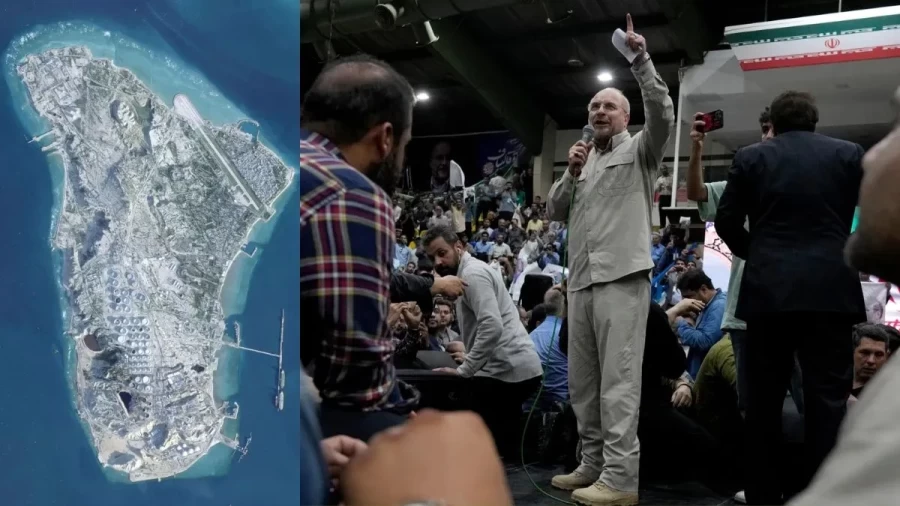
Speaker Mohammad Bagher Ghalibaf revealed through a post on social media platform X that specific intelligence indicates a plot by enemies to occupy an Iranian island. He claimed that this plan is being orchestrated with the support of a regional country. While the identity of the specific island and the collaborating nation weren't disclosed, the Speaker made it clear that Iran's armed forces are on high alert. He noted that the surveillance of enemy activities is continuous and comprehensive, leaving no room for a surprise maneuver.
The Iranian authorities have characterized these alleged plans as a direct threat to national sovereignty. Ghalibaf's statement serves as a formal notification to the international community regarding the perceived threats facing Iran. The Speaker reiterated that the defense of Iranian soil is a non-negotiable priority and that the military is equipped with the necessary intelligence and hardware to thwart any such occupation attempts. This claim has added a new layer of complexity to the already volatile security environment in the Persian Gulf.
Warning of Retaliation Against Regional Infrastructure
In his warning, Ghalibaf stated that if any hostile action is taken against Iranian territory, the response will be relentless. He specifically targeted the regional nations that might be facilitating enemy plans, asserting that their vital infrastructure would be subject to continuous and uninterrupted strikes. This stance is intended to deter regional neighbors from providing logistical or military support to external forces. The Iranian leadership has often warned that any conflict in the region wouldn't be localized and would affect all participating entities.
Foreign Minister Abbas Araghchi echoed this sentiment, focusing on the failure of US policy toward Iran. Araghchi argued that the US strategy of maximum pressure and military posturing has not yielded the intended results. He pointed out that the goals of forcing a change in government or achieving a swift military advantage have remained unfulfilled. According to Araghchi, Iran's resilience has forced its adversaries to reconsider their tactics, although the current military buildup suggests a shift toward more direct confrontation.
Largest US Military Deployment Since 2003
The Pentagon has ordered the deployment of 2000 additional soldiers from the 82nd Airborne Division, based in North Carolina, to the Middle East. On top of that, two Marine Expeditionary Units (MEUs) are being dispatched from both sides of the Pacific. The Tripoli Amphibious Ready Group is arriving from Japan, while the Boxer Amphibious Ready Group is en route from San Diego. These reinforcements will add approximately 6,000 to 7,000 marines and sailors to the existing force of 50,000 US personnel already stationed in the region.
According to reports from Al Jazeera, this represents the largest US military mobilization in the Middle East since the 2003 Iraq War, when 1,60,000 troops were deployed. While no official order for a ground invasion has been issued, the scale of this deployment has raised concerns about a potential large-scale military operation. The arrival of specialized airborne and marine units indicates a high level of preparedness for various contingencies, ranging from rapid response to sustained maritime operations.
Potential Strategic Scenarios in the Middle East
Military analysts have identified at least three potential scenarios that could explain the massive US deployment. The first involves the potential seizure or blockade of Kharg Island, which is a critical hub for Iran's oil industry. Controlling or neutralizing this island would Importantly impact Iran's economic capabilities. The second scenario focuses on clearing the Iranian coastline to ensure the permanent reopening and security of the Strait of Hormuz, a vital corridor for global energy supplies.
The third and most significant scenario involves securing Iran's nuclear materials and facilities. While these remain speculative, the nature of the deployed forces—including specialized marine and airborne divisions—is consistent with such high-stakes objectives. Iran has responded to these possibilities by reinforcing its own coastal defenses and conducting naval exercises. The concentration of military power from both sides in such a confined geographic area has Importantly increased the risk of accidental or intentional escalation, with the international community closely watching the developments.
