

- India,
- 19-Apr-2026 11:33 AM IST


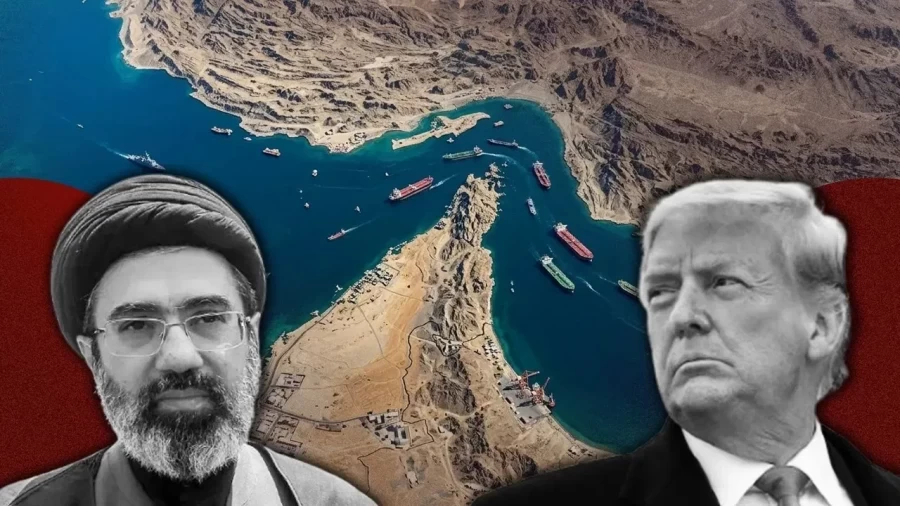
Tensions flared once again at the Strait of Hormuz on Saturday as Iran reversed its decision to reopen the critical waterway. Iranian forces reportedly fired upon vessels attempting to pass through the strait, a move described as a retaliatory action following the United States' decision to extend its naval blockade of Iranian ports. The ongoing conflict between the US and Iran has now entered its eighth week, raising significant concerns over global energy security and the potential for a wider regional escalation.
Uncertainty Over Talks and Demand for Shared Framework
The first round of negotiations held in Islamabad, aimed at ending the hostilities between Iran and the United States, ended in failure. While efforts are underway to organize a second round of talks, Iran remains firm in its position. Iran's Deputy Foreign Minister, Saeed Khatibzadeh, warned Washington that no date has been finalized for further discussions. " Khatibzadeh noted that both sides have yet to reach a point of convergence, primarily due to what he described as Washington's stubborn stance.
Blockade Standoff and Revolutionary Guard Warning
Iran has maintained that it won't reopen the Strait of Hormuz until the United States lifts the siege on its ports. Conversely, US President Donald Trump has asserted that the naval blockade of Iranian ports will continue until a formal agreement is reached between the two nations. Trump stated that Washington wouldn't succumb to pressure from Tehran. Adding to the tension, the Iranian Revolutionary Guard Navy announced that the strait would remain closed as long as the US blockade persists, while they issued a stern warning that any vessel moving in the Persian Gulf or the Sea of Oman near the Strait of Hormuz would be viewed as cooperating with the enemy and targeted accordingly.
Global Energy Impact and Ceasefire Deadline
The latest escalation at the Strait of Hormuz has sent shockwaves through global markets, as approximately one-fifth of the world's oil supply typically passes through this route. The closure threatens to deepen the global energy crisis and draw more nations into the conflict. Currently, a two-week ceasefire between Iran and the US is set to expire next Wednesday. Despite the rising tension, Iran mentioned receiving new proposals from the US, with Pakistani mediators working to arrange another round of direct talks to prevent further hostilities.
India's Diplomatic Response and Maritime Incidents
The Iranian Joint Military Command stated that control of the Strait of Hormuz has returned to its previous state under the strict management of the armed forces, while however, the UK Maritime Trade Operations Center reported that Iranian forces fired on a tanker and an unknown projectile struck a container vessel, resulting in the destruction of several containers. This escalation has directly impacted India; the Ministry of External Affairs (MEA) summoned the Iranian Ambassador in Delhi to protest a "serious incident" involving firing on two Indian-flagged merchant ships. This comes after Iran had previously allowed several Indian vessels to pass through the region unhindered.
