

- India,
- 31-Mar-2026 09:14 PM IST


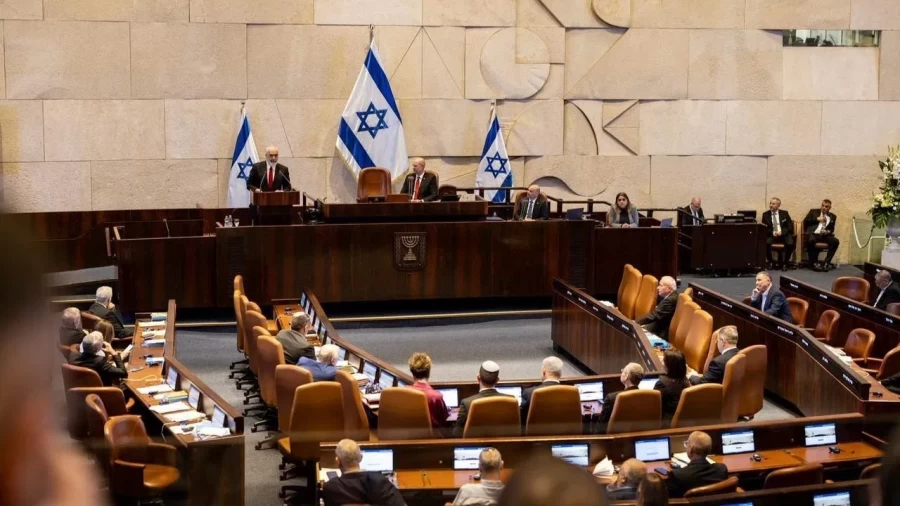
The Israeli Parliament, known as the Knesset, has formally approved a contentious piece of legislation that mandates the death penalty for Palestinians from the West Bank convicted of fatal attacks. This legislative move has triggered a wave of international condemnation and raised significant questions regarding adherence to international human rights standards. According to official reports, the law specifically targets individuals found guilty of killings motivated by nationalist or terrorist intent, while the passage of this bill marks a significant shift in Israel's penal policy within the occupied territories, drawing immediate scrutiny from the United Nations and various global monitoring bodies.
Core Provisions and Judicial Constraints
The newly enacted law stipulates that any Palestinian resident of the West Bank convicted of a lethal attack must be sentenced to death. A critical and highly debated aspect of this legislation is the removal of the right to appeal against the sentence. Also, the law mandates that the execution must be carried out within 90 days of the sentencing. While the law is primarily focused on mandatory capital punishment, it does allow for a narrow exception where courts may opt for life imprisonment under extraordinary circumstances. The legislation is designed to apply to acts categorized as ideologically or politically motivated crimes against the state or its citizens.
Allegations of a Discriminatory Legal Framework
A central point of contention for critics is the perceived discriminatory nature of the law. Human rights advocates point out that the legislation creates a stark disparity in the treatment of individuals based on their nationality. Palestinians in the West Bank are subject to the jurisdiction of Israeli military courts, whereas Israeli citizens residing in the same geographical area are tried in civil courts. Critics argue that the military court system lacks the procedural safeguards found in civil courts, leading to concerns over the fairness of trials. By introducing a mandatory death penalty specifically within this framework, observers suggest that the legal divide between the two populations is being further institutionalized.
Response from the United Nations and Amnesty International
The United Nations Human Rights Office has issued a stern call for the immediate repeal of the law, describing it as a violation of international legal principles. UN officials have consistently maintained that the death penalty is an inhumane form of punishment and that making it mandatory undermines judicial independence, while amnesty International has echoed these sentiments, labeling the law as a cruel and regressive measure. In an official statement, the organization asserted that the legislation reflects a profound disregard for human rights and exacerbates existing repressive policies. Amnesty further noted that such measures are inconsistent with the global trend toward the abolition of capital punishment.
Diplomatic Pushback from European Nations
Several European nations have voiced their strong opposition to the legislation, citing concerns over regional stability and human rights. Italian Foreign Minister Antonio Tajani confirmed that Italy, along with Germany, France, and the United Kingdom, had previously urged the Israeli government to withdraw the bill. These nations have expressed fears that the implementation of the death penalty could fuel further cycles of violence in the region, while ireland’s Foreign Minister, Helen McEntee, characterized the law as a significant setback for the right to life. The Council of Europe has also reiterated its stance that capital punishment is incompatible with democratic values and the rule of law.
Palestinian Authority and Local Human Rights Groups
The Palestinian Ministry of Foreign Affairs has condemned the law as a dangerous escalation and argued that Israel lacks the legal authority to impose such punitive measures in occupied territories. The Palestinian Center for Human Rights (PCHR) has called for urgent international intervention, describing the law as an attempt to provide a legal veneer for extrajudicial killings. Local organizations emphasize that the introduction of mandatory executions will likely heighten tensions in the West Bank and increase the sense of insecurity among the Palestinian population. They argue that the law serves as a political tool rather than a measure for justice.
