

- India,
- 21-Mar-2026 05:47 PM IST


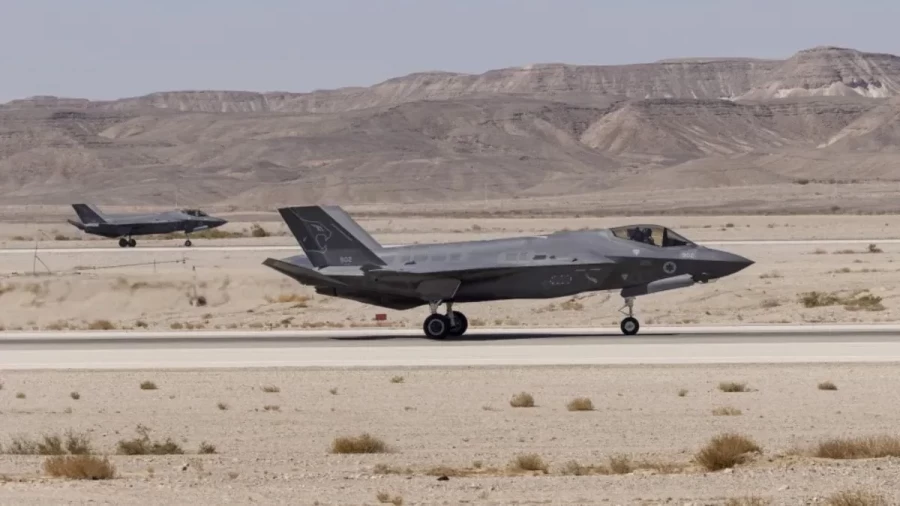
Tensions between Iran and Israel reached a new peak on Saturday following reports of an aerial engagement over Iranian territory. According to the Tehran Times, the Iranian military targeted an Israeli fighter jet with a surface-to-air missile (SAM). This incident occurred less than 24 hours after Iranian sources claimed to have downed a US F-35 stealth fighter. While Tehran has framed the event as a successful defense of its sovereign airspace, the Israeli military has provided a different account, confirming the engagement but denying any loss of aircraft, while the incident underscores the high-stakes environment in the Middle East as both nations continue to engage in direct and indirect military confrontations.
Surface-to-Air Missile Engagement over Iran
The encounter took place during a mission conducted by the Israeli Air Force (IAF) within Iranian airspace. Iranian air defense units reportedly detected the intrusion and launched a missile to intercept the target. Local media in Tehran reported the action as a significant achievement for their domestic defense systems. However, the specific type of missile used and the exact location of the engagement have not been officially disclosed by the Iranian authorities. This escalation follows repeated warnings from Tehran that any violation of its borders by foreign military assets would be met with immediate and lethal force. The event marks one of the most direct kinetic engagements between the two regional rivals in recent months.
IDF Confirmation and Pilot Evasion Tactics
The Israel Defense Forces (IDF) issued a statement confirming that one of its fighter jets came under anti-aircraft fire while operating over Iran, while according to the IDF, a surface-to-air missile was indeed launched toward the aircraft. The military spokesperson emphasized that the flight crew acted in accordance with established emergency procedures, utilizing advanced evasive maneuvers and onboard electronic warfare systems to neutralize the threat. The IDF stated that the jet sustained no damage and the mission was completed as planned. The pilot's professional response and the aircraft's technical capabilities were credited with preventing what could have been a major strategic loss for the IAF.
Conflicting Narratives from Tehran and Tel Aviv
As is common in the ongoing conflict, the narratives from Tehran and Tel Aviv remain contradictory. Iranian state-aligned media suggested that the Israeli jet was either hit or forced to retreat in a compromised state. These reports are part of a broader information campaign by Iran to demonstrate its military readiness against superior Western-made aircraft. Conversely, the Israeli side maintained that their operational integrity remained intact. The Times of Israel reported that while the pilot was in significant danger, the mission's success highlights the IAF's ability to operate even within highly contested environments. These conflicting reports reflect the psychological warfare that accompanies the physical skirmishes in the region.
Technical Overview of Iranian Air Defense Capabilities
Iran has invested heavily in its integrated air defense network (IADS) to counter the threat posed by the IAF and the US Air Force. The network includes the Bavar-373, which Iran claims is comparable to the Russian S-400, and the Khordad-15 system. These systems are designed to track and engage multiple targets, including stealth aircraft and cruise missiles. The recent engagement suggests that Iranian radar operators are becoming more proactive in identifying and engaging high-value targets. For Israel, the challenge lies in maintaining its qualitative military edge (QME) while navigating an increasingly dense and sophisticated missile environment. The use of SAMs against Israeli jets indicates a shift from passive monitoring to active engagement by Iranian forces.
Strategic Risks of Continued Aerial Operations
The frequency of these aerial encounters raises the risk of a broader military escalation, while the IAF has been conducting numerous sorties across the region to strike targets linked to Iranian interests, but direct operations over Iran itself carry the highest risk. Military analysts note that while Israel has not yet lost a fighter jet in these specific engagements, the persistent use of advanced air defenses by Iran could eventually lead to a loss that might trigger a full-scale retaliatory strike. The geopolitical situation remains precarious, with international observers monitoring the situation closely. The ability of Israeli pilots to evade such attacks is critical to maintaining the current status quo, but the margin for error is narrowing as technology on both sides continues to evolve.
