
- India,
- 20-Nov-2026 07:29 PM IST



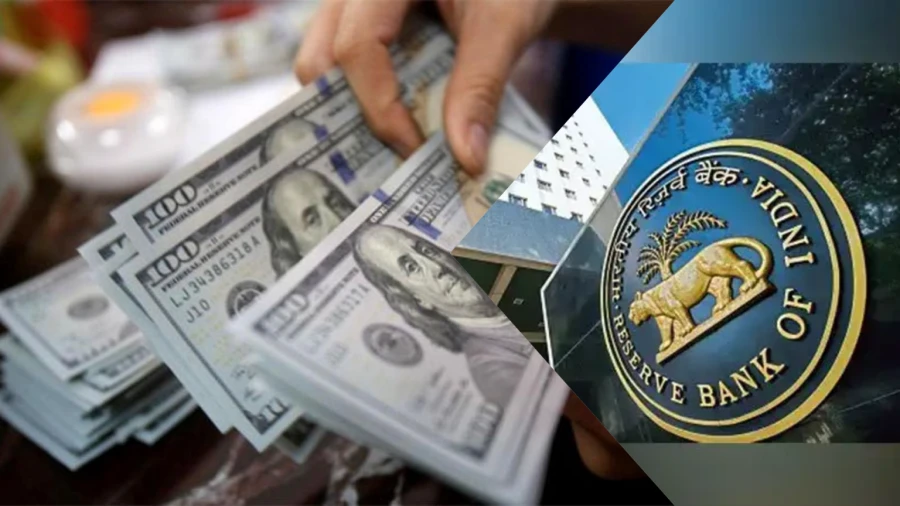
Fresh data released by the Reserve Bank of India indicates a significant decline in the nation's foreign exchange reserves. 342 billion dollars for the week ended November 13.547 billion dollars. Market experts believe that the primary reasons behind this substantial dip include heavy interventions by the central bank to defend the Indian rupee in the forex market and the continuous downward fluctuations in global gold prices.
Continuous Decline From Record All Time High Level
A closer look at the financial data of the past few months reveals that the country's foreign exchange reserves have been steadily retreating from their historic peak. 706 billion dollars. That historic milestone was achieved due to massive inflows of foreign currency under a special concessional swap arrangement established for deposits obtained from non-resident Indians, through which domestic banks successfully raised a record 133 billion dollars. 342 billion dollars.
Sharp And Deep Fall In Foreign Currency Assets
Data shared by the Reserve Bank of India clearly highlights that foreign currency assets, which form the largest component of the total foreign exchange reserves, registered a massive contraction. 452 billion dollars. When measured in terms of US dollars, the valuation of foreign currency assets also factors in the appreciation or depreciation movements of non-US currencies held within the foreign exchange reserves, such as the euro, British pound, and Japanese yen. Financial analysts suggest that the central bank's tactical interventions in the foreign exchange market to manage exchange rate volatility played a major role in reducing these core assets.
Real Reasons Behind The Massive Drop In Gold Reserves
The second major contributor to the overall decline in forex reserves is attributed to the shrinking value of the gold reserves. 613 billion dollars during the reporting week. Financial experts and market commentators have explicitly clarified that this reduction in the valuation of gold reserves didn't stem from any physical decrease in the volume of gold held, but rather from the continuous decline in international gold prices, while this weakness in gold valuations Importantly impacted the country's overall foreign exchange reserve metrics.
Special Drawing Rights And IMF Reserve Position
The central bank data reveals that the contraction wasn't limited to foreign currency and gold alone, as other constituent elements also witnessed modest reductions. 517 billion dollars. 758 billion dollars. Consequently, collective reductions were recorded across all major segments of the foreign exchange reserves.
Total Cumulative Reduction Recorded Since September 4
706 billion dollars on September 4, a massive cumulative depletion has occurred. 364 billion dollars. Expert analysis indicates that on one hand, India utilized a significant portion of its foreign exchange reserves to stabilize the rupee and curb excessive volatility in the forex market, while on the other hand, falling international gold prices pulled down the overall valuation of this precious reserve. 342 billion dollars, serving as a critical financial metric under continuous monitoring.