

- India,
- 03-Mar-2026 11:59 AM IST


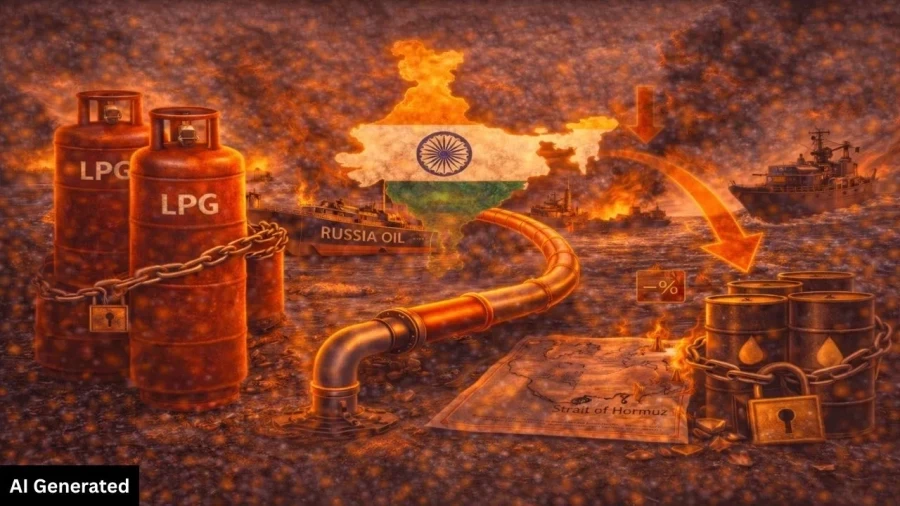
In response to the intensifying conflict between Israel, Iran, and the United States in the Middle East, the Government of India has developed a strong 'Oil Contingency Plan' to safeguard national energy security. Following high-level discussions between the Ministry of Petroleum and Natural Gas and industry stakeholders, several emergency measures are being considered to address potential supply chain disruptions. According to officials, the strategy involves diversifying import sources and managing domestic demand to ensure that fuel availability remains unaffected even if maritime traffic through the Strait of Hormuz is restricted for several weeks.
Potential Restrictions on Fuel Exports
One of the primary measures under consideration by the Indian government is the imposition of restrictions on the export of petrol and diesel to prioritize domestic availability. Currently, India exports approximately one-third of its petrol production and one-fourth of its diesel output. On top of that, nearly half of the nation's Aviation Turbine Fuel (ATF) production is sent to international markets. Officials stated that in the event of a supply crunch, refiners could redirect surplus ATF into other product streams to meet local demand. This move is intended to create a buffer against any sudden drop in crude oil arrivals from the Gulf region.
Increasing Crude Oil Imports from Russia
To compensate for potential supply losses from the Middle East, India is exploring the possibility of Notably increasing crude oil imports from Russia. Industry sources indicate that a substantial volume of Russian oil is currently available on water and can be swiftly redirected to Indian refineries. If global supplies tighten and prices surge, Russian crude remains a viable alternative for Indian refiners. Officials suggest that if the global supply situation worsens, international stances on trade with Russia may soften, allowing India to secure larger volumes of crude to stabilize its domestic energy market.
Addressing Vulnerabilities in LPG Supply
Liquefied Petroleum Gas (LPG) has been identified as the most vulnerable segment in India's energy portfolio. India depends on imports for approximately two-thirds of its LPG consumption, with 85-90% of these imports originating from the Gulf. Given the limited domestic inventory, any disruption in the Strait of Hormuz could impact supply chains. In response, state-run refiners including Indian Oil, HPCL, and BPCL have begun ramping up LPG production at specific petrochemical-integrated refineries. Targeted demand-management steps are also being discussed to ensure that essential cooking gas supplies remain uninterrupted during the crisis.
Status of Strategic Petroleum Reserves
India maintains a strategic buffer of crude oil and refined fuels to navigate short-term supply disruptions. Current estimates suggest that India's crude oil reserves can cover approximately 17-18 days of national consumption. Refined fuels like petrol and diesel have a buffer of about 20-21 days, while LNG reserves are sufficient for 10-12 days. Without new arrivals through the Strait of Hormuz, these buffers would gradually deplete. Consequently, the government is closely monitoring the situation to manage these reserves effectively while seeking alternative supply routes to replenish stocks as needed.
Impact of the Strait of Hormuz Disruption
The Strait of Hormuz is a critical maritime chokepoint through which nearly half of India's crude and LNG imports pass. Recent reports indicate a reduction in tanker traffic through the strait, raising concerns about the continuity of supply. Petroleum Minister Hardeep Singh Puri has reviewed the evolving situation, stating that all necessary steps will be taken to ensure the availability and affordability of petroleum products in the country. Industry experts believe that while the transit through the strait might normalize soon, the government's contingency plan provides a necessary safety net against prolonged regional instability.
