

- India,
- 20-Mar-2026 05:57 PM IST


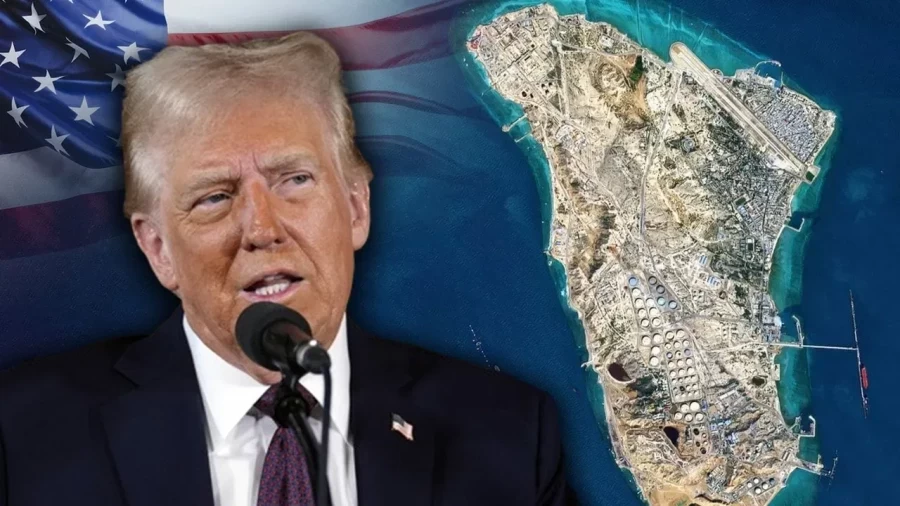
In a significant escalation of military posturing in the Middle East, the United States has announced the deployment of 2500 Marines to the vicinity of Iran's Kharg Island. According to officials from the White House and the Pentagon, this strategic move is designed to exert maximum pressure on Tehran and ensure the reopening of the Strait of Hormuz. The deployment comes as Iran continues to restrict the passage of oil tankers through this vital maritime corridor, leading to a sharp rise in global energy prices and supply chain disruptions.
Kharg Island, located approximately 15 miles off the Iranian coast, serves as the primary export terminal for Iran's crude oil. Official data indicates that nearly 90% of the country's oil exports pass through this facility. US defense sources state that establishing a military presence or a blockade around the island would directly impact Iran's economic use. The Trump administration is currently evaluating multiple options, including a naval blockade or a potential seizure of the island to restore international oil flow.
Strategic Significance of Kharg Island in Global Energy
Kharg Island is the cornerstone of Iran's energy infrastructure. Its geographical location in the Persian Gulf makes it the most critical point for Iranian oil logistics. US officials emphasize that any disruption to operations at Kharg Island would severely limit Iran's ability to fund its regional activities. The current US strategy involves weakening Iranian coastal defenses through targeted aerial strikes before any potential ground or naval maneuvers. Recent reports confirm that the US Air Force has already conducted several strikes in the region as a deterrent measure.
US Military Strategy and Marine Deployment Details
The deployment of 2500 Marines is part of a broader buildup of US forces in the region. According to Pentagon reports, two additional Marine Expeditionary Units (MEUs) are currently en route to the Persian Gulf. Each unit consists of approximately 2500 personnel, potentially bringing the total deployment to 7500 troops. These units are equipped with advanced amphibious capabilities, allowing them to conduct operations from sea to land. The US Navy has also repositioned carrier strike groups to provide air cover and logistical support for the Marines.
Impact on Global Oil Markets and Strait of Hormuz
The Strait of Hormuz is widely regarded as the world's most important oil transit chokepoint. Approximately one-fifth of the world's total petroleum and liquefied natural gas (LNG) consumption passes through this narrow waterway, while the ongoing blockade by Iran has caused significant volatility in international energy markets. US officials argue that securing the strait is a matter of global economic security. The deployment of Marines is intended to signal to Tehran that the US is prepared to use military force to keep the shipping lanes open and stabilize prices.
Potential for Ground Operations and Aerial Strikes
The Trump administration has maintained that all options remain on the table regarding the Iranian crisis. While a ground assault on Kharg Island is considered a high-risk option by some military experts, it remains a part of the contingency planning. An alternative strategy being discussed involves the US Navy providing armed escorts for commercial tankers, effectively bypassing the need for a land-based occupation. The intensity of the situation has forced President Trump to postpone his scheduled visit to China to focus on the Middle East developments.
Diplomatic Implications and Trump Administration's Stance
The White House has reiterated that the primary goal of the military deployment is to force Iran back to the negotiating table. US officials are working to build a coalition of international partners to support the freedom of navigation in the Persian Gulf. The administration maintains that Iran's actions are a violation of international maritime law and a threat to global stability. While the deployment increases the risk of direct confrontation, US officials state that the objective is to achieve a diplomatic resolution through a position of military strength. Further deployments are expected if the situation doesn't de-escalate.
