

- India,
- 10-Mar-2026 08:11 AM IST


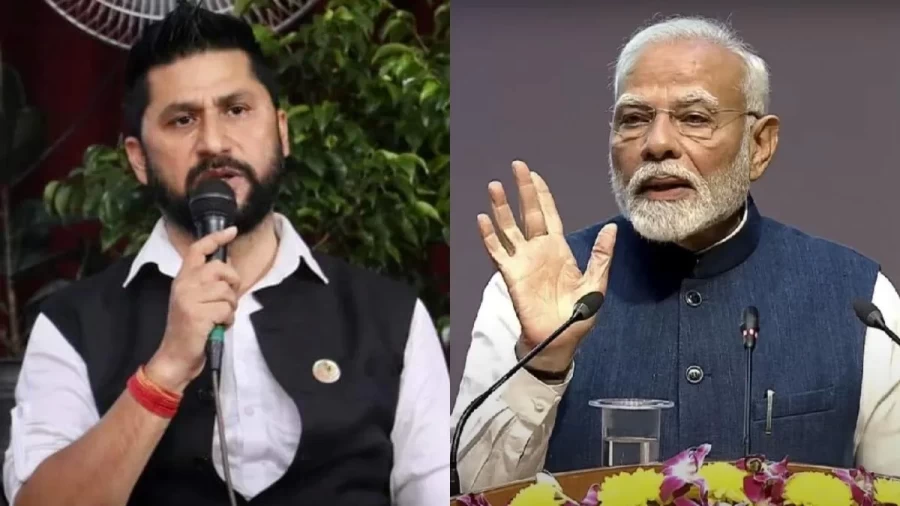
In the recently concluded parliamentary elections in Nepal, the Rashtriya Swatantra Party (RSP) has achieved an unprecedented victory, positioning itself close to a two-thirds majority in the House of Representatives. This significant political shift ensures that the RSP will lead the next government in Nepal. Following this historic performance, Indian Prime Minister Narendra Modi extended his congratulations to the RSP leadership via a telephone call. Responding to the Prime Minister's message, RSP Chairman Rabi Lamichhane reaffirmed his commitment to elevating India-Nepal bilateral relations to new heights, while lamichhane emphasized that his government would prioritize 'development diplomacy' based on mutual respect and shared prosperity.
Rabi Lamichhane’s Response and Diplomatic Vision
RSP Chairman Rabi Lamichhane took to the social media platform 'X' to express his gratitude to Prime Minister Narendra Modi. In his message, he thanked the Prime Minister for his warm congratulations and for recognizing the democratic mandate of the Nepali people. According to Lamichhane, the RSP and the incoming government remain dedicated to strengthening the relationship based on mutual respect. He specifically highlighted the concept of 'development diplomacy,' stating that Nepal looks forward to a partnership with India that reaches new milestones in connectivity, cultural tourism, energy, and trade cooperation. He expressed confidence that such collaboration would lead to a prosperous future for the citizens of both nations.
Telephonic Conversation Between PM Modi and RSP Leadership
Earlier, Prime Minister Narendra Modi held detailed telephonic conversations with RSP Chairman Rabi Lamichhane and senior leader Balendra Shah on Monday, while sharing details of the interaction, the Prime Minister stated that he congratulated both leaders on their electoral success and the RSP's remarkable performance. Prime Minister Modi extended his best wishes for the formation of the new government and reiterated India's continued commitment to Nepal's progress, prosperity, and public welfare. The Prime Minister expressed confidence that through joint efforts, India-Nepal relations would scale new heights in the coming years. This high-level communication is seen as a vital step in defining the future diplomatic roadmap between the two neighbors.
Detailed Breakdown of Parliamentary Election Results
The voting for Nepal's House of Representatives took place on March 5. Under Nepal's electoral system, 165 seats are decided through the First-Past-The-Post (FPTP) method, while 110 seats are allocated based on Proportional Representation (PR). According to the latest data from the Election Commission, the RSP has secured 124 seats in the FPTP category and is leading in 1 other. In contrast, traditional major parties in Nepal have faced significant setbacks. The Nepali Congress has secured 17 seats so far, while the CPN-UML has won 8 seats. Other parties include the Nepal Communist Party with 7 seats, the Shram Sanskriti Party with 3, and the Rastriya Prajatantra Party with 1 seat. Also, an independent candidate, Mahabir Pun, has also been elected.
Shift in Nepal’s Political Landscape and Majority Projections
According to trends from the Election Commission, the Rashtriya Swatantra Party is on track to win approximately 60 seats under the Proportional Representation (PR) quota. If these trends hold, the RSP's total strength in the 275-member House of Representatives could reach around 185 seats. As per constitutional provisions, a two-thirds majority requires 184 seats. Consequently, the RSP is in a position to form a strong and stable government, while these election results signal a major transformation in Nepal's political sphere, where voters have placed their trust in a new party and its leadership over traditional political entities that have dominated the landscape for decades.
Strategic Areas of Cooperation for India and Nepal
With the formation of a new government in Nepal, discussions regarding the future of its relations with India have intensified, while statements from Rabi Lamichhane suggest that the new administration will focus on economic and infrastructural development. In the field of connectivity, the expansion of road and rail networks, cooperation on hydroelectric projects in the energy sector, and the removal of trade barriers are expected to be shared priorities. Also, there will be an emphasis on promoting 'people-to-people' contact through cultural tourism. India has consistently prioritized Nepal under its 'Neighborhood First' policy, and the new government is expected to bring strategic depth to these long-standing ties.
