

- India,
- 22-Mar-2026 07:44 PM IST


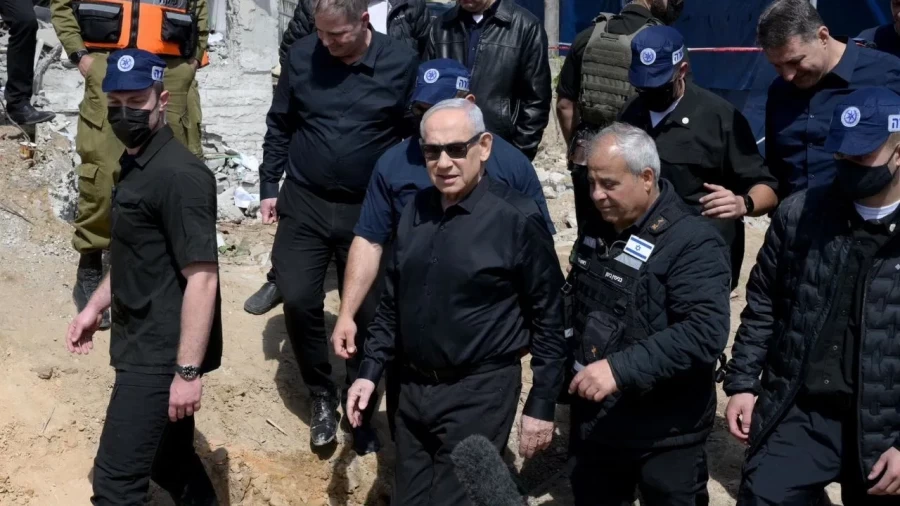
Israeli Prime Minister Benjamin Netanyahu has issued a stern warning to the international community, alleging that Iran carried out four major attacks within a 48-hour period. During a visit to the cities of Dimona and Arad on Sunday, the Prime Minister inspected sites hit by missile strikes and stated that Iran's recent actions represent a clear and present danger to global stability. According to official reports, these attacks targeted civilian infrastructure, sacred religious sites, and strategic military installations. Netanyahu emphasized that the time for international intervention has arrived to curb Iranian aggression.
The Prime Minister's visit to the Negev desert region highlighted the physical impact of the strikes. He asserted that the deliberate targeting of residential areas marks a significant escalation in the ongoing conflict, while israeli defense officials are currently assessing the damage and the types of munitions used in the strikes. The Prime Minister's rhetoric suggests a shift towards seeking a broader international coalition to address the security challenges posed by Tehran's regional activities.
Allegations of Targeting Civilians and Using Prohibited Munitions
Prime Minister Netanyahu accused Iran of violating international humanitarian laws by launching strikes against densely populated civilian areas. He reported that missiles landed near children's day-care centers and homes for the elderly. Also, the Prime Minister alleged that Iran utilized prohibited weapons, such as cluster munitions, in these attacks. According to Netanyahu, the use of such weaponry is designed to maximize civilian casualties and constitutes a grave violation of global norms. He urged world leaders to hold Tehran accountable for these specific tactical choices.
Strategic Threat to Sacred Religious Landmarks in Jerusalem
In a significant statement, Netanyahu highlighted that Iranian ballistic missiles posed a direct threat to some of the world's most sacred religious sites in Jerusalem. He noted that projectiles landed in areas that could have endangered the Church of the Holy Sepulchre, the Al-Aqsa Mosque, and the Western Wall. These sites hold immense spiritual value for Christians, Muslims, and Jews worldwide. The Prime Minister argued that Iran's willingness to risk the destruction of these landmarks demonstrates a total disregard for global religious heritage and international sensitivities.
Attacks on Dimona and the Diego Garcia Military Facility
The Israeli Air Force and Home Front Command are conducting a thorough investigation into the strikes in Dimona, a city located approximately 30km southeast of Beersheba. Dimona is strategically significant due to its proximity to the Shimon Peres Negev Nuclear Research Center. Also, Netanyahu claimed that Iran attempted to target the joint US-UK military base at Diego Garcia, located nearly 4000km away. He warned that Iran's missile reach now extends to parts of Europe, transforming a regional conflict into a global security concern that requires immediate attention.
Blockade of the Strait of Hormuz and Global Oil Blackmail
Addressing the economic implications of the conflict, Netanyahu accused Iran of engaging in 'oil blackmail' by disrupting traffic through the Strait of Hormuz. This strategic waterway is vital for global energy supplies, and any interference has immediate repercussions on international oil prices. According to the Prime Minister, Iran is using its geographical position to hold the global economy hostage. He called for a unified international response to ensure the freedom of navigation and to protect the global energy supply chain from political coercion.
Call for a Unified Global Response Against Iranian Aggression
Aligning with recent statements from US leadership, Netanyahu stated that Israel is fighting a battle that concerns the entire civilized world. He questioned how much longer the international community would wait before taking decisive action. The Prime Minister emphasized that the current situation demands more than just diplomatic condemnation, while he urged for a coordinated effort to dismantle the infrastructure that allows such attacks to occur, stressing that the window for preventive action is rapidly closing as the threat expands beyond the borders of the Middle East.
