

- India,
- 22-Mar-2026 01:18 PM IST


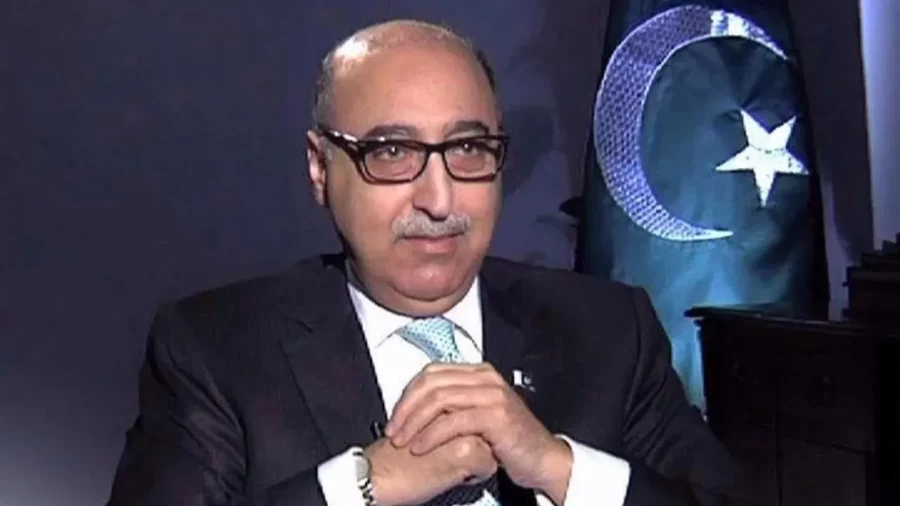
Abdul Basit, the former High Commissioner of Pakistan to India, has triggered a significant controversy with his recent provocative remarks. During a discussion regarding regional security, Basit suggested that in the event of an attack on Pakistan by an external power, specifically mentioning the United States, Pakistan would retaliate by targeting major Indian cities such as New Delhi and Mumbai. He made these comments while responding to a question about a hypothetical conflict scenario, emphasizing that the existing tensions in the region could escalate rapidly under such circumstances.
The statement from the former diplomat comes at a time when South Asia is grappling with complex geopolitical shifts. Basit argued that if Pakistan's sovereignty were threatened, the nation wouldn't hesitate to strike at India's strategic and economic hubs. While he repeatedly categorized the scenario as impossible and noted that neither India nor Pakistan currently desires a war, his explicit mention of targeting civilian and administrative centers has drawn widespread attention. He stated that Pakistan would act decisively without a moment's thought if pushed into such a corner.
Details of the Hypothetical Conflict Scenario
In his discourse, Abdul Basit outlined a scenario where the United States might initiate military action against Pakistan. He posited that in such a crisis, Pakistan's strategic response would involve launching attacks on India. According to Basit, targeting cities like Mumbai and New Delhi would be a primary objective to exert pressure and demonstrate retaliatory capabilities. He framed this as a potential defensive-offensive strategy, suggesting that Pakistan wouldn't remain passive if its borders were violated. Despite the hypothetical nature of the discussion, the specificity of the targets mentioned has raised concerns regarding the underlying military posturing in the region.
Diplomatic Tenure in New Delhi (2014-2017)
Abdul Basit is a well-known figure in Indian diplomatic circles, having served as Pakistan's top envoy in New Delhi from 2014 to 2017. His tenure was marked by some of the most turbulent phases in bilateral relations, including the Uri terror attack and the subsequent surgical strikes conducted by the Indian Army. Given his extensive experience and direct engagement with the Indian leadership during his posting, his recent comments carry a weight that transcends typical political rhetoric, while his past role as a high-ranking diplomat makes his public discussion of attacking Indian cities particularly notable in the context of international relations.
Escalating Tensions on the Afghan Border
The timing of Basit's remarks coincides with a period of severe friction between Pakistan and Afghanistan, while recently, Afghan officials have accused the Pakistani military of conducting airstrikes within Afghan territory, specifically in regions like Kabul, Kandahar, and Paktika. These cross-border operations have led to a war of words between the two neighbors, with the Taliban administration claiming that civilian areas, including a rehabilitation center, were targeted. The long-standing dispute over the Durand Line and the presence of militant groups along the border have contributed to a volatile security environment that forms the backdrop of Basit's statements.
Taliban Allegations of Pakistani Airstrikes
Zabihullah Mujahid, the spokesperson for the Taliban, has issued strong condemnations regarding Pakistan's military actions. The Taliban claims that Pakistani aircraft violated Afghan airspace to carry out bombings, resulting in casualties and destruction of property. Pakistan, on the other hand, has often maintained that such actions are necessary to neutralize terror threats emanating from Afghan soil. This ongoing conflict on Pakistan's western front has increased the sense of insecurity within the country's establishment, potentially influencing the aggressive tone adopted by former officials like Basit when discussing regional threats.
Regional Security and Diplomatic Implications
While there has been no official response from the Indian Ministry of External Affairs regarding Basit's comments, security analysts in India have viewed the statement as an attempt to maintain relevance or stir nationalist sentiments. Experts suggest that such inflammatory language from a former diplomat is counterproductive to regional stability and peace efforts. The mention of nuclear-armed neighbors engaging in strikes on major metropolitan areas is seen as highly irresponsible. As the geopolitical situation remains fluid, the international community continues to monitor the developments along both the eastern and western borders of Pakistan, emphasizing the need for restraint and diplomatic dialogue.
