

- India,
- 22-Mar-2026 12:58 PM IST


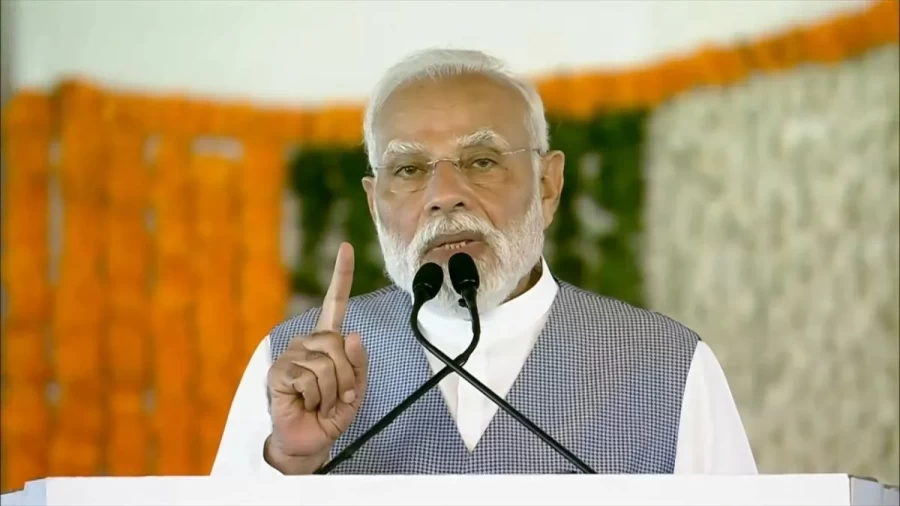
Prime Minister Narendra Modi has achieved a significant milestone in Indian political history by becoming the longest-serving head of government in the country. According to official records, PM Modi has completed a total of 8,931 days in office, combining his tenure as the Chief Minister of Gujarat and his ongoing term as the Prime Minister of India. With this achievement, he has surpassed the long-standing record held by Pawan Kumar Chamling, the former Chief Minister of Sikkim, who served as the head of a government for 8,930 days. This milestone reflects a journey of over two decades in high-level executive governance.
Historical Comparison with Pawan Kumar Chamling
Pawan Kumar Chamling, the founder of the Sikkim Democratic Front, held the record for the longest-serving head of government in India for several years. He served as the Chief Minister of Sikkim from December 12, 1994, to May 27, 2019, spanning over five consecutive terms. His total duration in office was 8,930 days. While Chamling remains the longest-serving Chief Minister of an Indian state, Narendra Modi has now overtaken him in the cumulative count of days served as a head of government at either the state or central level, while other notable leaders in this category include Jyoti Basu of West Bengal, who served for over 23 years as Chief Minister.
The Gujarat Chapter: 2001 to 2014
Narendra Modi's journey as a head of government began on October 7, 2001, when he was sworn in as the Chief Minister of Gujarat. He took over the leadership during a challenging period for the state and subsequently led the Bharatiya Janata Party (BJP) to three consecutive assembly election victories in 2002, 2007, and 2012. He remained the Chief Minister of Gujarat until May 22, 2014, serving for approximately 12 years and 227 days. During his tenure in Gujarat, he introduced several administrative reforms and economic models that gained national prominence, establishing him as a key figure in Indian politics before his transition to the national stage.
National Leadership and Three Consecutive Terms
Following a landslide victory in the 2014 Lok Sabha elections, Narendra Modi was sworn in as the 15th Prime Minister of India on May 26, 2014. Under his leadership, the BJP-led National Democratic Alliance (NDA) secured mandates in 2014, 2019, and most recently in the 2024 general elections. He's the first Prime Minister since Jawaharlal Nehru to be elected for three consecutive terms. His tenure as Prime Minister has now exceeded 10 years, during which his administration has implemented major policy shifts, including the Goods and Services Tax (GST), the Jan Dhan Yojana, and significant infrastructure projects across the country.
Early Life and Political Evolution
Born on September 17, 1950, in Vadnagar, Gujarat, Narendra Modi rose from a humble background. He spent his early years assisting his father at a tea stall and later traveled across India before joining the Rashtriya Swayamsevak Sangh (RSS) in the early 1970s. He became a full-time worker for the RSS and was later deputed to the BJP in the late 1980s. His organizational skills were instrumental in the BJP's electoral successes in Gujarat during the 1990s. Notably, he's the first Indian Prime Minister born after the country gained independence in 1947, representing a generational shift in the nation's top leadership.
Administrative Continuity and Global Impact
The record of 8,931 days highlights a period of significant administrative continuity in Indian governance. PM Modi is among the few Prime Ministers who brought extensive experience as a state head to the Prime Minister's Office (PMO). His combined tenure has seen India's transition through various economic cycles and a heightened presence on the global diplomatic stage. According to government data, his administration has focused on digital transformation, welfare schemes, and strengthening India's manufacturing sector through the 'Make in India' initiative, while this record stands as a testament to his long-standing role in shaping the executive direction of the country at both the state and national levels.
