
- India,
- 11-Nov-2026 04:54 PM IST



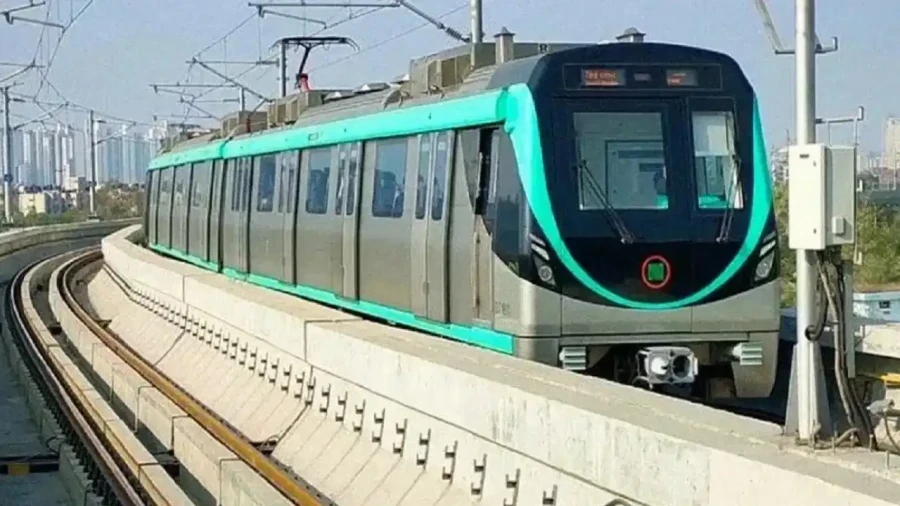
The Union Cabinet, chaired by Prime Minister Narendra Modi, has officially approved the extension of the Aqua Line metro rail corridor from Noida Sector 51 to Greater Noida Sector 04 under the Noida Metro Rail Project. Sharing comprehensive details regarding this major development, Union Minister Ashwini Vaishnaw stated that the cabinet meeting marked a significant decision concerning the Noida Greater Noida Metro Rail Project, granting official clearance for the expansion of the Aqua Line along this crucial route. This ambitious infrastructure project is estimated to incur a total expenditure exceeding 77 thousand 101 crore rupees. Spanning a total length of 8 kilometres and 449 metres, this newly approved corridor will feature a total of 5 elevated stations. Once this new corridor becomes fully operational, the urban centers of Noida and Greater Noida will boast a combined active metro rail network spanning a massive 71 kilometres and 878 metres.
Enhanced Connectivity and Integration with Major Transit Routes
Elaborating further on the project, Union Minister Ashwini Vaishnaw clarified that this proposed metro project will primarily cover the vital segment situated between Noida Sector 51 and Greater Noida Sector 4. In addition to the existing Aqua Line, this specialized corridor will provide easy connectivity with the Magenta Line, which directly connects to the Indira Gandhi International Airport, as well as with New Delhi. Addressing the media on this occasion, Prime Minister Narendra Modi expressed his views, stating that the realization of this project will Importantly reduce traffic congestion and drastically cut down commuting time for everyday commuters. The Prime Minister placed special emphasis on the fact that this initiative will ensure effortless access to major offices, educational institutions, hospitals, and commercial hubs, marking a monumental step forward in enhancing connectivity and easing the lives of citizens.
The proposed extension of the Aqua Line metro rail corridor from Noida Sector 51 to Greater Noida Sector 4 will integrate approximately 8 kilometres and 449 metres of brand new metro lines into the existing transit framework. This development will dramatically improve the public transportation infrastructure across the cities of Noida and Greater Noida, particularly in residential and commercial sectors that currently face a shortage of strong and accessible connectivity options. Also, this corridor will establish direct connectivity alongside high-demand transit routes, which includes the modern convenience of an interchange facility with the Blue Line at Noida Sector 61. The core objective of this comprehensive infrastructure project is to interlink all major and bustling commercial zones of Noida efficiently, encompassing prominent commercial hubs, multinational corporations, IT parks, and esteemed educational institutions.
Direct Linkages to Commercial, Educational, and Healthcare Centers
The prominent commercial hubs falling within the catchment area of this metro extension include Gaur City Mall, H and S Mall along with their expansive office spaces, Blue Sapphire Mall, and other commercial spaces located in Greater Noida Sector 04. Also, the globally renowned IKEA store situated in Noida Sector 51 and the Anthurium Mall located in Noida Sector 73 will be directly connected through this route. When considering major multinational corporations and IT hubs, the corridor will serve key employment centers such as Tech Mahindra and TCL Tech offices in Noida Sector 60, the Oil Industry Development Board in Noida Sector 73, and the Golden I offices and commercial spaces situated in Greater Noida Sector 04. On the educational front, premier institutions such as Delhi Public School located in Noida Sector 122 will find themselves in close proximity to the new metro line.
From a healthcare perspective as well, this route will prove to be exceptionally vital as it will bring prominent medical facilities within easy reach, including Kailash Hospital and Rama Hospital in Noida Sector 70, Cloud9 Hospital in Noida Sector 51, and Rama Hospital in Noida Sector 62. On top of that, high-profile residential societies such as Cleo County Residences in Noida Sector 122 and Gaur City 1 and 2 in Greater Noida Sector 04 fall directly within the project's operational zone. Consequently, the expansion of the Aqua Line metro rail corridor from Noida Sector 51 to Greater Noida Sector 04 will systematically connect all these critical areas to a solid metro network, ensuring enhanced accessibility.
Impact on Traffic, Environment, and Socio-Economic Growth
The implementation of this comprehensive extension project won't only uplift regional connectivity but is also expected to provide a tremendous boost to local economic activities. Commuting for daily travelers, residents, and professionals engaged in employment, commerce, education, and other essential travel will become Importantly smoother and more convenient. Metro rail consistently serves as an exceptional and modern alternative to conventional road transport. The expansion of this corridor will strengthen the overall metro footprint across Noida and Greater Noida, leading to a noticeable reduction in vehicular traffic congestion on roads. Smoother traffic flow will decrease transit times and contribute positively to overall road safety standards.
Examining the environmental benefits, the extension of the Aqua Line from Noida Sector 51 to Greater Noida Sector 04 and the subsequent growth of the metropolitan transit network are projected to considerably lower carbon emissions compared to traditional fossil-fuel-dependent transport systems. With marked reductions in travel times and faster accessibility to transport hubs like the Delhi Airport, railway stations, and bus depots across different parts of the city, overall productivity levels among the populace will witness a substantial surge. Citizens will be able to reach their workplaces and destinations with greater efficiency and punctuality. Also, this upgraded connectivity will act as a major catalyst for local businesses, particularly in areas surrounding the newly established metro stations, fostering investment and development in previously hard-to-reach zones.
Socio-Economic Upgradation and Additional Cabinet Approvals
Analyzing the broader social impact of the project, this expansion will guarantee equitable access to public transportation for diverse segments of society. Individuals belonging to various socio-economic backgrounds will directly benefit, helping to bridge existing disparities in mobility. Enhanced accessibility to essential civic services and shortened travel durations will collectively elevate the standard of living for ordinary citizens. In addition to this infrastructure milestone, the Union Cabinet during its meeting also granted official clearance to several other far-reaching policy proposals.
Mindful of the millions of small-scale entrepreneurs across the nation, the Union Cabinet officially approved the continuation and expansion of the Pradhan Mantri Mudra Yojana for the next five years. Providing a major fillip to the agricultural sector, the cabinet sanctioned a massive subsidy amounting to 62 thousand 370 crore rupees on phosphatic and potassic fertilizers for the upcoming Rabi crop season of 2026-27. This decisive action ensures that India's farming community will continue to procure DAP fertilizers at the previously established affordable rate of 1350 rupees per bag. Union Minister Ashwini Vaishnaw also informed the press that the cabinet has given its formal go-ahead to the establishment of the Yuge Yugeen Bharat National Museum, a project dedicated to showcasing the nation's rich cultural heritage.
Under this historic and ambitious initiative, a substantial financial outlay of 3 thousand 230 crore rupees has been sanctioned for the development and construction of a magnificent national museum within the historic North and South Block premises in New Delhi, which will proudly display India's ancient historical and cultural legacy. According to official government data, the upcoming Yuge Yugeen Museum will span a total area of 1 lakh square metres, making it Importantly larger in area than world-renowned institutions like the Louvre Museum, the British Museum, and the Hermitage Museum. This museum stands as one of the government's premier dream projects, for which preliminary preparations and structural blueprint designs have already commenced at a rapid pace.
Credit Guarantee Fund and Stand Up India Provisions
Addressing media representatives, Union Minister Ashwini Vaishnaw also shared that the government has taken a monumental decision concerning the credit guarantee fund structure under the Mudra Scheme. With the explicit objective of facilitating easy access to institutional credit without cumbersome paperwork for micro-enterprises and small businesses across the country, the government has decided to establish a dedicated credit guarantee fund amounting to 5 thousand crore rupees. He further elaborated that an allocation totaling 4 thousand 111 crore rupees has been earmarked to extend financial assistance and steadfast support to eligible beneficiaries of the Stand Up India scheme and grassroots-level entrepreneurs, empowering emerging business owners nationwide.